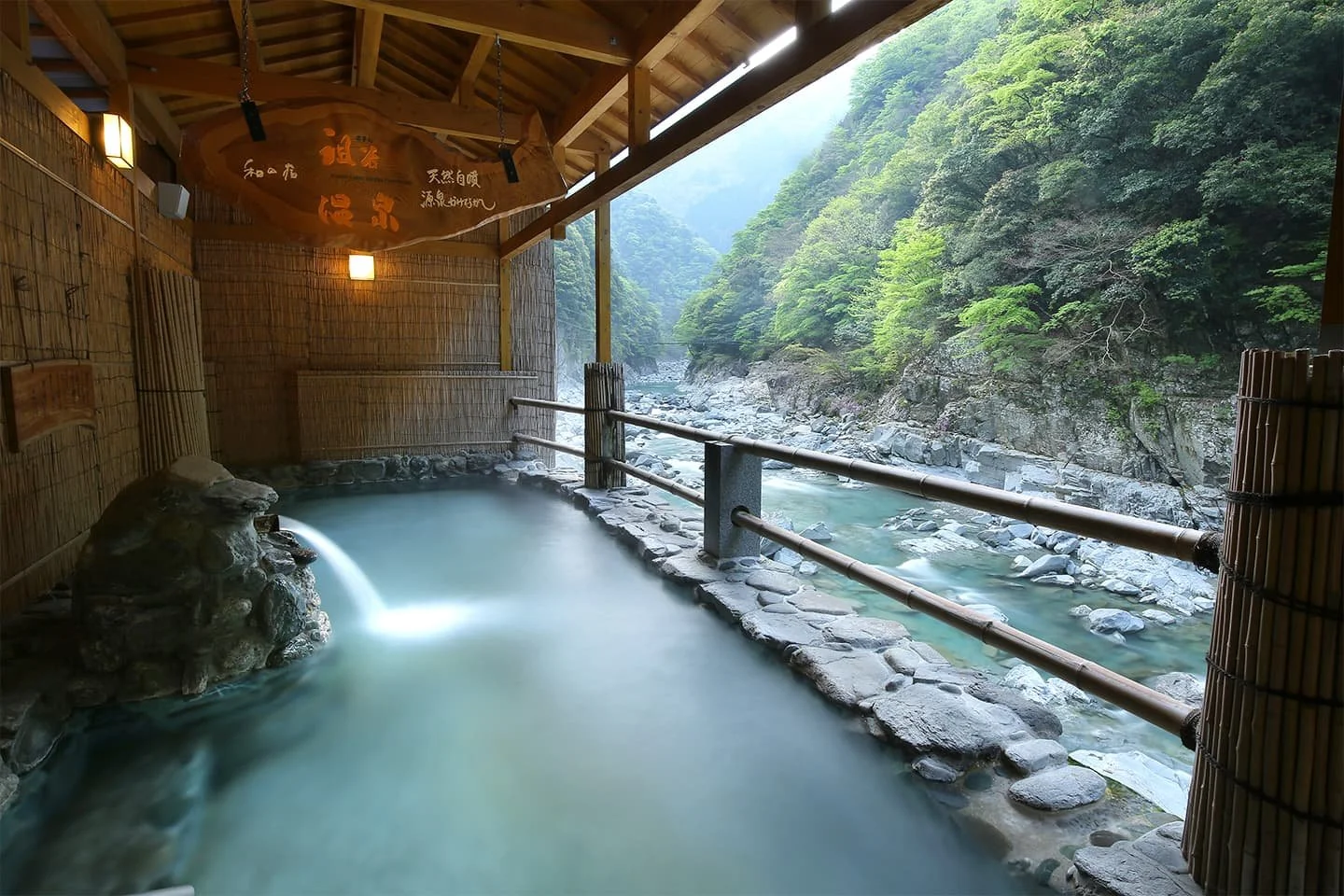
"He had a pleasant feeling that the water was part of him and he was part of the water, that there was no boundary between the bath and the outside world."

— Yasunari Kawabata

Onsen
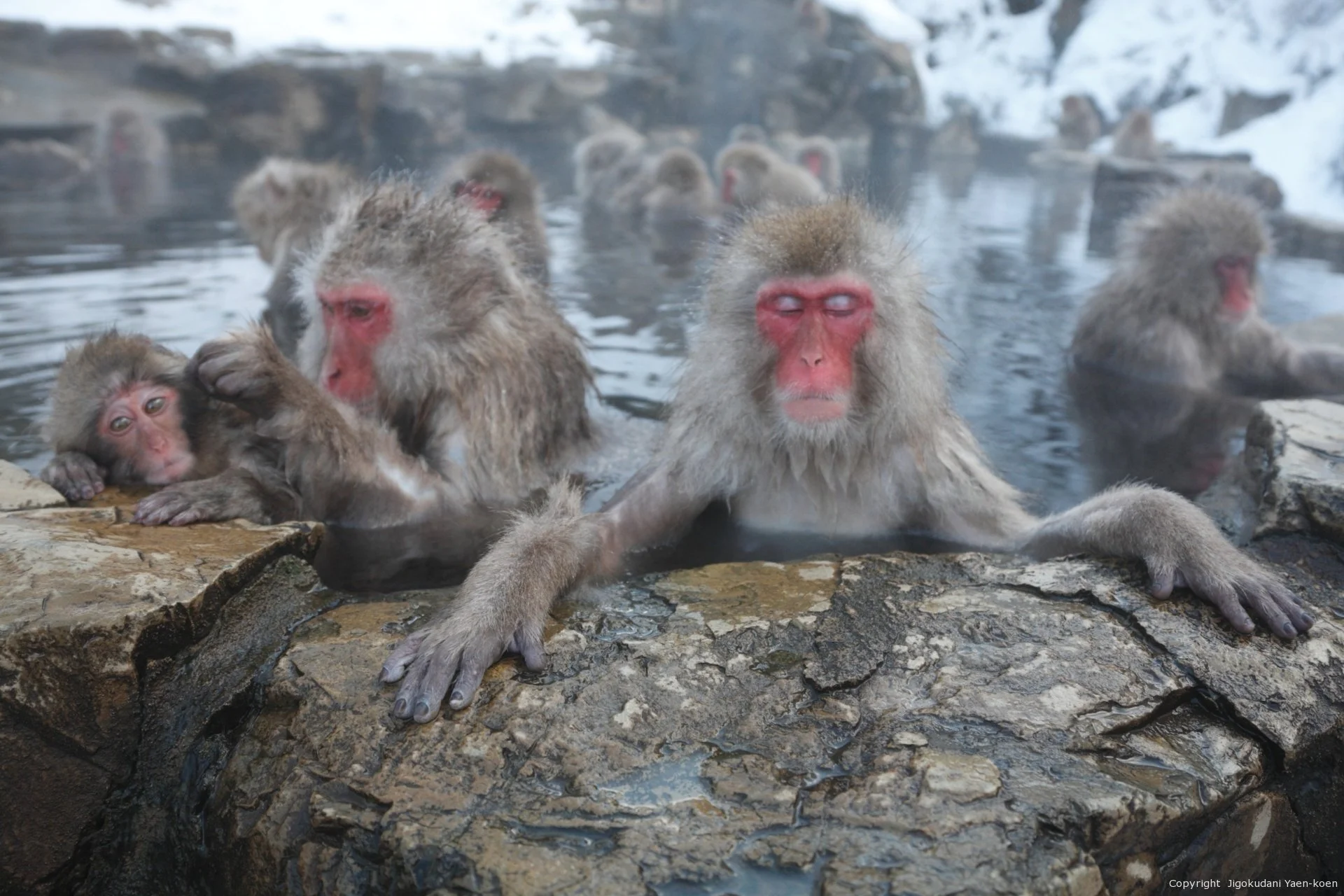
Japan has more hot springs than almost anywhere on earth. The country sits on the Pacific Ring of Fire, and the same volcanic forces that shaped its mountains have been heating water underground for millions of years. Wherever there are mountains in Japan, there is usually an onsen nearby.

Onsen come in several forms — some are attached to ryokan and open only to overnight guests, others welcome day visitors for a few hours, and some are standalone bathhouses with no accommodation at all. The mineral content of each spring is different: some waters are said to ease tired muscles, others to soften the skin, others to calm the nervous system. Whether or not you believe the therapeutic claims, the experience itself is restorative in ways that are difficult to explain and easy to feel.

On our trips, we try to end the day near an onsen when we can. After cycling mountain roads or walking through forest, the option to soak is there if you want it. Knowing a hot spring is nearby tends to change the quality of the day.
  • Kusatsu Onsen

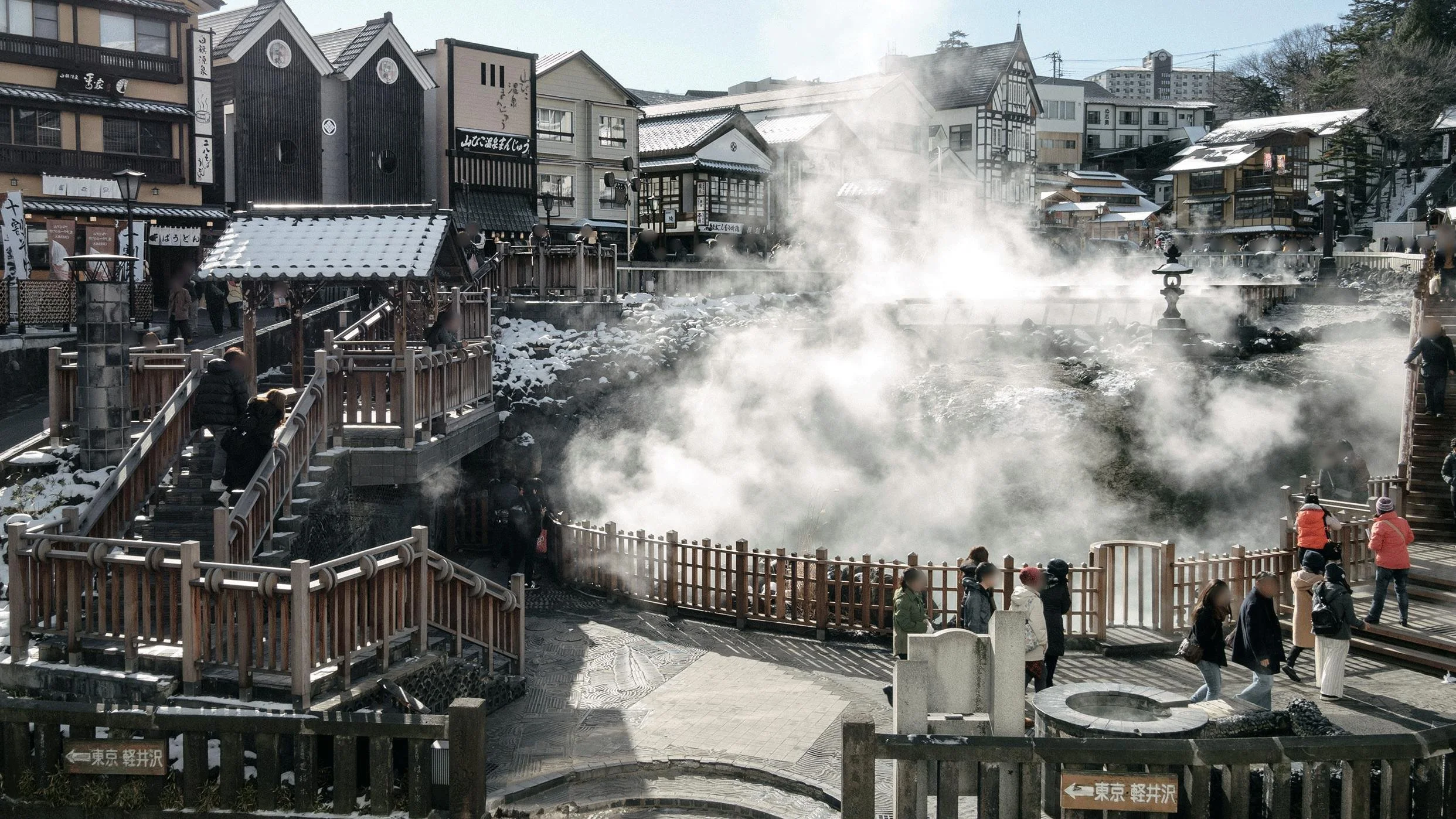
    Kusatsu is one of Japan's most celebrated hot spring towns, and the water here is unlike almost anywhere else. The spring flows at a pH of around 2.1 — strongly acidic, closer to lemon juice than to ordinary water. It kills bacteria on contact. Tokugawa shoguns had it carried by barrel to Edo. The acidity is high enough that the water cannot be diluted to lower the temperature; instead, it is cooled the old way, by flowing it through wooden channels and stirring it by hand with long wooden paddles — a method called yumomi that has been practiced here for centuries.

    At the center of town is the Yubatake, the "hot water field" — a series of wooden channels where the spring water runs visibly through the streets, steaming in cold air, turning the ground white with mineral deposit. More than 32,000 liters flow through every minute. The town was built around this source, and it still feels that way.

    The water temperature runs between 50 and 94 degrees Celsius depending on the source. You enter slowly.

  • Takaragawa Onsen

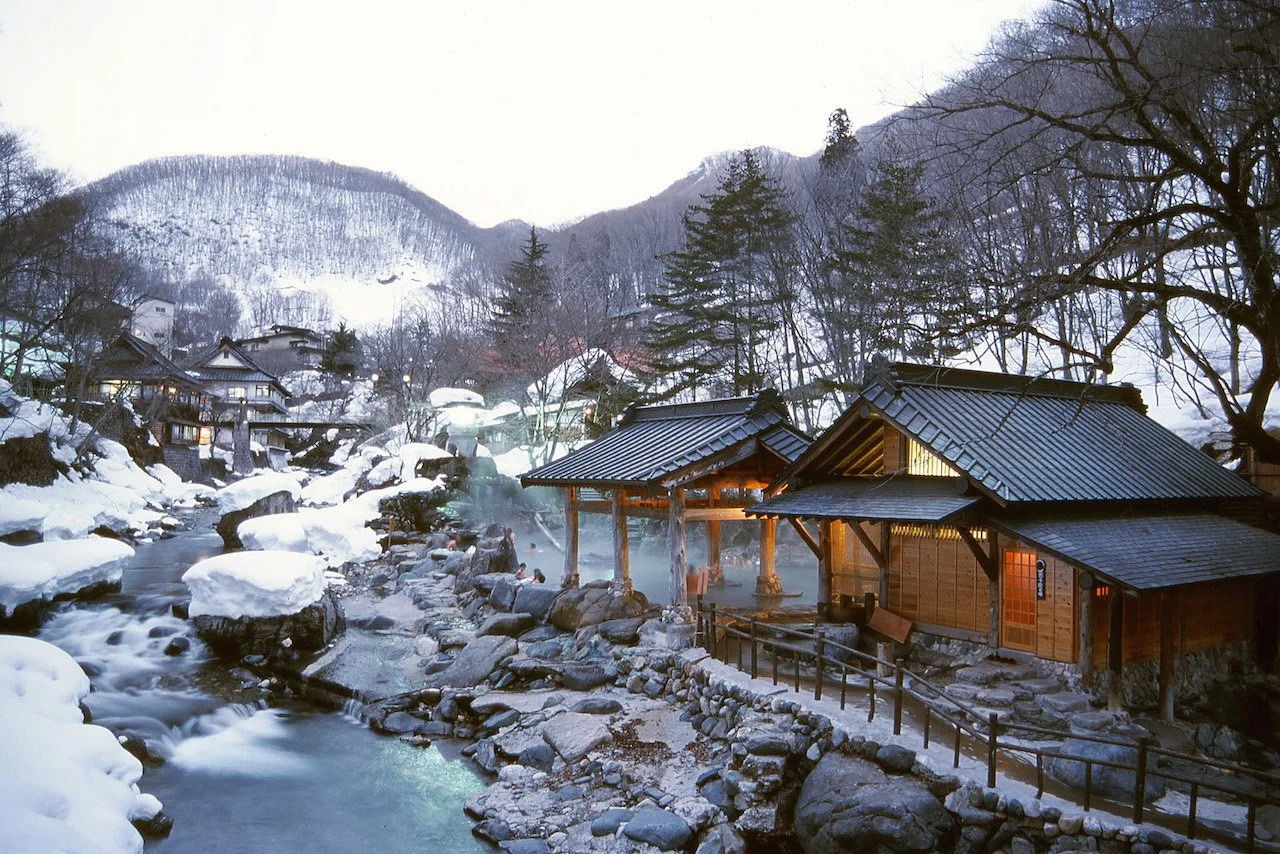
    Takaragawa Onsen, in the mountains of Gunma Prefecture, is one of the most dramatic outdoor bathing experiences in Japan. The ryokan here — Osenkaku — sits beside the Takara River, and its four rotenburo (outdoor baths) are built directly along the riverbank, fed by water flowing from the hillside above. The largest single bath covers over 300 square meters. In total, the four baths span close to 900 square meters of open water.

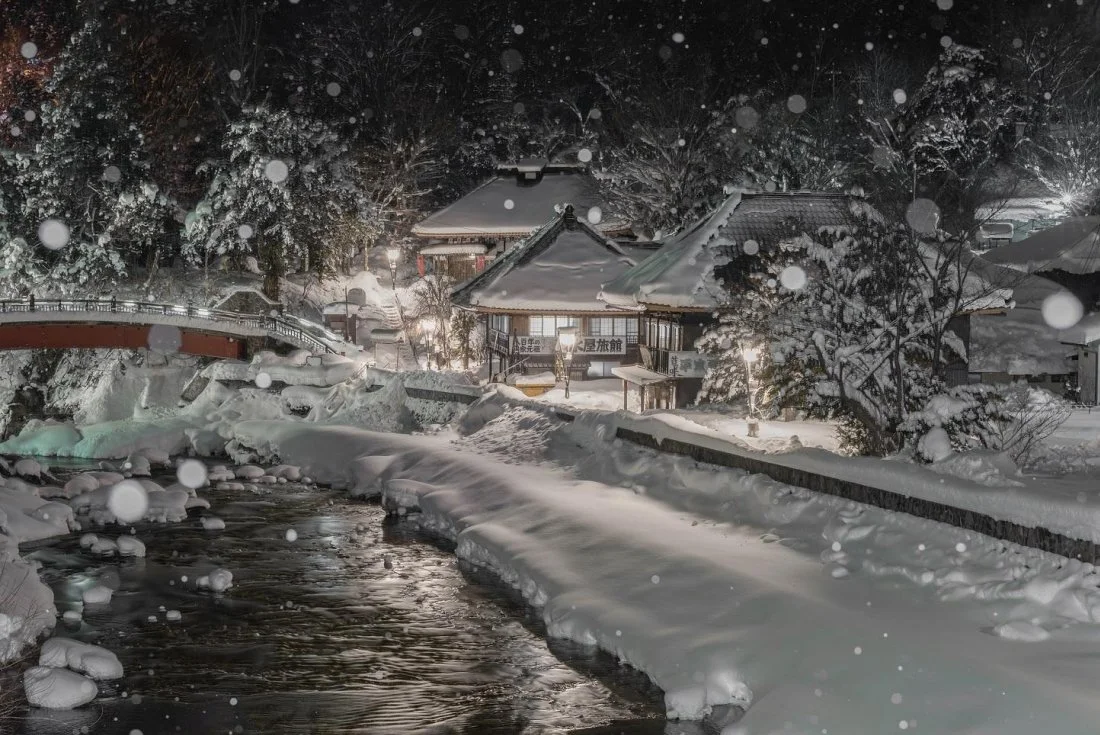
    The setting does most of the work. You are outside, in mountain air, with the sound of the river beside you and forest on all sides. In winter, snow collects on the rocks at the edge of the water. The contrast between the heat of the spring and the cold of the air is something that is easier to remember than to describe.

    Takaragawa is about two hours from Tokyo by car. Day visitors are welcome.

  • Hakone

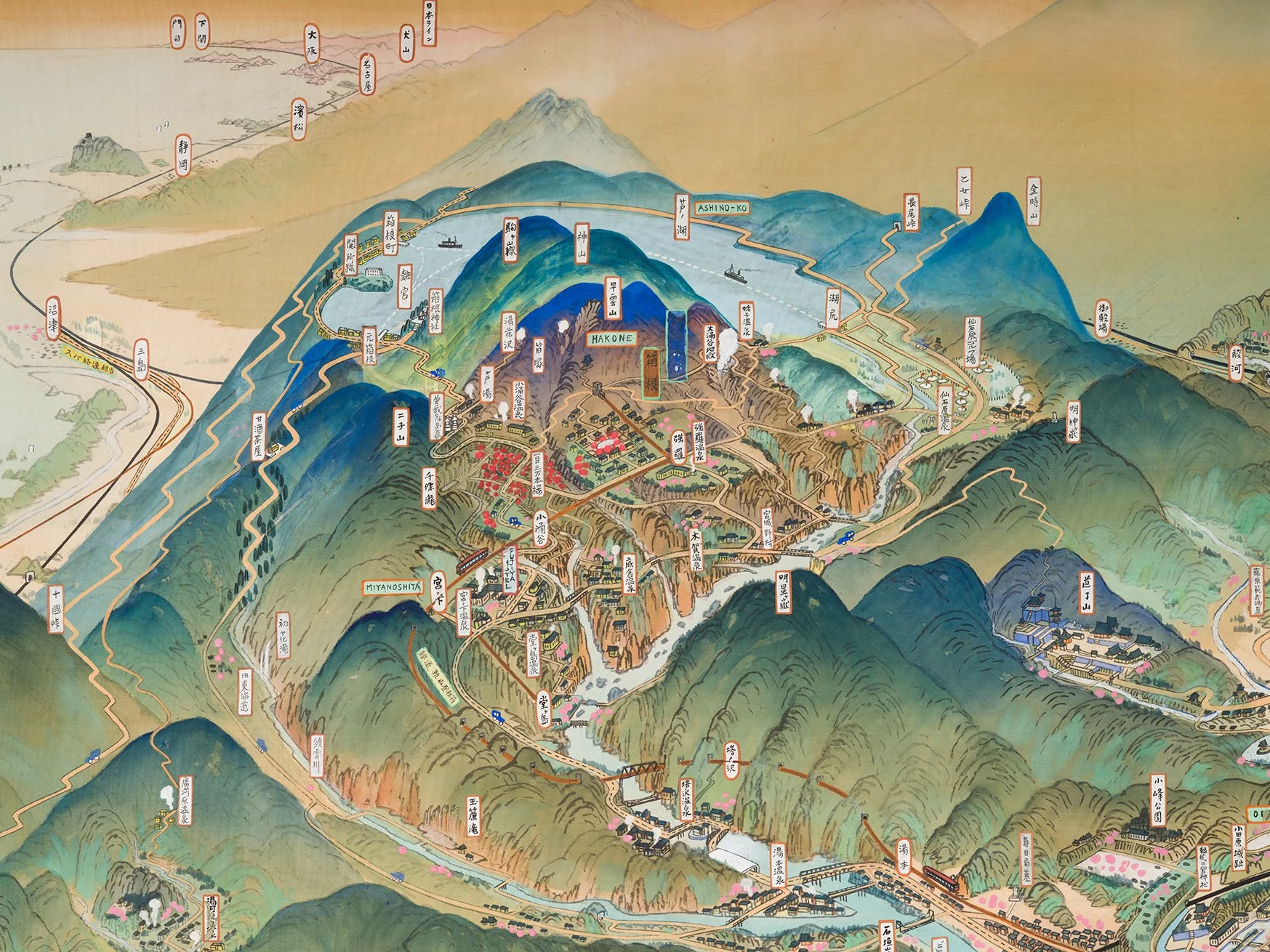
    Hakone is best known as an onsen town, and it earns that reputation — the area sits on a volcanic caldera, and hot springs surface throughout the valley. But Hakone is also one of the most layered destinations within easy reach of Tokyo, and a single day rarely does it justice.

    Lake Ashi stretches across the southern part of the caldera, with Mt. Fuji visible above the ridgeline on clear days. At the lake's edge stands the Hakone Sekisho — a checkpoint restored to its Edo-period form, where travelers on the Tokaido road were once inspected before being allowed to pass between Kyoto and Edo. Above the town, Owakudani's volcanic valley steams visibly from the hillside, a reminder that the ground here is still doing something.

    For cyclists, Hakone is more honest than romantic — the climbs are serious, and the main roads carry traffic. But arriving at a hot spring after a day in those hills is exactly what it should be.

  • Atami

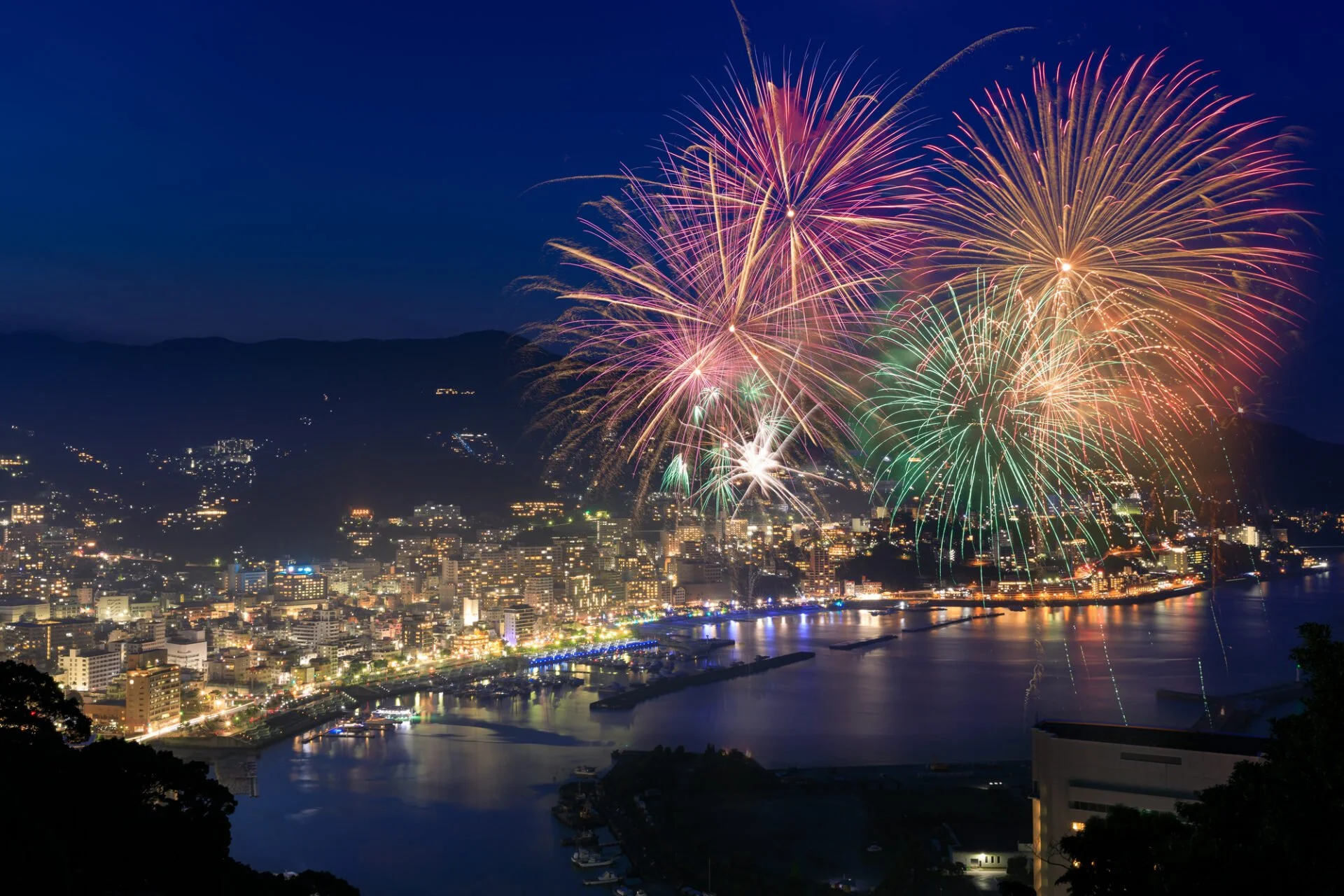
    Atami sits on the coast at the northeastern tip of the Izu Peninsula, about an hour from Tokyo by shinkansen. It is one of Japan's oldest resort towns — records of the hot springs here date to the eighth century — and for much of the twentieth century it was where Tokyoites went when they needed to leave the city. Politicians, artists, and writers kept villas here. The town still carries that atmosphere: slightly faded, unhurried, facing the sea.

    The onsen in Atami draw from a geothermal system of around 500 individual springs beneath the town. Many ryokan have their own sources. Some baths look directly out over Sagami Bay.

    Atami is also the natural starting point for the Izu Peninsula. The shinkansen stops here, the roads south begin here, and the character of the coastline — volcanic, rugged, increasingly quiet as you move away from the city — announces itself almost immediately once you leave town.

  • Ikaho Onsen

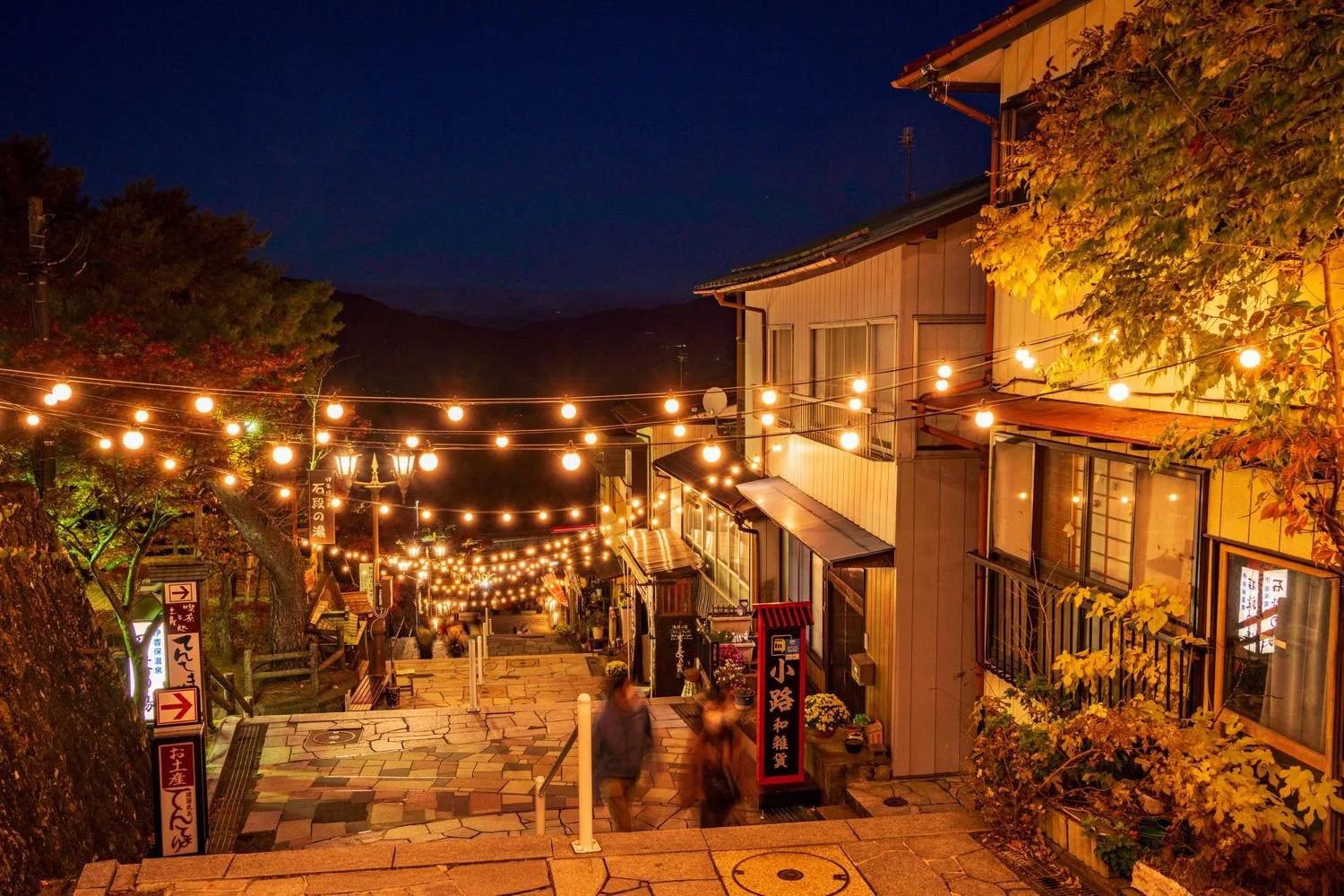
    Ikaho is a mountain onsen town in Gunma Prefecture, built on a hillside above the Tone River valley. The town is organized around a single long stairway — 365 stone steps climbing through the center, lined on both sides by ryokan, small shops, and the occasional game arcade unchanged since the Showa era. Walking up them takes about ten minutes, but most people take longer.

    The waters here come in two types: the brown, iron-rich spring that the town is known for, and a newer colorless spring discovered more recently. The brown water stains the stone channels it runs through, giving the baths and the streets around them a particular color that is specific to this place.

    Ikaho has been a resort since at least the eighth century. It sits about two hours from Tokyo, in the foothills below Mt. Haruna — close enough to the mountains for a half-day of hiking before the bath.

  • Yunishigawa Onsen

    Yunishigawa Onsen sits in a narrow valley in the mountains of Tochigi Prefecture, north of Nikko. The road in follows a river through cedar forest, and the town — a loose gathering of ryokan along the gorge — feels genuinely remote in a way that few places within three hours of Tokyo manage.

    The legend attached to this place is specific. In the twelfth century, two rival samurai clans fought for control of Japan. The war ended at sea in 1185, and the losing clan — facing certain death — scattered into the mountains. Some of them found this valley and stayed. The village they built became Yunishigawa. The Heike no Sato — the village of the Heike, the clan that lost — is a preserved cluster of traditional houses open to visitors, telling that story through the objects and structures left behind. It is less a museum than a place where the past has simply not been cleared away.

    In winter, the valley hosts a kamakura festival — dozens of snow huts lit from inside, built along the riverbank. The combination of deep snow, hot spring, and that particular silence that comes with both is worth the journey on its own.

  • Kinugawa Onsen

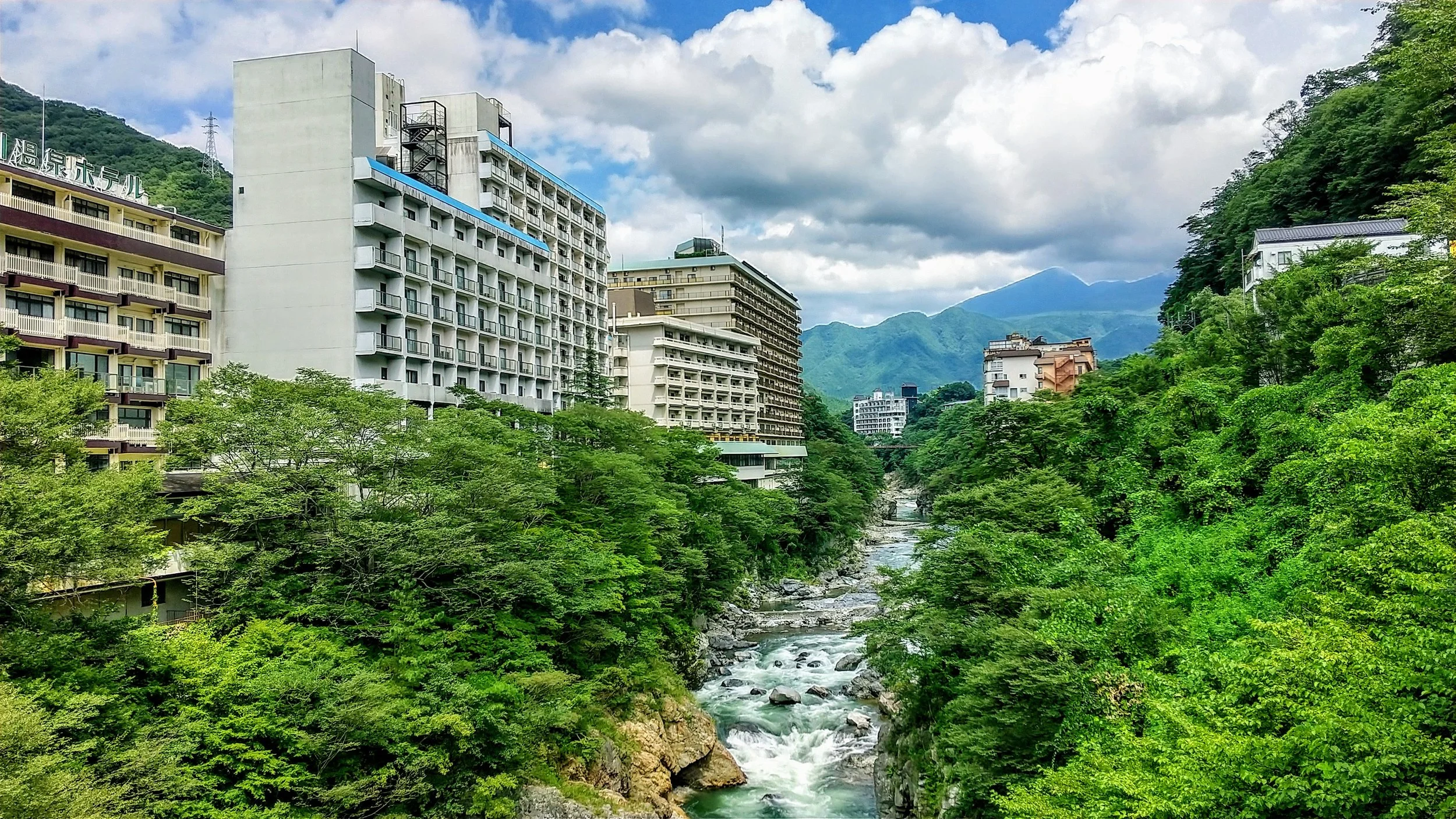
    Kinugawa Onsen sits along the Kinugawa River — whose name translates, with some drama, as "angry demon river" — in the mountains of Tochigi Prefecture, about two hours from Tokyo by train. The hot springs here were discovered in the mid-eighteenth century, and for much of the Edo period the baths were reserved for feudal lords and monks making the pilgrimage to Nikko, which lies about 20 kilometers to the west.

    That connection to Nikko still makes sense as a travel pairing. The shrines and temples of Nikko — among the most elaborately decorated in Japan — are a full day on their own. Kinugawa gives you somewhere to end that day, in hot water, beside a river gorge.

    The town itself is built in the resort style of the mid-twentieth century — large hotels lining the riverbank, a few theme parks nearby. It lacks the quiet atmosphere of smaller onsen towns. But the water is good, the gorge is genuinely dramatic, and the access from Tokyo is straightforward enough that it works as an overnight without much planning.

  • Soka Kenko Center

    Soka Kenko Center is not the kind of onsen that appears in travel magazines. There is no ryokan, no mountain view, no atmospheric stone pathway leading to the bath. It sits in a residential neighborhood in Soka, Saitama, about thirty minutes from central Tokyo, and it looks more or less like what it is: a large urban bathhouse that opened in 1988 and has been quietly perfecting itself ever since.

    What it offers is serious bathing. The facility draws water from Kusatsu — the same strongly acidic spring that defines one of Japan's most celebrated onsen towns — and pipes it into an outdoor rotenburo alongside carbonated baths, herbal medicinal baths, and a sauna that has developed a devoted following of its own. Among sauna enthusiasts in Japan, Soka has a reputation that bears no relation to its surroundings.

    The regulars here are not tourists. They are people who come back every week, who know which bath to start with and which to finish in, who have a preferred spot in the changing room. That kind of loyalty is its own recommendation. Places earn it slowly.

  • Thermae-Yu (Shinjuku)

    Thermae-Yu occupies several floors of a building in Kabukicho, Shinjuku — a few minutes' walk from one of the busiest intersections in the world. The hot spring water is trucked in daily from Nakaizu on the Izu Peninsula, which says something about the lengths urban onsen go to for legitimacy. The water is real; the surroundings are not what you would call natural.

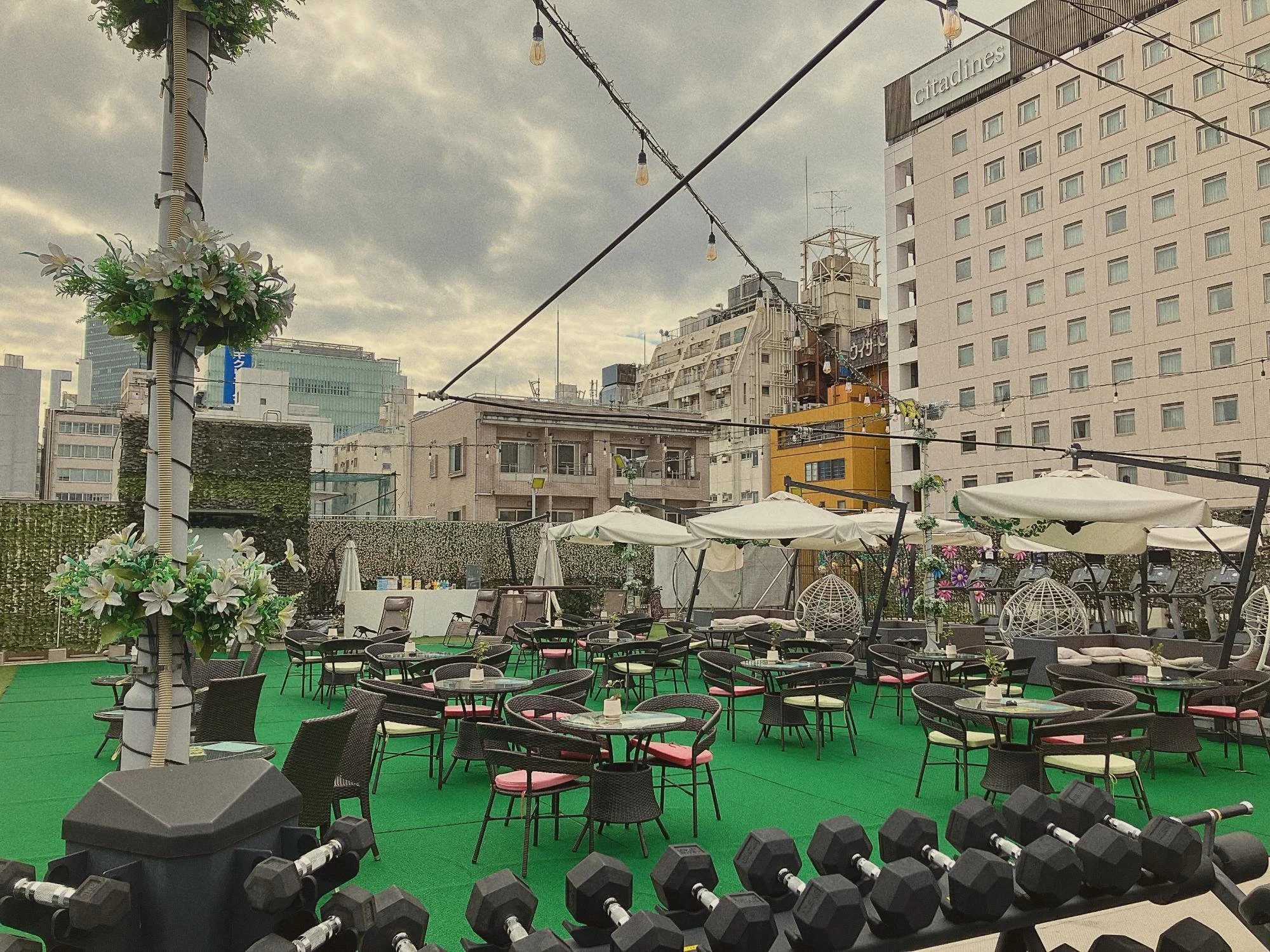
    What Thermae-Yu offers is convenience and a certain kind of urban luxury — multiple baths, sauna floors, a rooftop deck above the Shinjuku skyline, and a facility designed with out-of-towners in mind. It is open 24 hours, tattoo-friendly by Tokyo standards, and staffed for international visitors. For someone arriving jet-lagged, or spending a night in Shinjuku with nowhere else to decompress, it does the job well.

    The difference from somewhere like Soka Kenko Center is not just location. Soka has regulars who treat it like a second home. Thermae-Yu has guests. Both are worth knowing about, depending on what kind of day you're having.

  • Kashiba (Kawagoe)

    There is a place ten minutes from my house that I visit most weeks. It is called Kashiba, and it is in Kawagoe — a castle town about an hour from central Tokyo, well known for its preserved Edo-period streetscape and sweet potato snacks. Most visitors come for the old town and leave by evening. Those who stay longer sometimes find their way here.

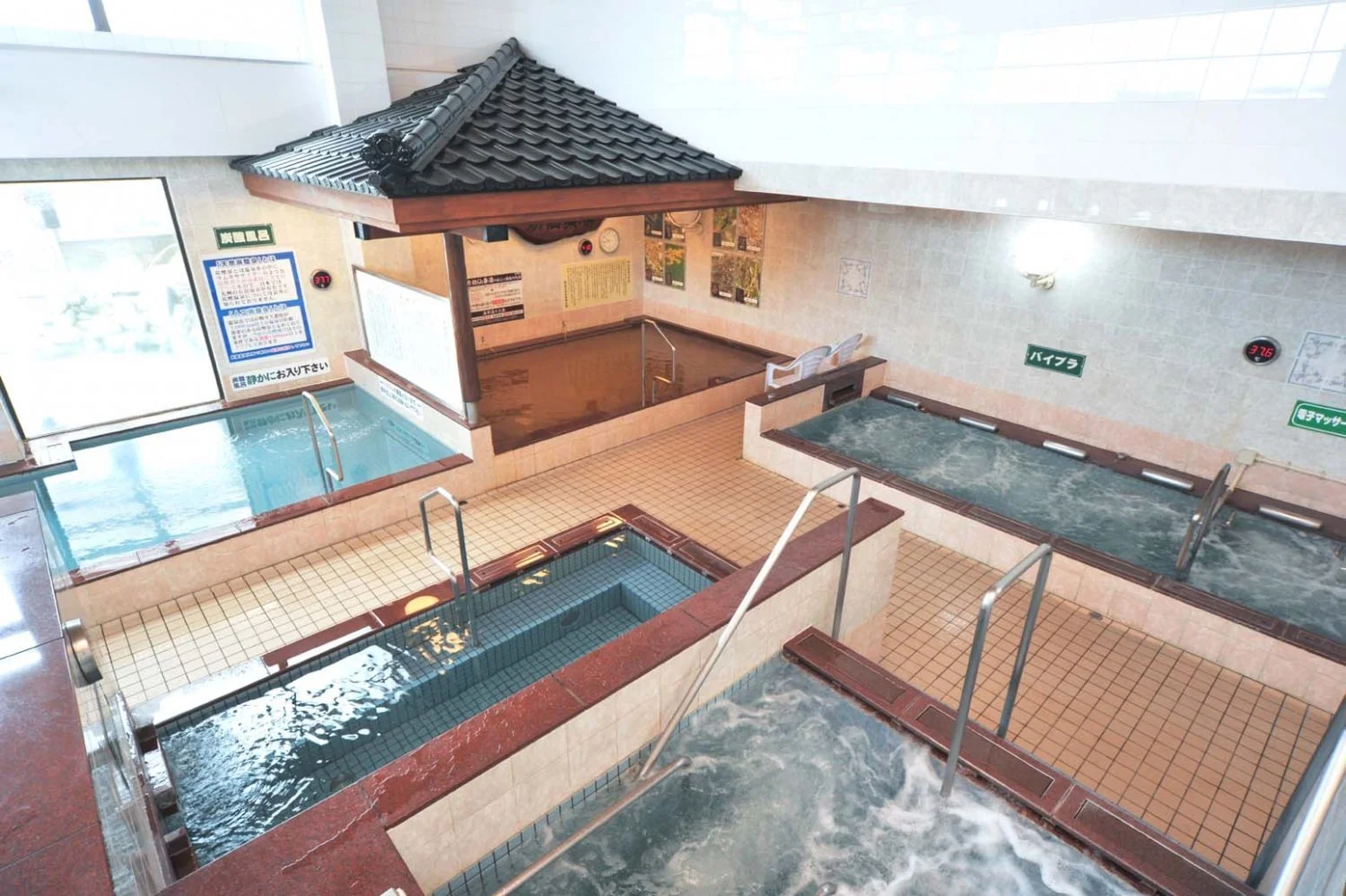
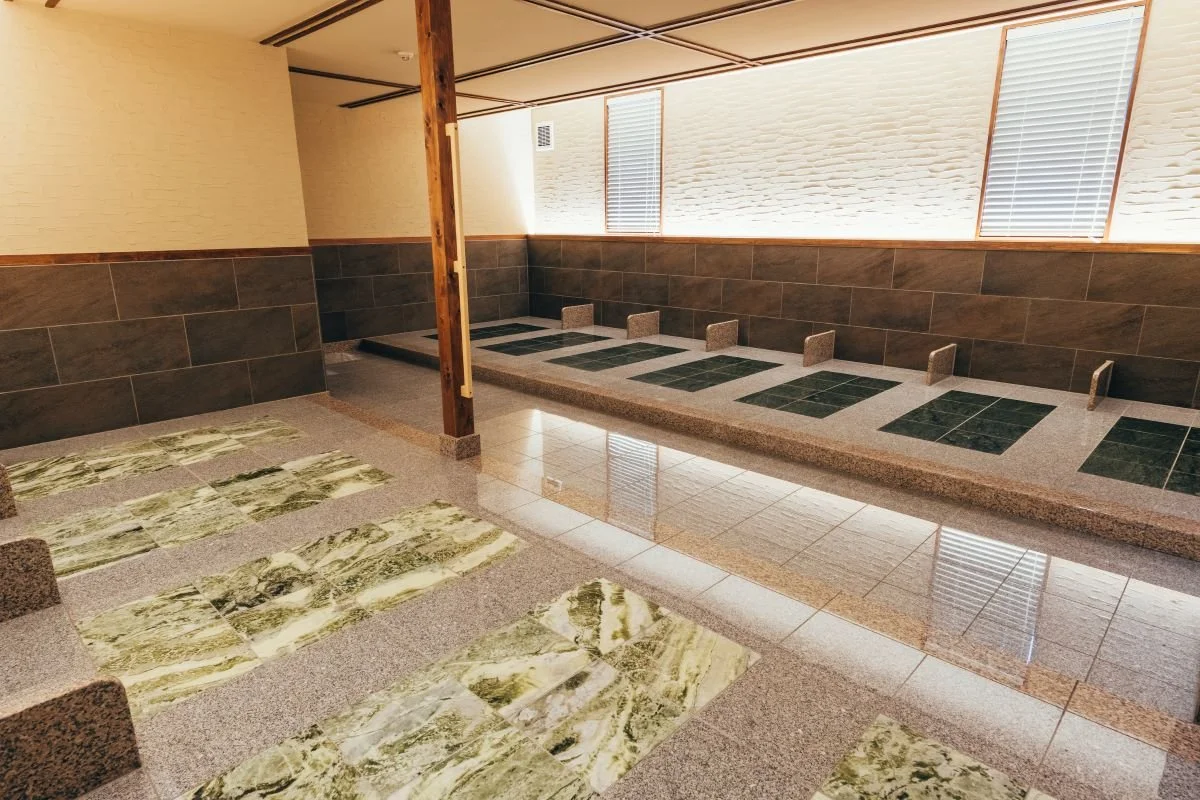
    The baths cover most of what you might want: carbonated water, ultrafine bubble baths, hot stone rooms, sauna and cold plunge with enough temperature difference to feel like it means something. There is also a restaurant, rest areas, a room for sleeping, and shelves of manga. You can arrive in the morning and leave after dark.

    It represents something that exists all over Japan and rarely makes it onto any itinerary — the neighborhood bathhouse that locals return to not for the scenery or the history, but simply because it is good, and close, and theirs. A day in Kawagoe's old town followed by an evening at Kashiba is, in my experience, a very good day.

Previous
Previous

Cycling

Next
Next

Architecture