Tennō I: Stone Walls and Clay Walls: What Two Palaces Say About Japan
Prologue: Two Silences
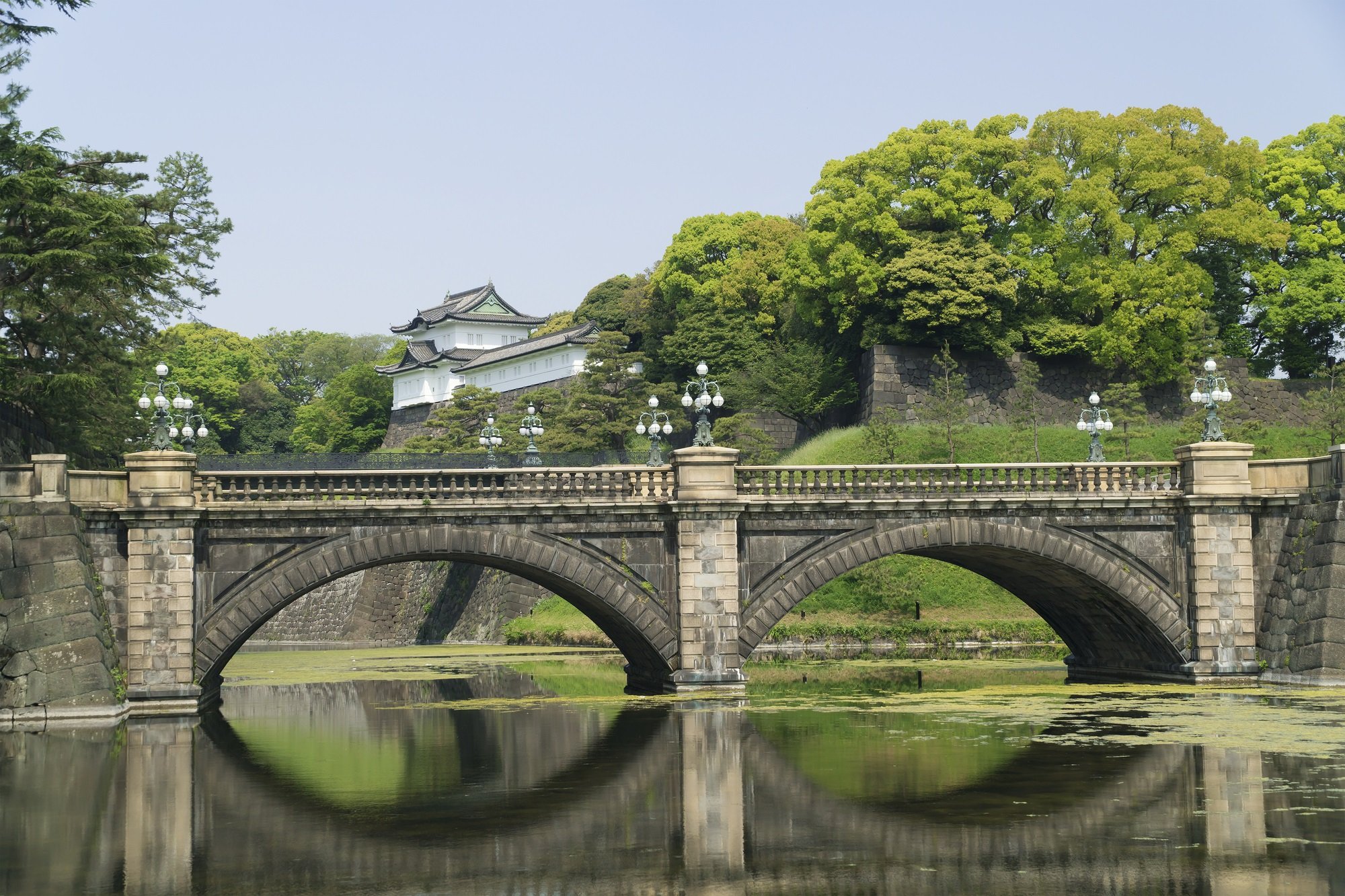
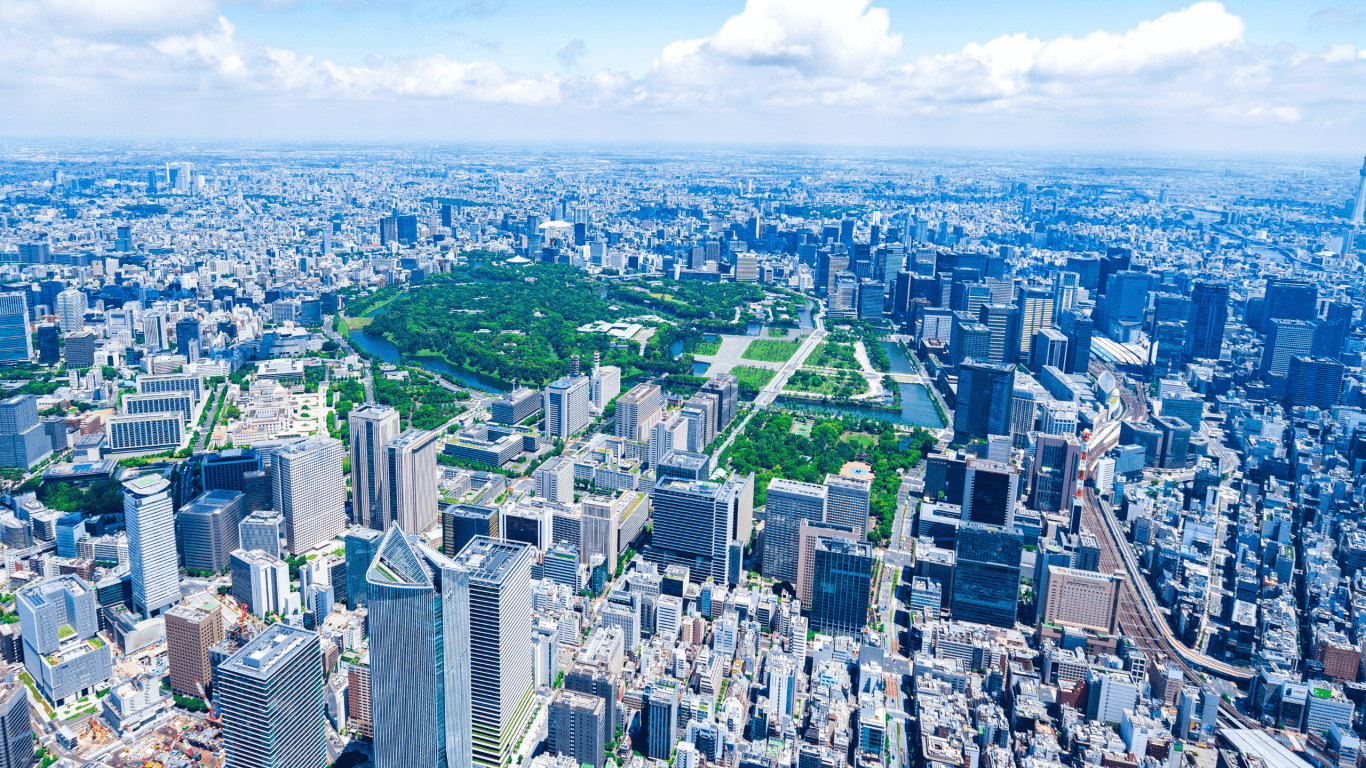
The first thing most visitors feel when they arrive at the Imperial Palace in Tokyo — the Kōkyo — is a closed silence. In the middle of one of the world's densest cities, this much emptiness. High stone walls, deep moats, heavy gates. The green beyond them seems to belong to a different order of time than the towers rising all around.
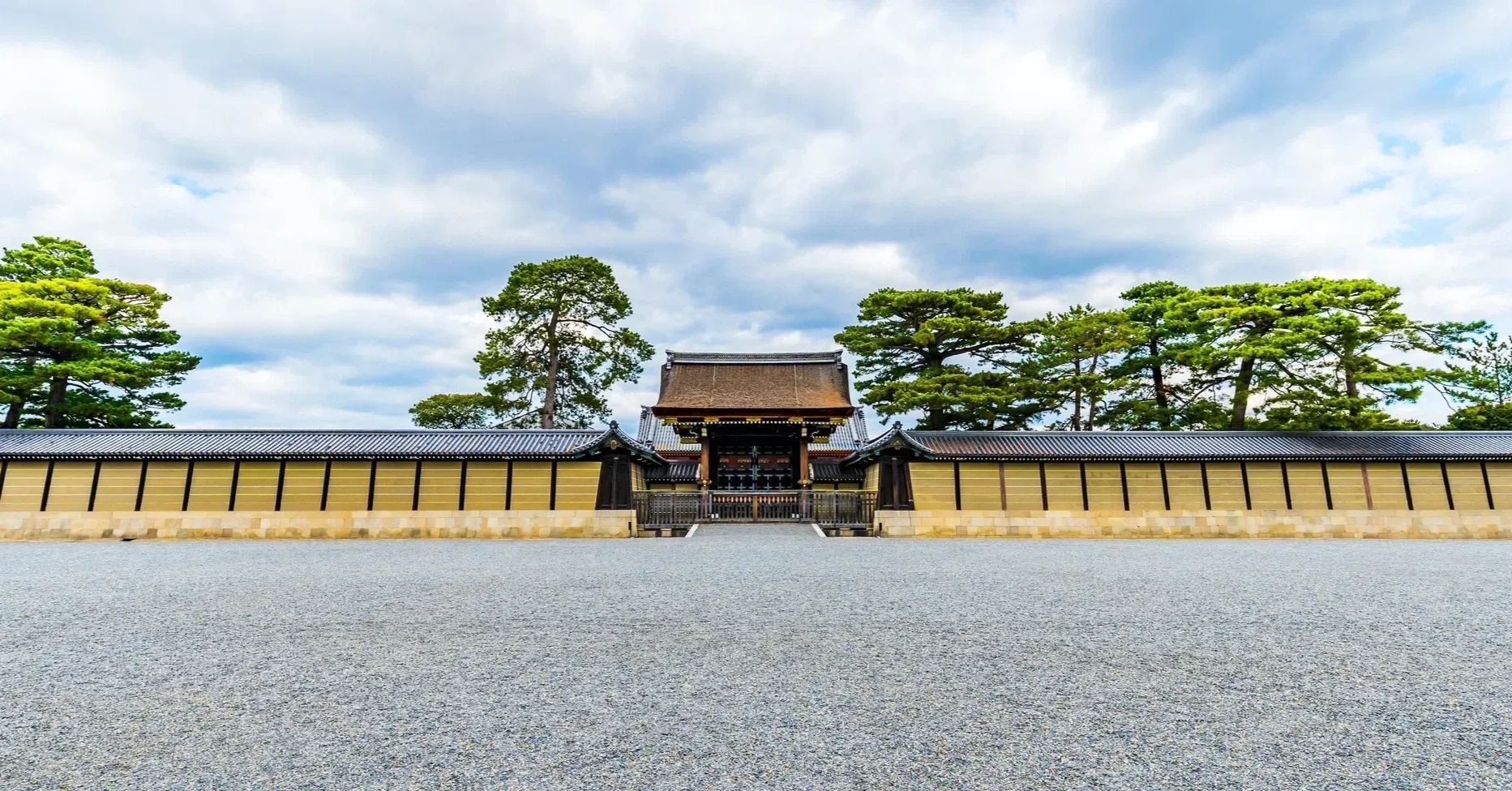
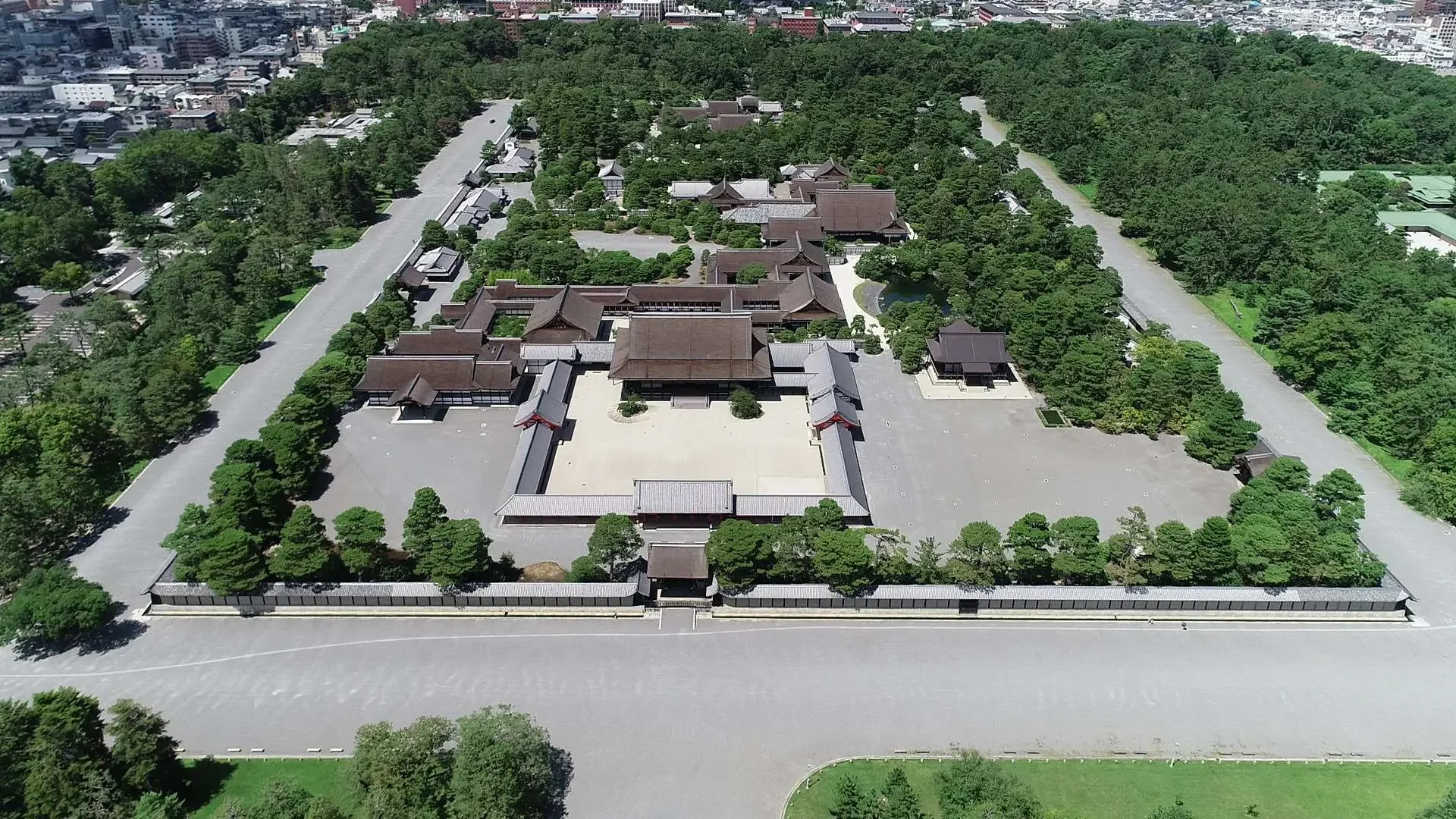
At the Gosho in Kyoto — the old Imperial Palace — visitors also encounter silence. But it is a fundamentally different kind. Not closed off. Simply there. The Gosho is surrounded by tsuiji-bei — walls of packed earth and tile, with no pretense of military defense. Not stone ramparts, not iron gates, not watchtowers. These walls have burned and crumbled through centuries of war and fire, and been rebuilt each time. When visitors learn that this was the "fortification" that protected the site for more than a thousand years, many pause and look again.
Two silences. Two different things being said.
When I started working as a guide, moving back and forth between Tokyo and Kyoto became part of the rhythm of my life. Kyoto — a place I'd visited only a handful of times, mostly on school trips — began to open differently. Standing in the same places across different seasons, returning with different questions, I started to see things that had been invisible before.
I studied architecture in the United States, and traveling through India before returning to Japan, I experienced something that stayed with me: the act of standing somewhere else changes what you see when you come back. The depth of a familiar object suddenly appears — what astronomers call parallax, the way a single point shifts depending on where you're standing when you measure it. Guiding did the same thing to me. Only this time, the distance was inside Japan itself.
At the center of that inquiry was the Tennō — the Emperor.
An institution that had lost political power, lost its economic base, and continued anyway. Its outline came to me not through books but through place.
This article begins with two spaces.
The Imperial Palace in Tokyo — Kōkyo — and the old Imperial Palace in Kyoto — Gosho. In Japanese, these are not the same word, and the difference matters. Kōkyo is closer to "Palace" in the Western sense: an architectural vessel for power and residence. Gosho breaks differently: sho means "place," and go is an honorific prefix. Not the palace of a sovereign — a revered place. The naming alone tells you these two spaces rest on different logic.
Both are "the Emperor's place." But what the architecture says is entirely different. Listening to that difference opens into a question.
Why did this institution survive?
For more than a thousand years, through every transformation of Japan, this presence persisted. Each time political order collapsed, each time a new era began, institutions rose and changed and disappeared. The Emperor alone continued — through the age of warlords, through foreign military occupation.
To begin to answer that question, I want to listen to what the two spaces say.
Chapter One: The Basso Continuo
There is a concept in music called basso continuo — the continuous bass.
What we consciously hear in a piece of music is the melody. The melody moves, modulates, rises and falls. But melody alone has no home. The key, the harmony, the ground that the whole piece rests on — that is the bass line running beneath it, the basso continuo. It does not assert itself. It does not come forward. Sometimes we barely notice it at all. But the moment it stops, the melody floats free of everything.
Japanese history has this structure.

The melody is the political power of each era. The Fujiwara regency, the warrior governments, the chaos of the Warring States period, the Tokugawa shogunate's closed country, the Meiji Restoration, militarism, defeat and occupation — a succession of melodies, each modulating sharply from the last. And through all of it, one bass note ran continuously beneath. The Emperor.
Why did it never stop? That is the question running through this article.
To ears arriving from outside, this bass line sounds like something else entirely. That is the problem this article will keep returning to.
When we picture "the Emperor," almost everything we imagine is the Tokyo Emperor — an image formed in barely 150 years, since 1869. And that image is itself a layering of contradictions.
The most recent layer: the postwar symbol emperor. Stripped of all political authority by the 1947 constitution, repositioned as "the symbol of the state and of the unity of the people." Many people still remember the image of Emperor Akihito sitting quietly before a television camera after the 2011 earthquake, speaking directly to the nation.
Beneath that, another layer: the wartime arahitogami — the living god. The Emperor's portrait in military uniform was distributed to every school in the country and enshrined in special cases. Most citizens never came close to the man himself. The Emperor they knew was the figure in that photograph: Supreme Commander of the Imperial Army, apex of State Shinto.
Both the Meiji Emperor (r. 1867–1912) and the Shōwa Emperor (r. 1926–1989) reigned under the Meiji Constitution as constitutional monarchs. The constitution gave the Emperor supreme sovereign authority in formal terms; in practice, decisions were divided among the Cabinet, the Imperial Diet, and the military command, each operating with its own independence. The Emperor received their counsel and ratified their conclusions — particularly in the Shōwa era, when military command exploited the doctrine that its authority derived directly from the Emperor, beyond the reach of elected government.
The Shōwa Emperor was a man who asked, seriously and for his entire life, what it meant to be a good constitutional monarch. In 1921, as Crown Prince, he visited Britain and was received by George V (r. 1910–1936) at Buckingham Palace, where he observed the workings of constitutional kingship directly. In his later years, he reflected: "What I heard from George V about the nature of constitutional government has been the foundation of my thinking ever since."
After the war, in a meeting with Tanaka Kiyoharu — a former communist militant turned conservative businessman — the Emperor was asked directly: "You opposed the war. Why couldn't you stop it?" His answer: "I am a constitutional monarch, not an absolute one. I cannot refuse what my ministers have decided. The constitution does not permit it."
This was not evasion. For the Shōwa Emperor, fidelity to the constitutional framework was the core of what it meant to be Emperor. That the framework had opened the door to war was a paradox he carried for the rest of his life.
Between the living god image imposed from outside and the self-understanding of a man trying to live faithfully inside the constraints of a constitutional system — in that gap lies the complexity of the wartime imperial institution.
The Shōwa Emperor lived between two roles. But the roots of that contradiction reach further back. The Meiji Emperor's era was also a time when two images of the Emperor crossed: on one side, the Emperor who had spent the long Edo period quietly present in the Kyoto Gosho, removed from political power; on the other, the new figure of sovereign that a Japan determined to enter the modern world needed to project. The Meiji Emperor lived between those two as well.
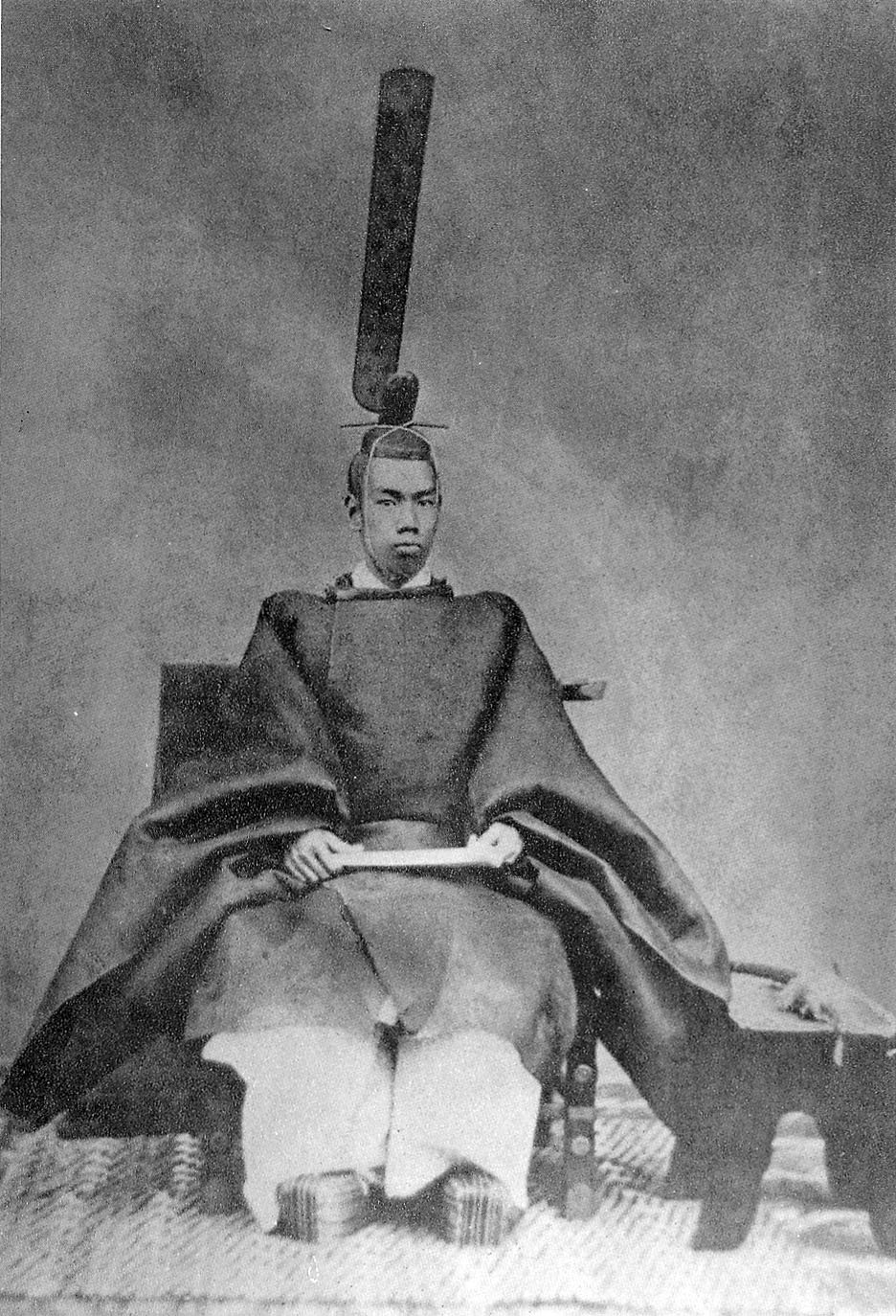
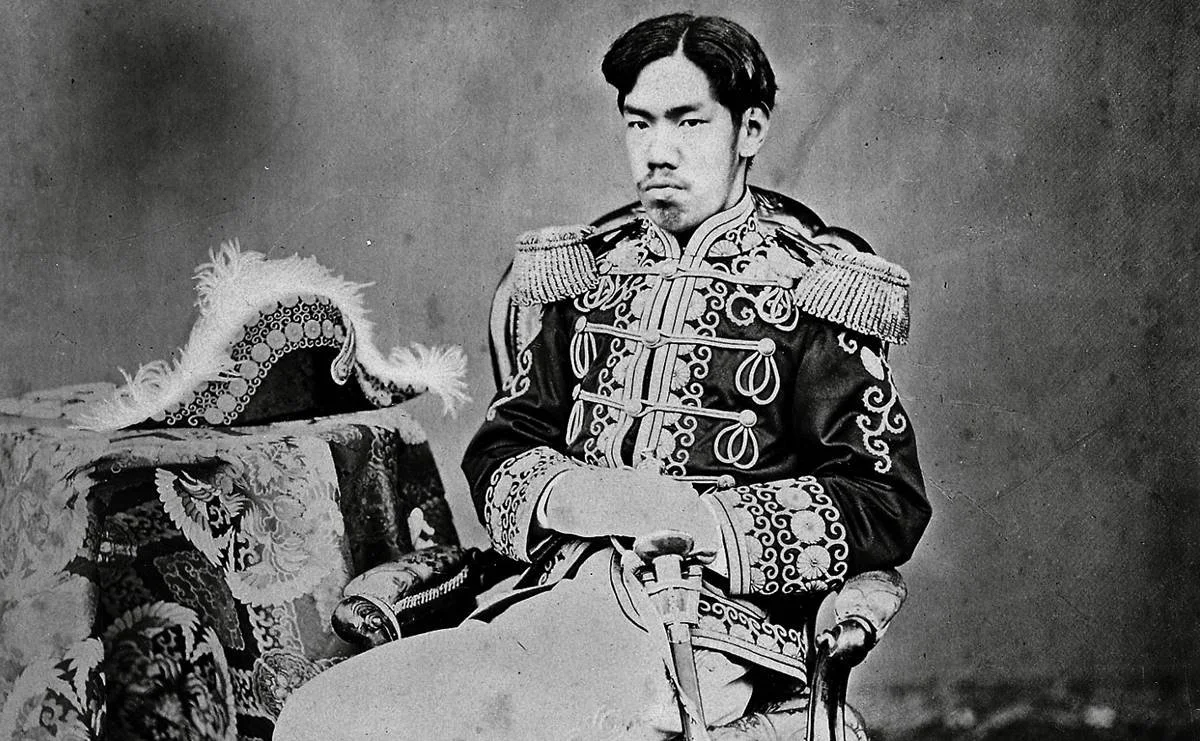
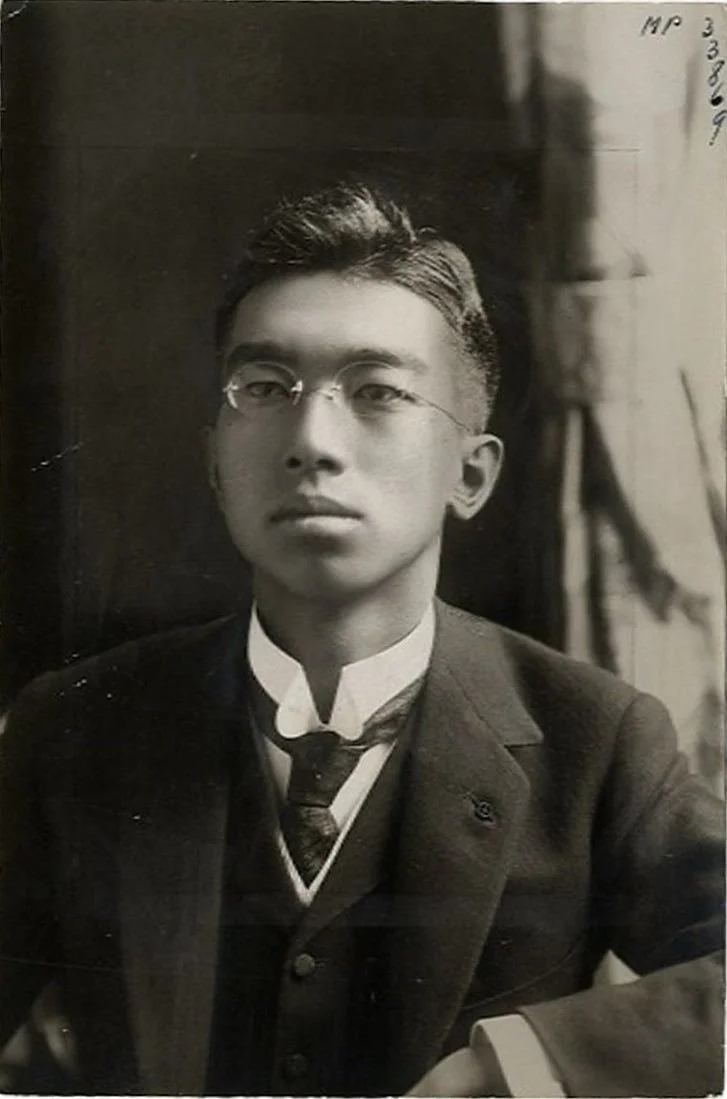
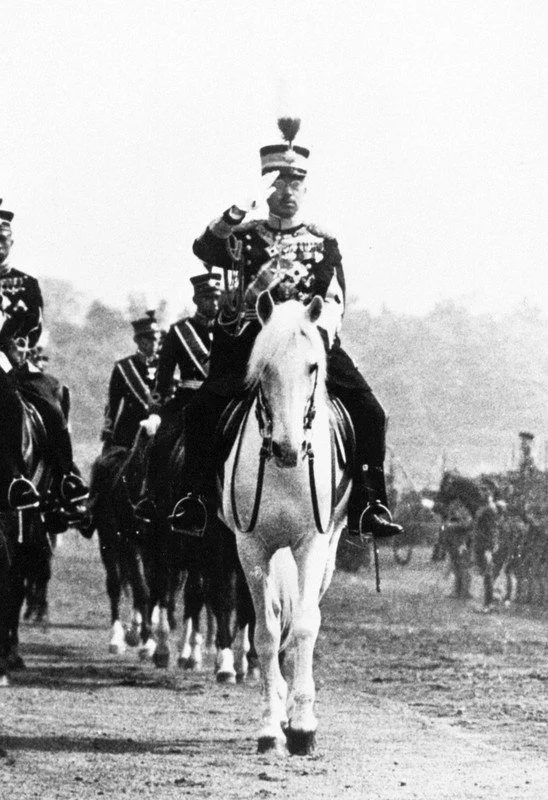
Even just the "Tokyo Emperor" is already a layering of images that seem to contradict each other. And all of them are products of the last 150 years.
In Kyoto, people sometimes call the Emperor Tennō-san — with the familiar honorific -san that you'd use for a neighbor or a shopkeeper. It would be unthinkable in Tokyo. The easy intimacy in that suffix tells you that the relationship between this city and the Emperor is, at its root, something different from Tokyo's. For people living inside a thousand years of capital history, the Emperor's 150-year stay in Tokyo is a parenthesis. In Kyoto, it's said, half-jokingly but not entirely as a joke: “Tennō-san is just visiting Tokyo. He'll be back.”
This is parallax. Measure the same object from a different position. Suddenly, depth appears that wasn't visible before.
Chapter Two: Stone Walls and Clay Walls
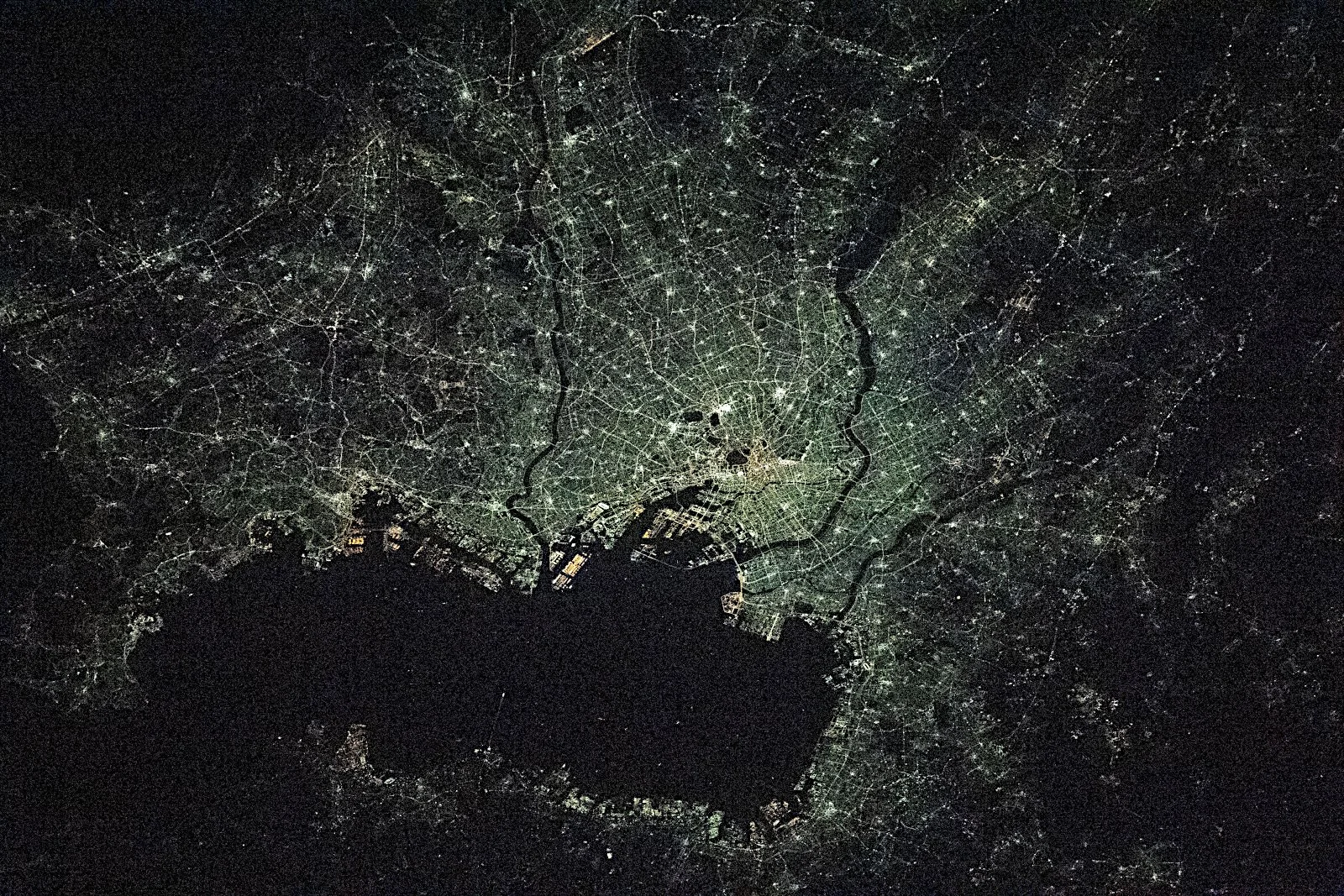
Anyone who has walked the perimeter of Tokyo's Imperial Palace — the Kōkyo — will be struck by the scale. The inner moat road runs roughly five kilometers all the way around. In the middle of one of the world's most densely built cities, this much space.
I once went jogging around the Palace with friends after work — a standard Tokyo evening activity. It was night. On one side, the towers were lit. On the other side, a dark hole had been cut into the city. Running along that edge, I felt something like a gravitational pull toward the darkness.
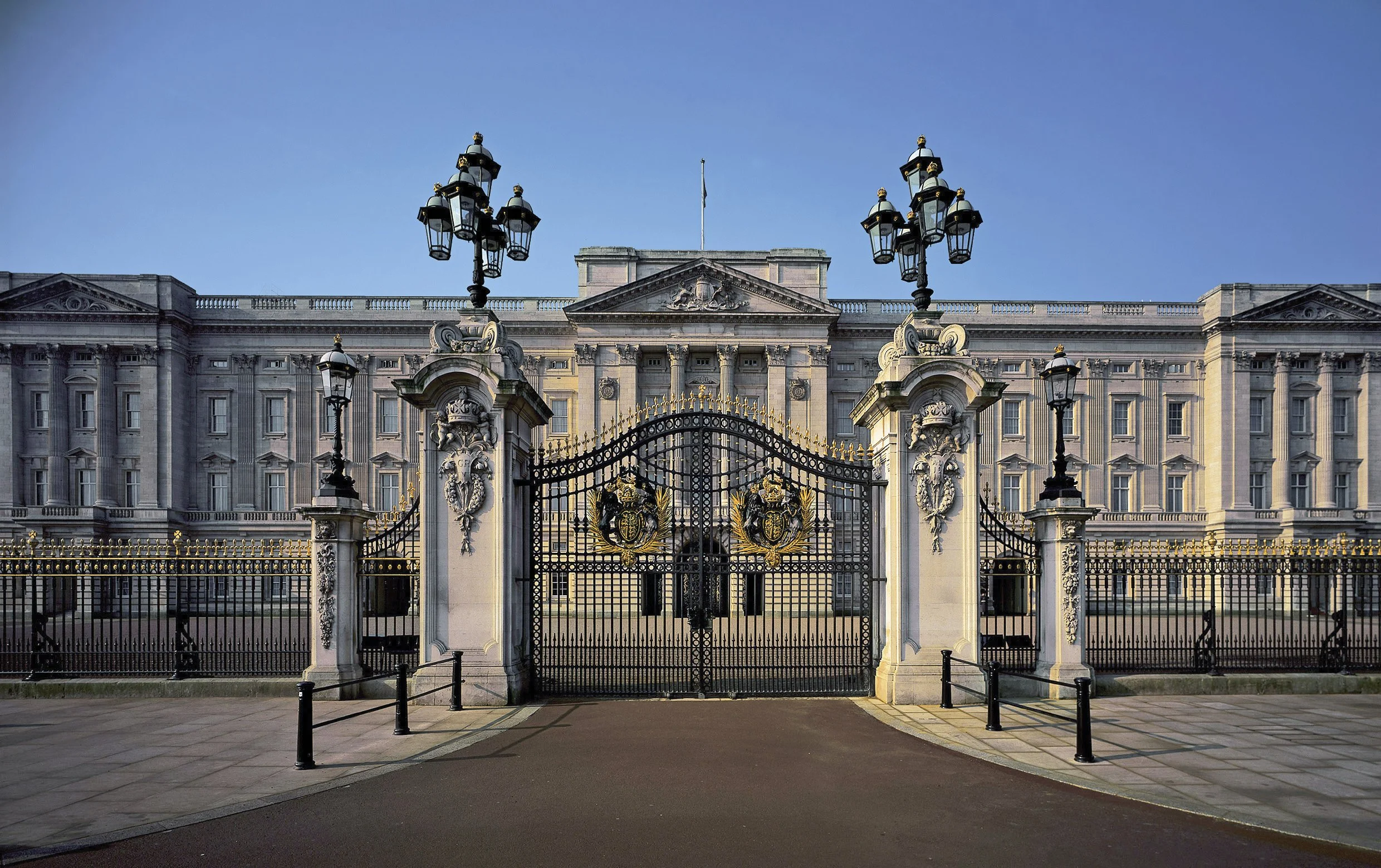
Roland Barthes, the French critic, wrote about the structure of Tokyo in Empire of Signs in 1970. His observation goes like this: in Western cities, "meaning" converges toward a center. God, truth, power. The Champs-Élysées converges on the Arc de Triomphe as its point of meaning. Buckingham Palace makes power visible. But at the center of Tokyo — nothing. You cannot enter. Power does not appear in visible form. No monumental architecture. Only moats, trees, stone walls — and silence. Barthes called this the "empty center": at the heart of a city saturated with signs, a void that radiates no meaning.
What I felt that night running alongside the Palace, Barthes had put into words. And the observation is sharp.
But what Barthes was looking at was the Kōkyo — the Tokyo Imperial Palace.
This place was not originally the Emperor's.
The stone walls and moats of the Kōkyo were built by Tokugawa Ieyasu after he established his shogunate in Edo, constructed through the forced labor of lords from across the country. Architecture of a castle — architecture of power, built to protect power.
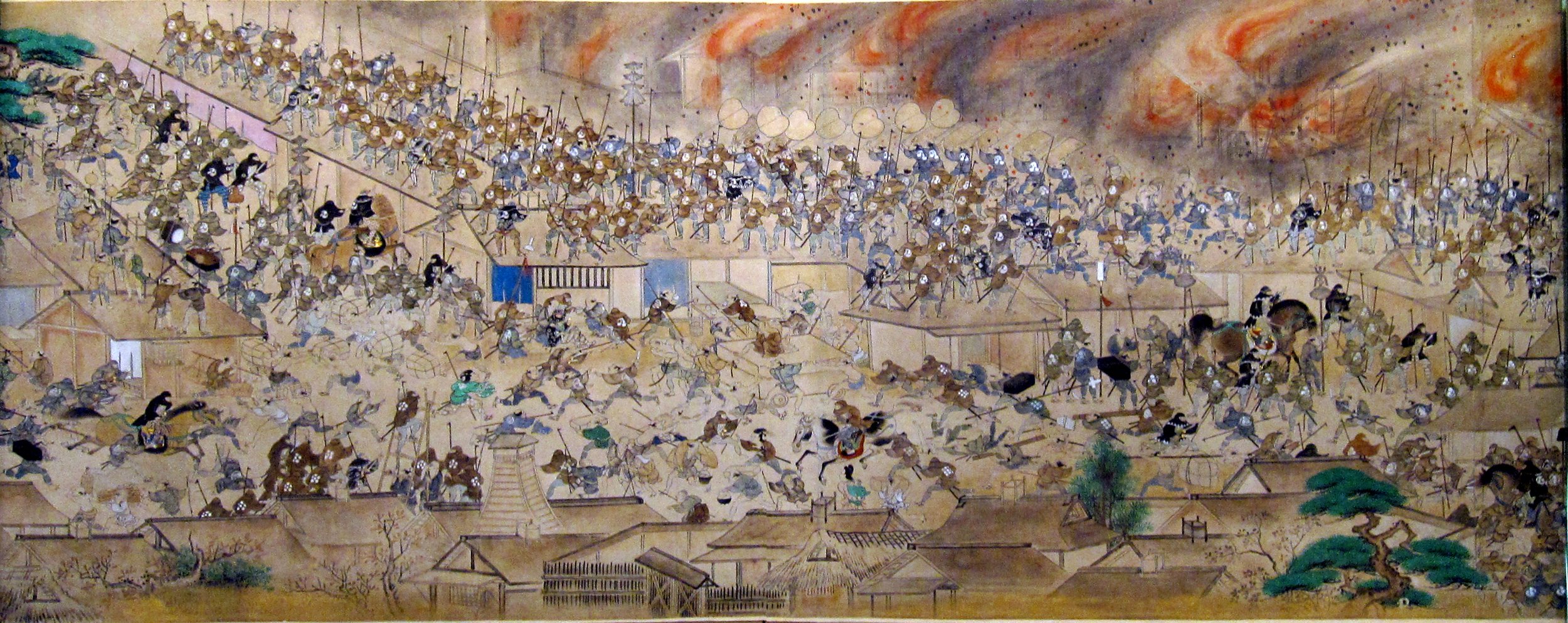
And this castle once had a tenshukaku — a keep. A wooden tower rising more than sixty meters, the largest wooden structure in Japan at the time. It burned in the Great Fire of Meireki in 1657 — a disaster that consumed sixty percent of Edo and took more lives than any accounting could easily capture. The keep fell with everything else.
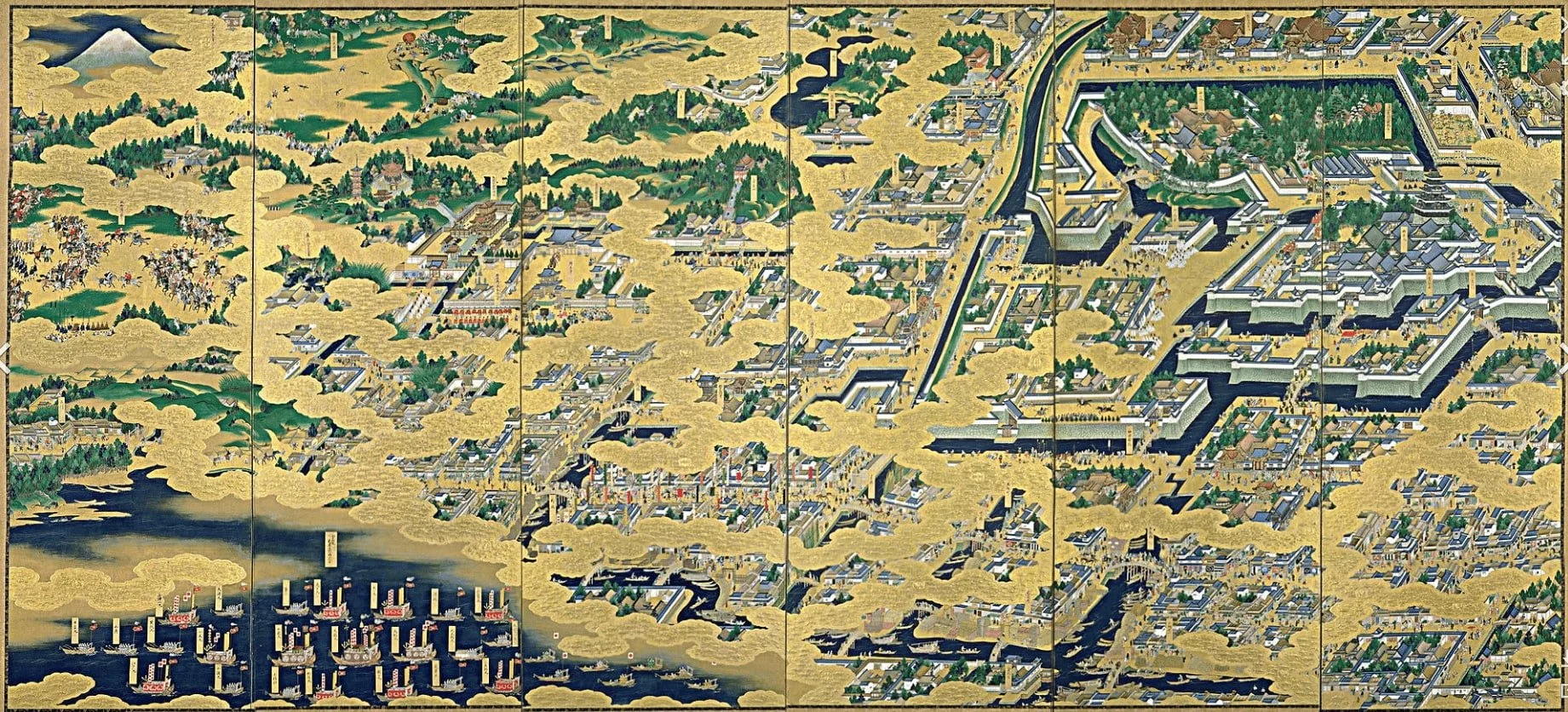
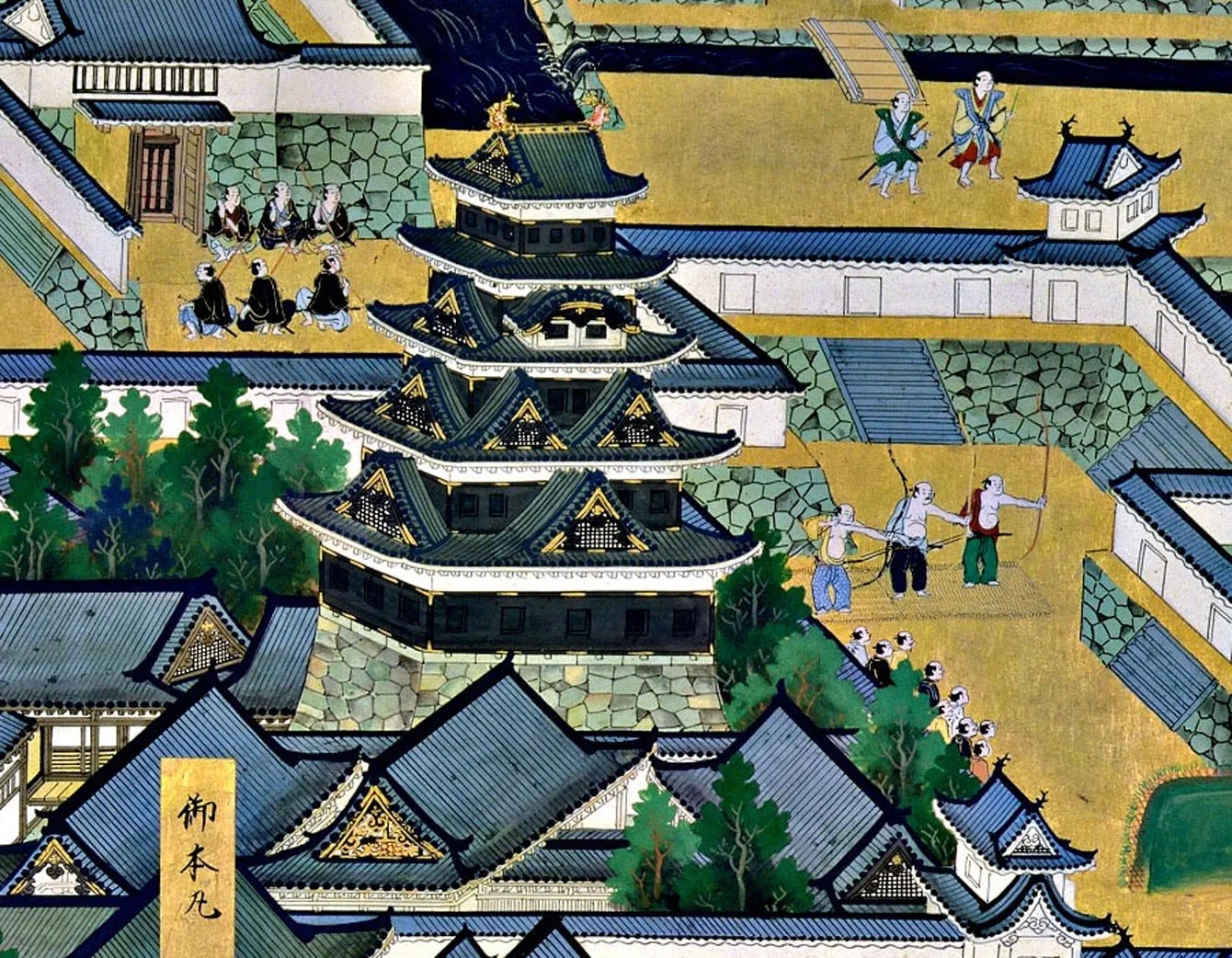
After the fire, there were plans to rebuild. The original stone platform had been badly damaged; the following year, 1658, the Kaga domain lord Maeda Tsunanori constructed an entirely new platform using granite — finely cut, hauled from the Seto Inland Sea, assembled with a precision meant to demonstrate the Maeda family's devotion and capability. That platform still stands today in the East Gardens of the Imperial Palace. But Hoshina Masayuki, one of the shogunate's most powerful figures, called a halt to the reconstruction of the keep itself. "A keep," he said, "is nothing more than a symbol of military power. The funds should go to rebuilding Edo and relieving those who suffered." That judgment held. The keep was never rebuilt.
Edo Castle has stood without a keep for more than 360 years. When Japan rebuilt itself as a modern state during the Meiji era, it might have seemed natural to erect some monumental symbol of power at the center of the new capital. The Eiffel Tower was going up. Berlin was building its monuments. Capital cities around the world were competing to make power visible. But nothing was built at the center of Tokyo. Why? No record explains it. Whether no one seriously proposed it, or whether leaving it empty was simply understood — we don't know.
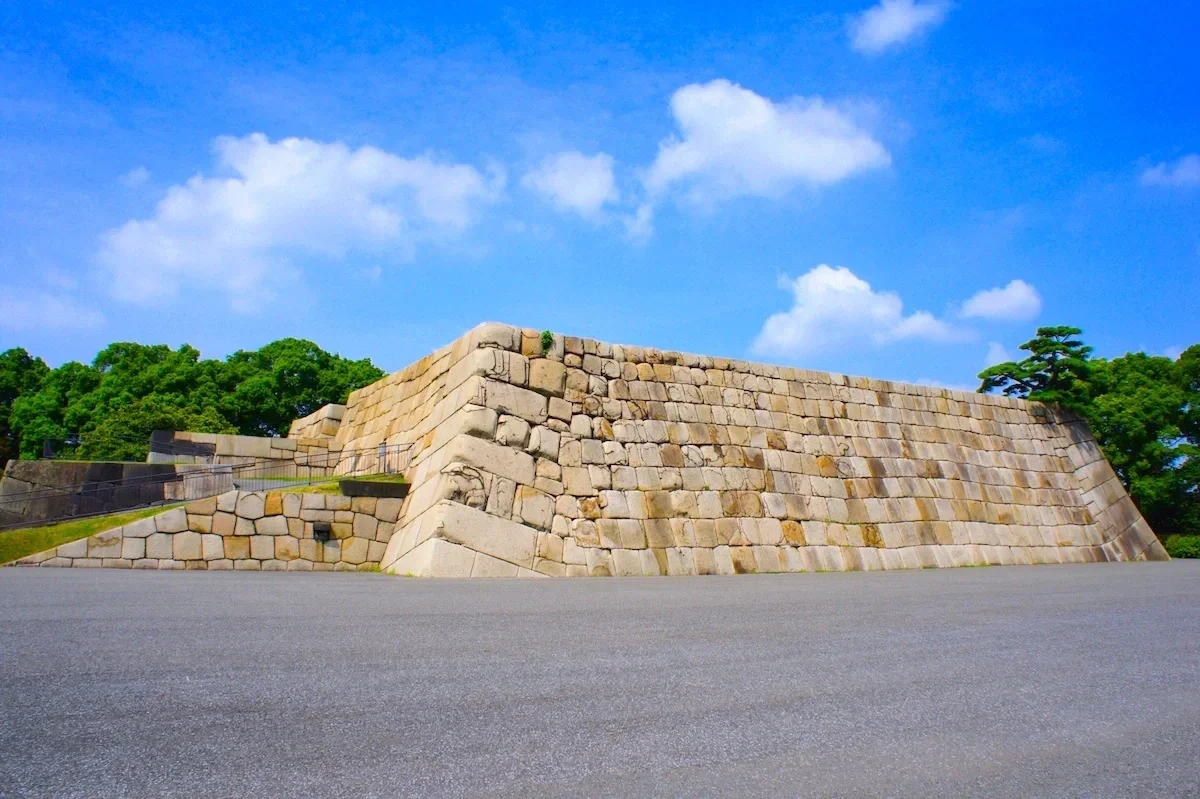
There are now efforts to rebuild the Edo Castle keep as a tourist destination. To me, this looks like filling in a question that the absence itself is asking. When reconstruction becomes the "answer," the question disappears. The more pressing thing to ask is: why is there nothing there? The emptiness Barthes felt matters precisely because it remains an unanswered question.
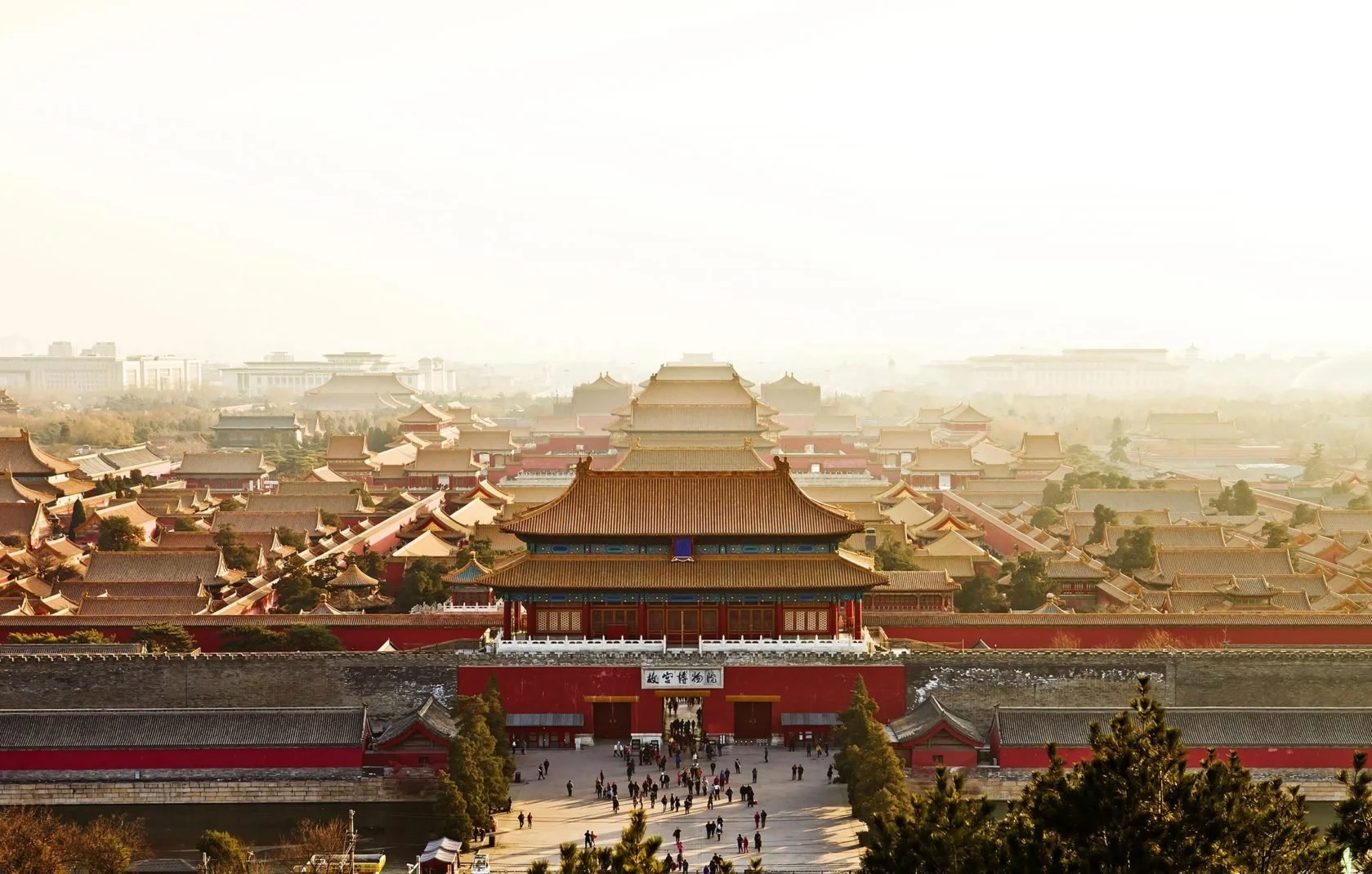
The Meiji government's decision to use the old castle buildings as the Emperor's residence created an unintended irony. Foreign diplomats and visitors arriving at the Emperor's place found a castle defended by stone walls and moats — a castle that had never even had a keep to begin with. Against the grammar of "architecture of power" that they knew — European castles, the Forbidden City in Beijing — this place resisted interpretation. It was a space of rupture: the Emperor had been installed in a vessel built for warrior power, and the "apex" of that architecture had been missing all along.
When Barthes called it an "empty center," he may have been seeing this layered hollowness — each rupture stacked on the one before.
The walls surrounding the Gosho in Kyoto — the old Imperial Palace — are tsuiji-bei: earth and tile, layer by layer. Not designed for military defense.
During the Ōnin War — which began in 1467, turned all of Kyoto into a battlefield for eleven years in a succession dispute that ended Japan's medieval period — the Gosho's walls burned, collapsed, and fell into ruin. When the fighting settled, they were rebuilt. They were not protected by force.
This is not a place of rupture. It is a place where the continuity of ritual has accumulated, layer upon layer.
So what protected it?
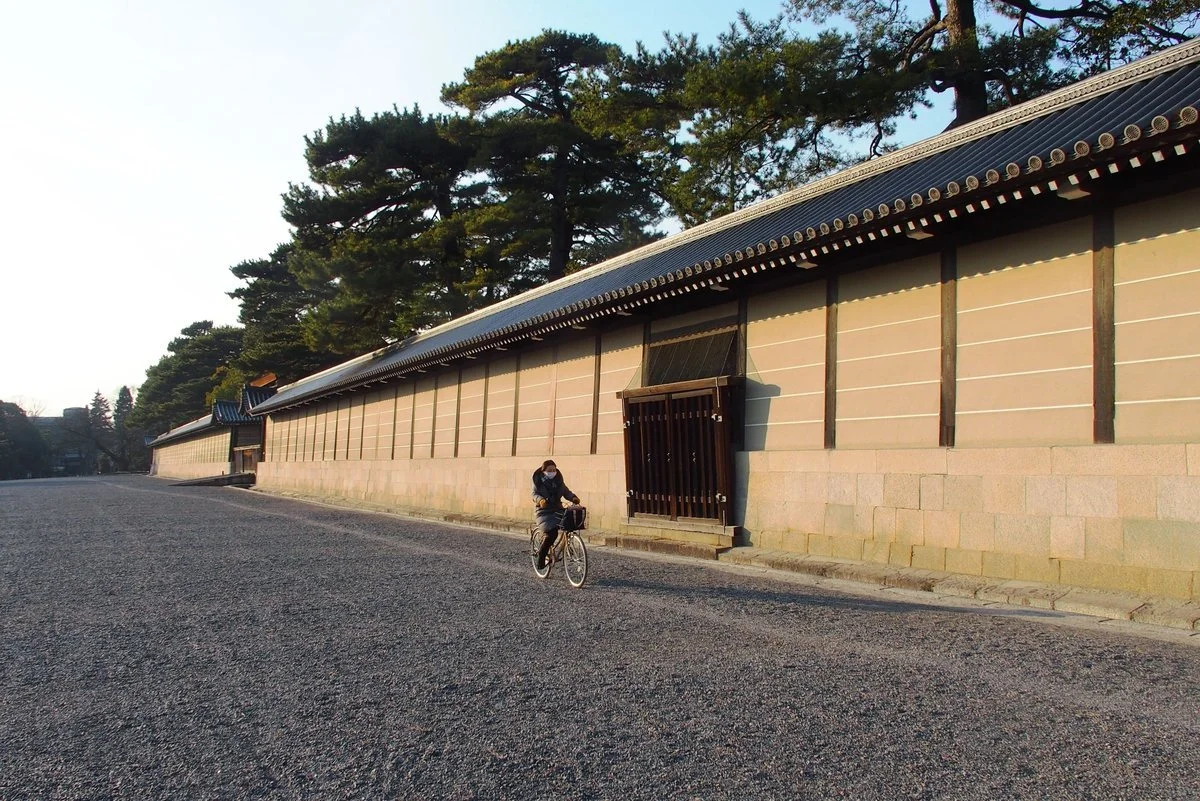
On the western side of the Gosho, there is a small, unassuming gate — roofless, simply made. It is called the Ana-mon — literally the "hole gate," a gap rather than a proper entrance — and also the Dōki-mon: the Gate of Dōki. The name comes from a man called Kawabata Dōki.
In the sixteenth century, after the Ōnin War, the Ashikaga shogunate had collapsed in authority. The imperial court had fallen into severe poverty. There are records indicating that at certain points, the Emperor could not be provided with adequate meals. In those circumstances, a mochi maker from Kyoto — Kawabata Dōki — began delivering a morning offering of rice cakes to the Gosho. (Mochi are a form of Japanese rice cake, made by pounding glutinous rice into a dense, smooth paste — they have been central to Japanese ritual and daily life for over a thousand years.) Kawabata Dōki called his offering o-asa-no-mono: the morning thing. No one had ordered him to. No reward had been promised.
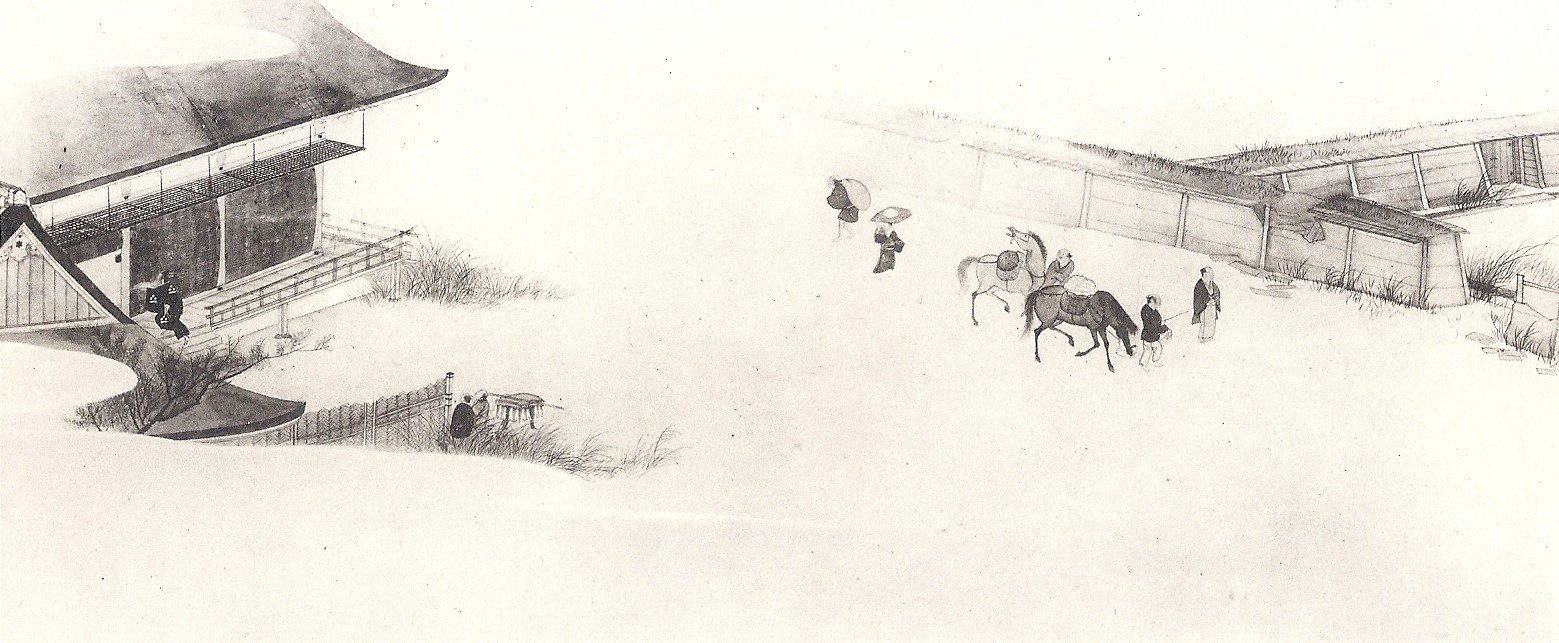
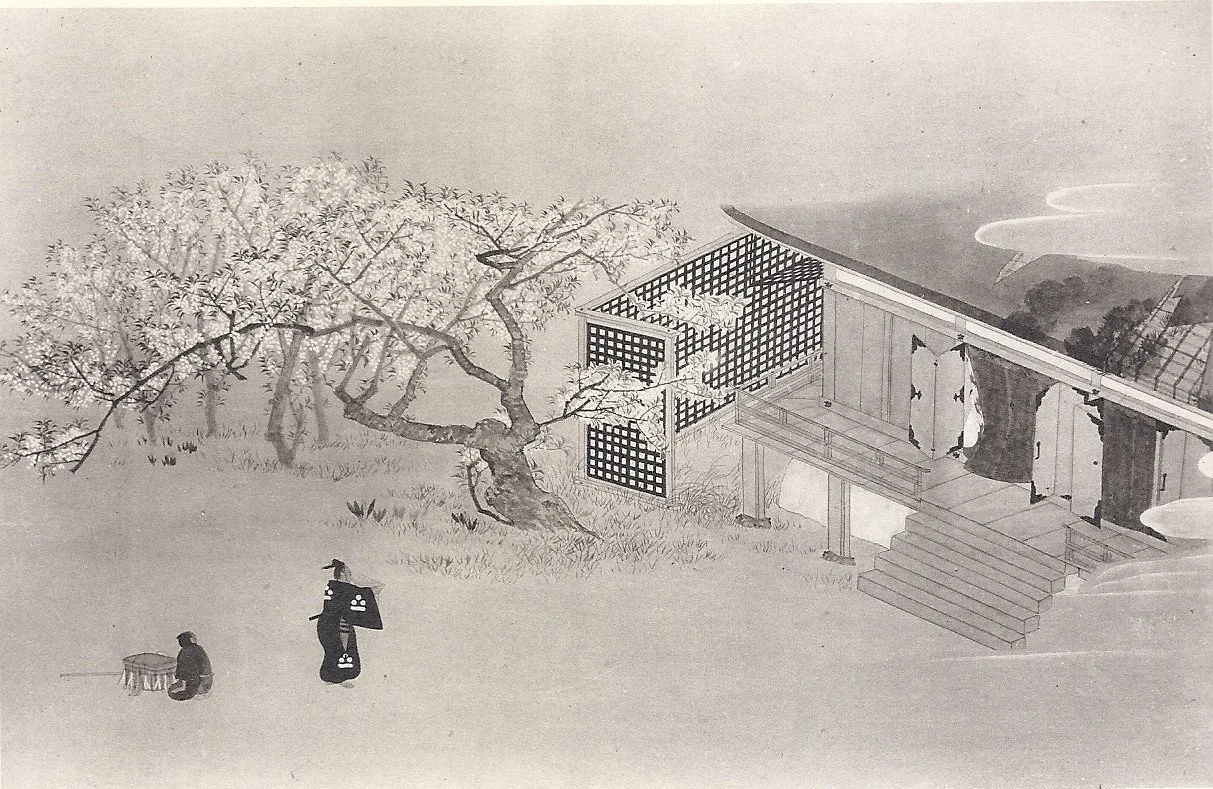
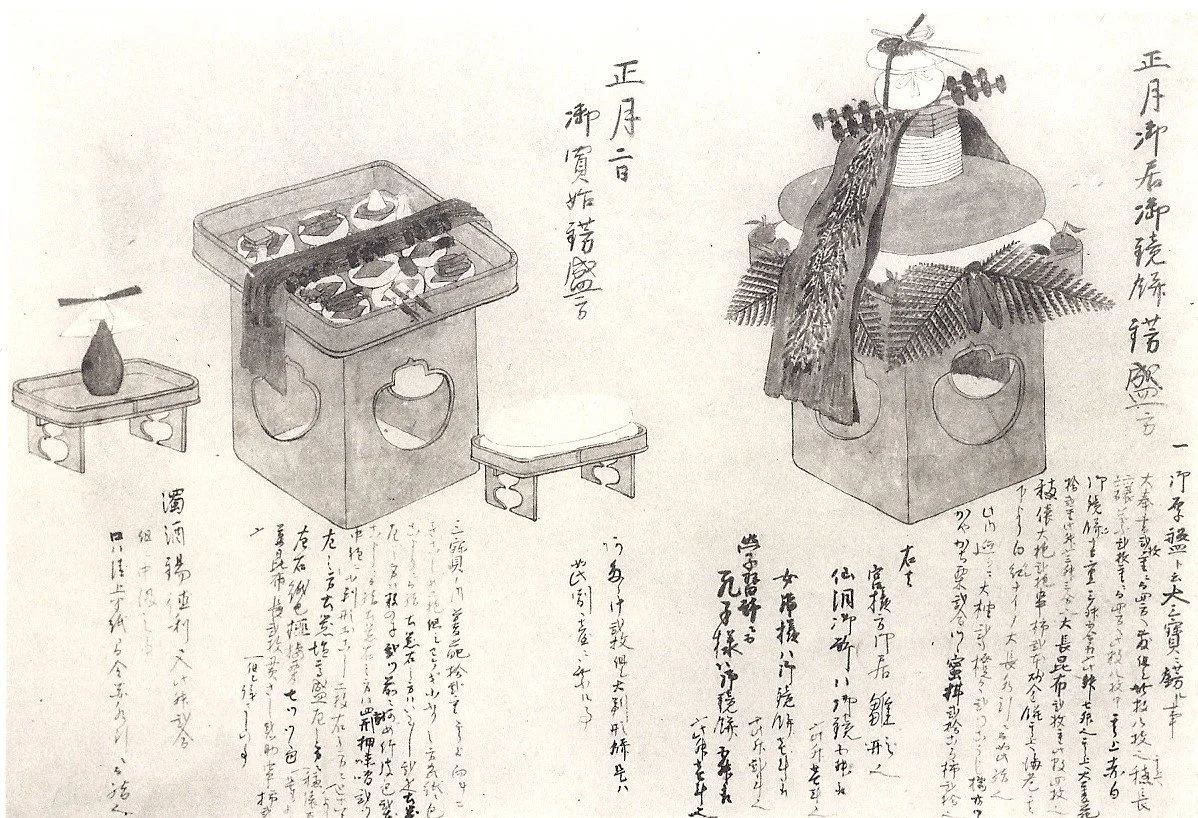
The practice passed to his son, then to his son's son. The Kawabata family, generation after generation, delivered rice cakes to the Gosho every morning. Until April 18, 1869 — the morning the Meiji Emperor left the Kyoto Gosho, never to return. More than 350 years.
The shop still exists. Gochimaki-tsukasa Kawabata Dōki — now in its sixteenth generation — continues to operate in Kyoto, by appointment only, and still receives occasional orders from the imperial household. The ancient documents recording their deliveries to the Gosho across five centuries have been designated a tangible cultural property by the city of Kyoto.
If the Emperor were simply the apex of political power, no one would make that journey for 350 years to an institution that had lost its power, asking nothing in return. What Kawabata Dōki kept delivering was not loyalty to a ruler. What he felt was something else — something like a quiet participation in the continued existence of this place.
The stone walls of the Tokyo Kōkyo say: there is force here that protects what lies within.
The clay walls of the Kyoto Gosho say: there are people who want to protect this place.
The first is protected by power. The second is protected by relationship.
And one more thing. At each imperial enthronement, the ceremony at the Kōkyo borrows something from elsewhere. The Takamikura — the imperial throne used for the accession rites — is normally kept at the Gosho in Kyoto, inside the Shishin-den hall. For the Heisei enthronement, it was flown to Tokyo by Self-Defense Force helicopter. For the Reiwa enthronement, it traveled by truck — eight vehicles — was used, and was returned to Kyoto when the ceremony was done. While the Emperor lives in Tokyo, the throne of accession stays in Kyoto. That fact speaks without words.
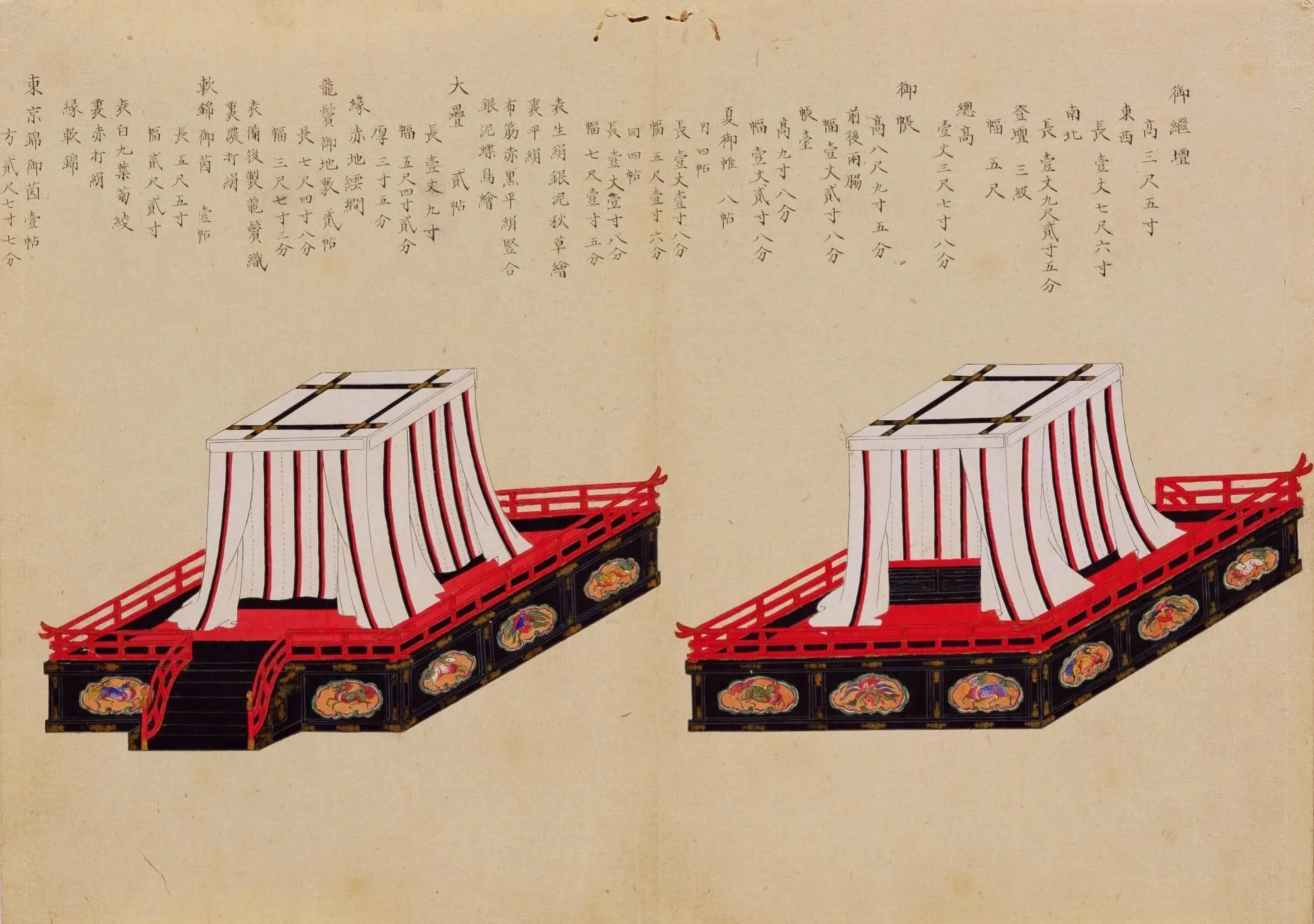
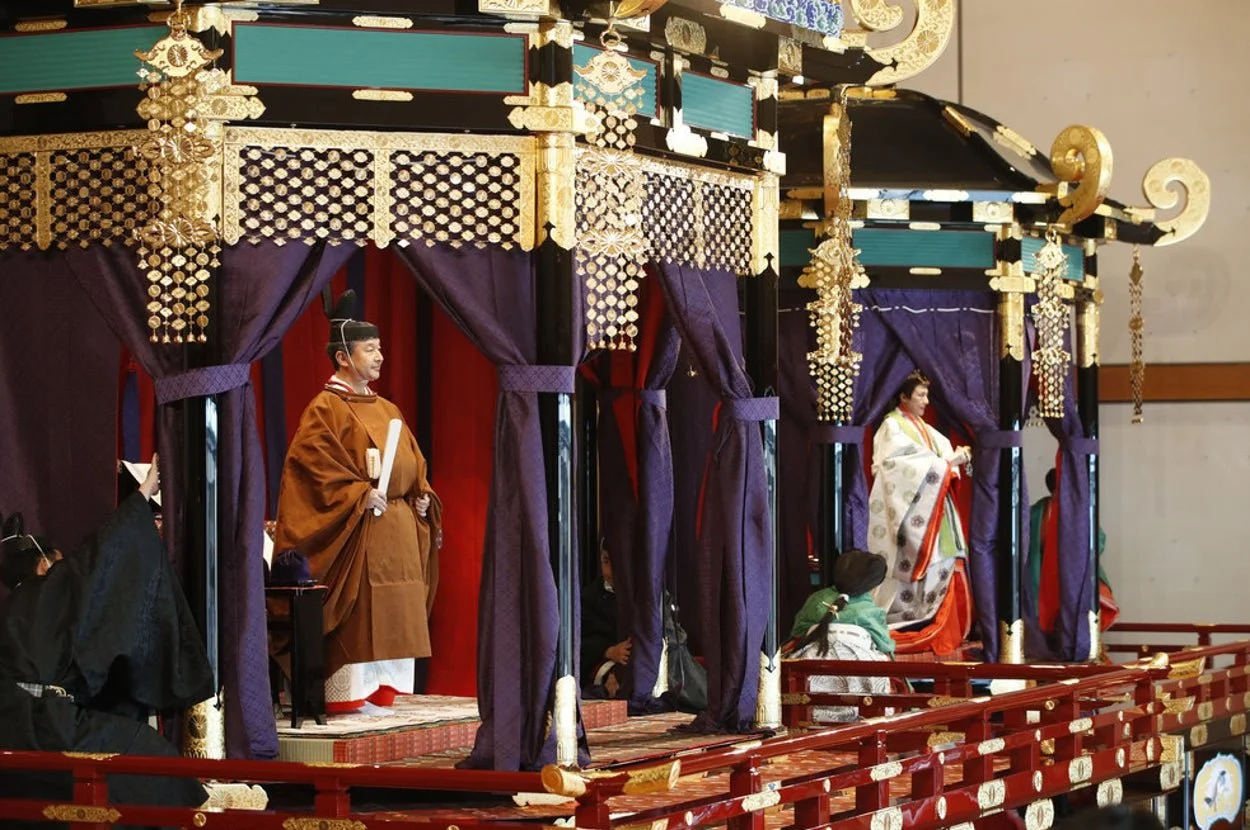
Barthes saw correctly. But what he was looking at was a translated version of the Emperor's place. A precise intelligence arriving from outside, capturing the surface accurately, while reading the deeper logic through the wrong grammar — this pattern of misreading does not belong to Barthes alone.
Chapter Three: MacArthur's Misreading
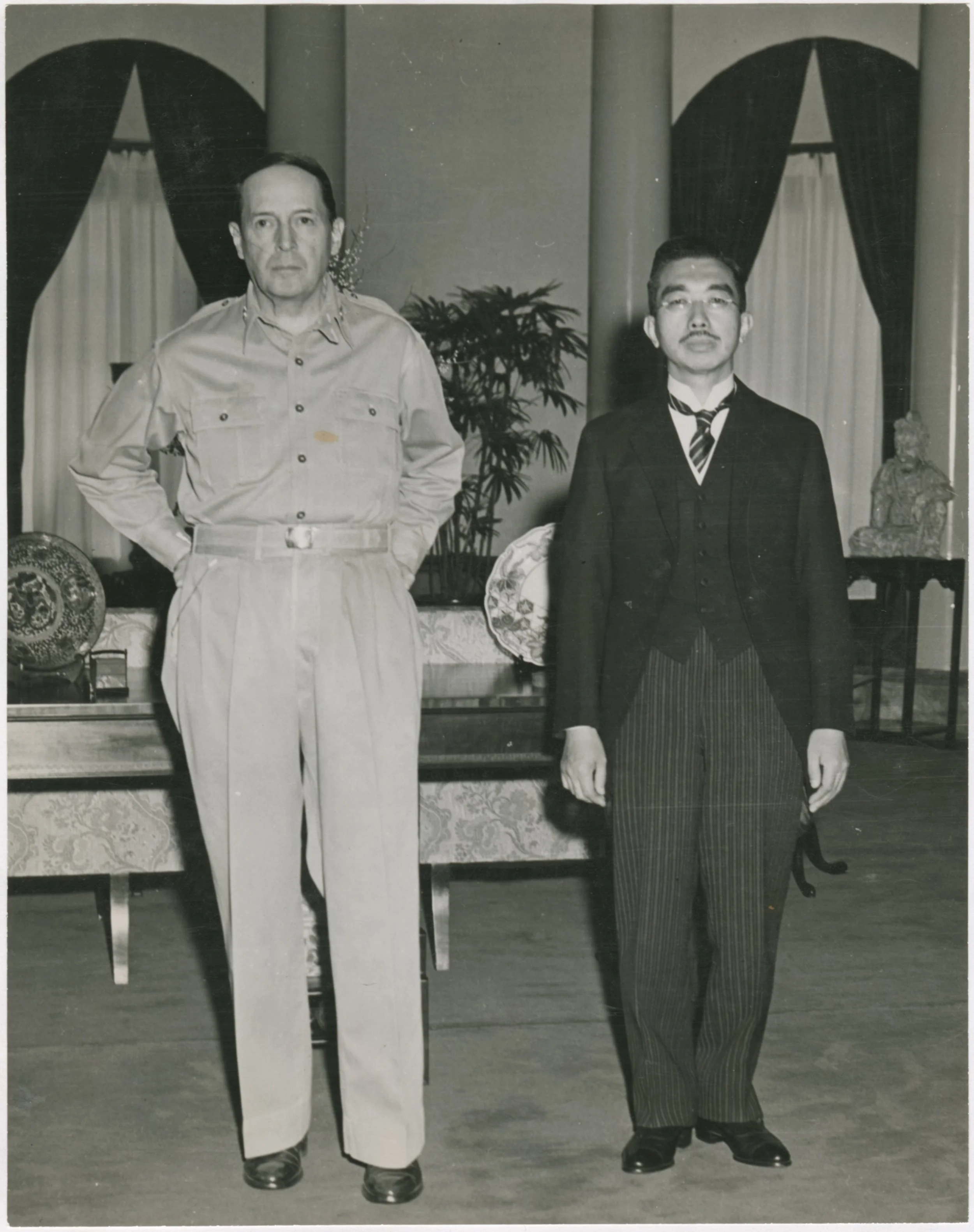
On September 27, 1945, the Shōwa Emperor traveled to GHQ headquarters to meet General Douglas MacArthur.
At the time, many Japanese feared the Emperor would be executed. There were persistent voices within the Allied nations calling for him to be tried as the ultimate responsible party for the war. The Emperor knew this. What MacArthur was probably expecting was an offer of some kind — or a defense. Instead the Emperor said something different.
"I come before you, General MacArthur, to offer myself to the judgment of the powers you represent as the one who bears sole responsibility for every political and military decision made and action taken by my people in the conduct of the war."
In his memoirs, published in 1964, MacArthur wrote: "I was moved to the very marrow of my bones. He was courageous in assuming a responsibility clearly beyond his own." It should be noted, however, that MacArthur's account differs significantly from the official record held in Japan's diplomatic archives. The Shōwa Emperor himself, having made what he considered a gentleman's agreement to keep the conversation private, said nothing about the meeting for the rest of his life. MacArthur's narrative of being moved may itself be a retelling — and that fact gets ahead of this chapter's theme.
There is another layer to this meeting. By the time the Emperor spoke those words, GHQ had already decided to remove him from the list of war crimes suspects. The Emperor did not know this. He came without knowing he had already been, in some sense, pardoned — coming only to accept responsibility. That changes the meaning of MacArthur's "being moved." What MacArthur witnessed was drama. The Emperor's reason for coming was not drama.
What MacArthur saw was, presumably, the supreme ruler of an empire acknowledging defeat. But what was actually happening was something different — a moment in the long history of an institution that had lived precisely by not holding power.
The question of Shōwa Emperor's war responsibility remains genuinely difficult. Causal responsibility — the idea that his decisions caused the war — is historically thin. As a constitutional monarch, he ratified the decisions that the Cabinet, the Diet, and military command each made independently. But that does not mean he bore no responsibility. The Shōwa Emperor himself carried that question for the rest of his life.
In the postwar national tours — visits to all 47 prefectures between 1946 and 1954 — the Emperor went among the people with minimal security. He stood before people who had lost families to the war and encouraged those rebuilding their lives. In a way, this was the same logic as the clay walls of the Kyoto Gosho: not through force, but through relationship, he tried to be present among people.
MacArthur and the Western observers who surrounded him tried to understand the Emperor through the framework of the European absolute monarch: subject = Emperor, verb = rules. A figure at the apex of power who, through defeat, loses power. That story. But the historical reality of Japan rested on an entirely different structure — the separation of power and authority.
Just as Barthes saw the empty center correctly but misread the reason for it, MacArthur was genuinely moved by the Emperor's words but misread what his own being-moved meant. The view from outside can touch the surface; it cannot reach the basso continuo running beneath.
The Emperor's essence was not holding power — it was the embodiment of something else.
Chapter Four: Between Power and Authority
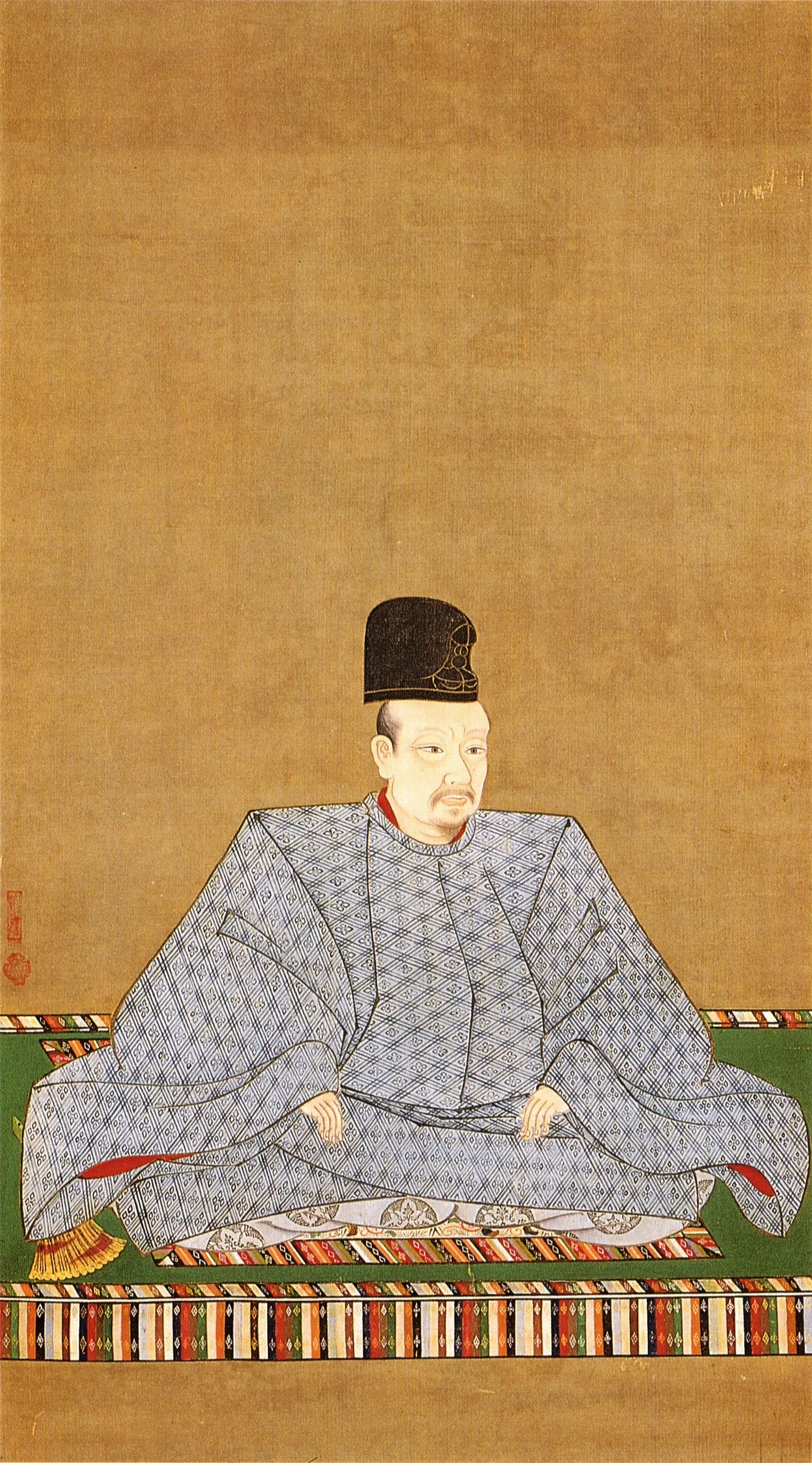
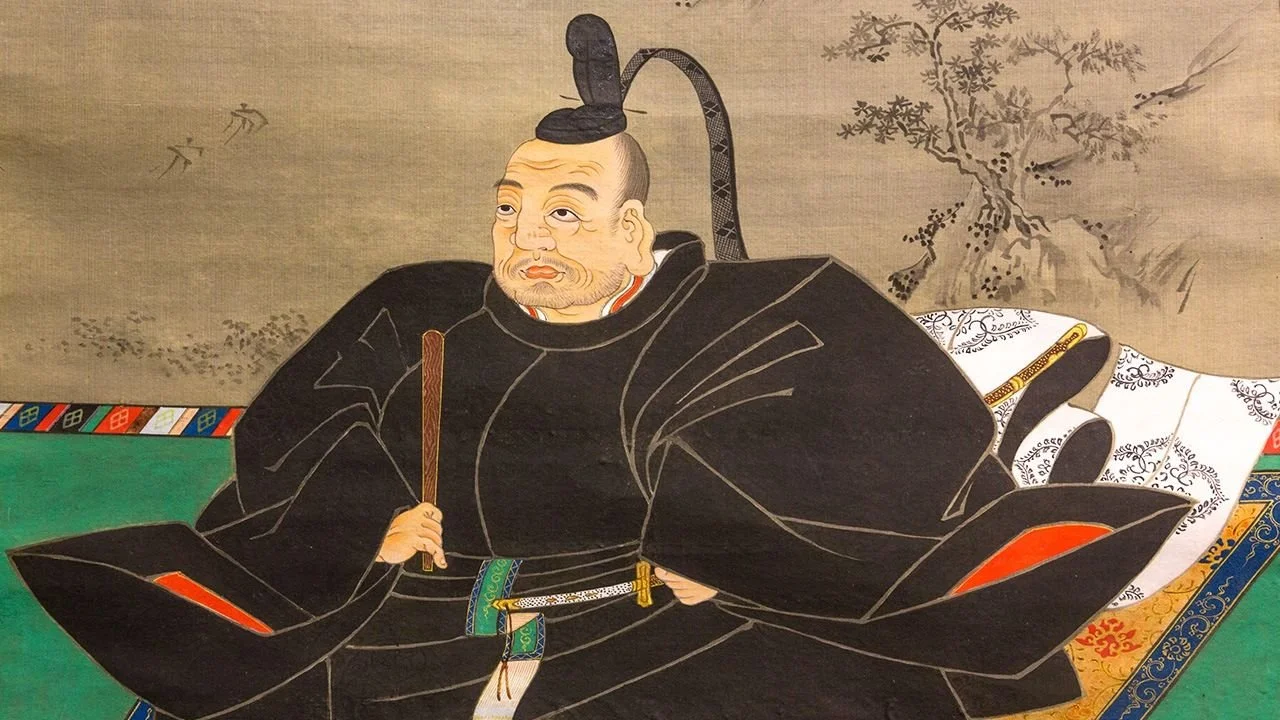
Something has happened repeatedly across Japanese history. Each time political and military power changed hands, the new holder sought legitimacy from the Emperor. The title of Seii Taishōgun — Great Barbarian-Subduing General, the supreme military commander — was conferred by the Emperor. The imperial era name was set by the Emperor. No matter how completely a man had seized power by force, he could not become a "legitimate" ruler without imperial recognition.
The powerless granting legitimacy to the powerful. Why?
Power always carries a legitimacy problem. If the answer to "why do you rule?" is only "because I'm stronger," then the moment someone stronger appears, legitimacy vanishes. So power needs a source of legitimacy that exists in a different dimension from force itself. The Emperor was that source.
And paradoxically, the Emperor could remain a source of legitimacy precisely because he held no power. Those who hold power can be held responsible for failure, and replaced by a stronger rival. Those who hold no power cannot be held responsible for failure. Governments fell; the Emperor did not fall. Whether or not this was ever consciously understood as strategy, it was the form that kept surviving — again and again, across the centuries.
A few moments to make this visible.
During the era when the Fujiwara clan held power as regent and chancellor, the authority to perform imperial succession rites remained with the Emperor. When Fujiwara power eventually collapsed, the Emperor continued.
When the Kamakura shogunate established warrior rule, the Emperor retained the authority to appoint the shogun. The shogunate controlled Japan by force while continuing to need the Emperor for legitimacy.
During the Edo period, the Tokugawa shogunate issued the Kinchū Narabini Kuge Shohatto — regulations that severely restricted the Emperor and the court. The Emperor was barred from political involvement, confined to scholarship, culture, and ritual. But even that shogunate continued to seek imperial recognition to legitimize each shogun's appointment.
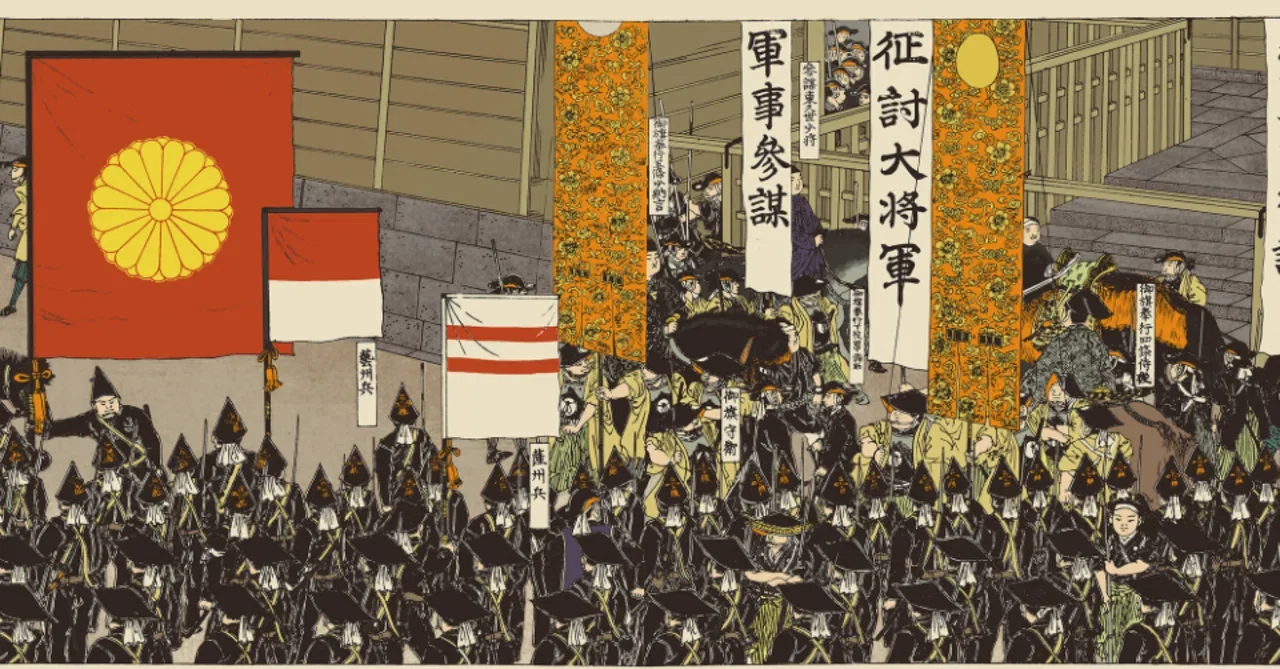
And at the end of the Edo period, this structure was turned dramatically against itself. In the Boshin War of 1868, the forces moving to overthrow the shogunate marched under the nishiki no mihata — the imperial brocade banner, identifying their army as the Emperor's. When Tokugawa Yoshinobu — the fifteenth and final Tokugawa shogun — saw it, he did not retreat because he was militarily outmatched. He fled without fighting because of what it would mean to be declared an enemy of the Emperor. The bloodless surrender of Edo Castle was, at its core, the moment when imperial authority moved the most powerful military force in the country. The existence of the powerless determined the action of the powerful.
But "holding no power" alone cannot explain 350 years of Kawabata Dōki. No one makes that journey every morning for 350 years simply because someone is a source of legitimacy. What was it that the Emperor actually embodied? The next chapter approaches from a different angle.
Chapter Five: The Praying King
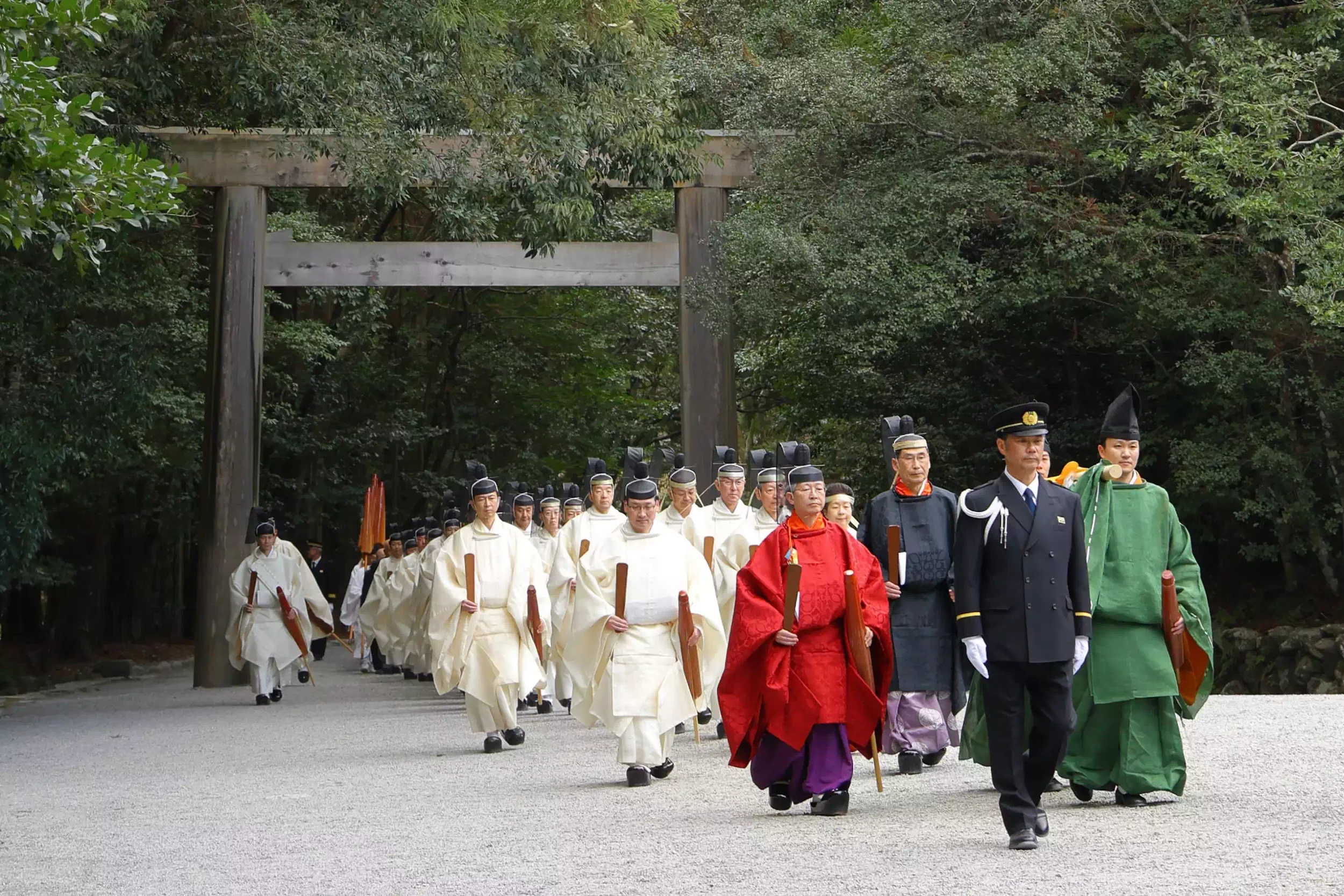
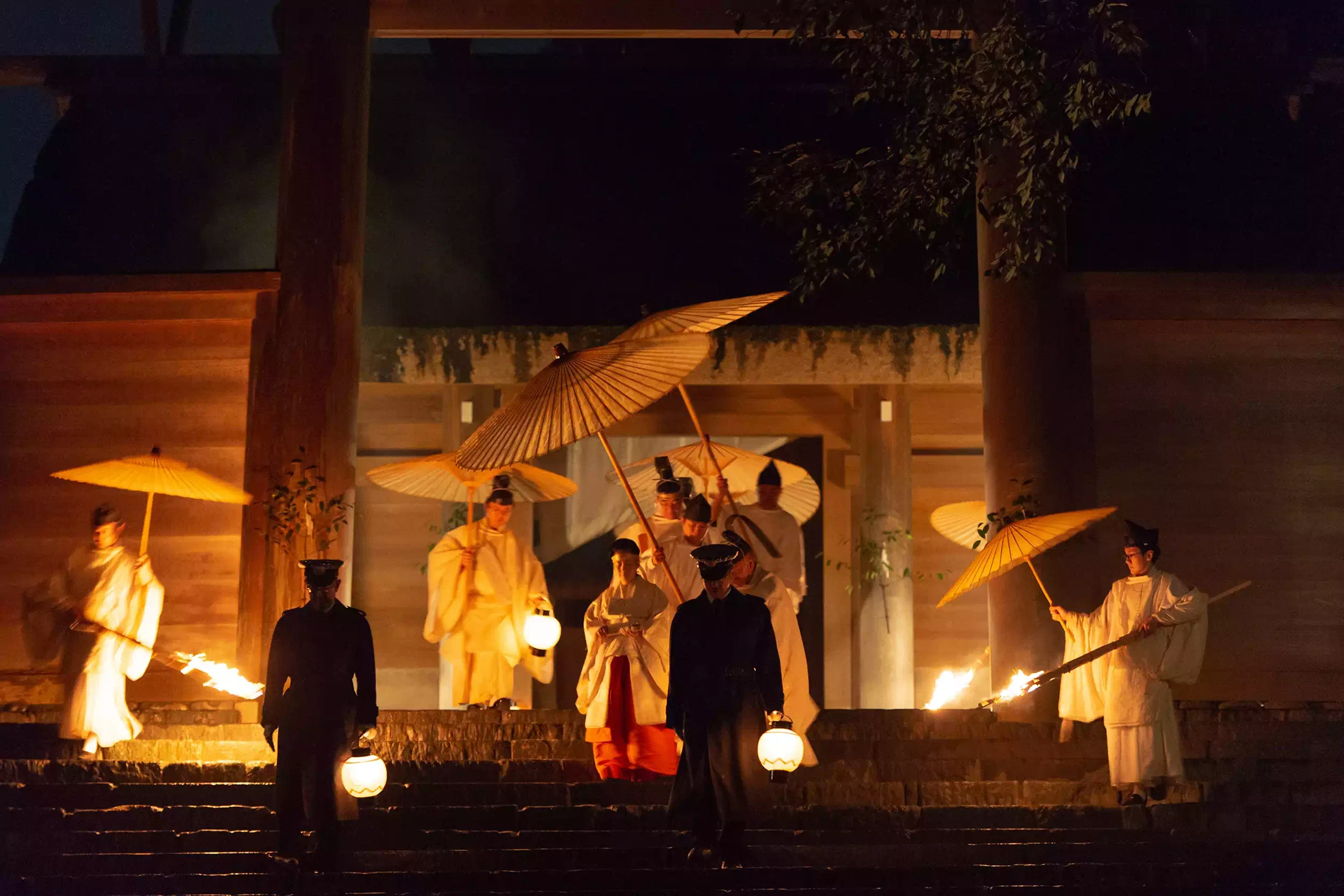
Every November, a ritual called Niiname-sai takes place within the imperial palace precincts.
The Emperor offers the new rice of the year to the gods, then eats it himself. Thanks for the harvest; prayer for the harvest to come. The earliest records of this ritual trace it to the seventh century; in practice, it is thought to reach further back, to the beginnings of agricultural culture in Japan.
What is striking is that this ritual has continued in complete independence from the rise and fall of political power. Through the era of Fujiwara regency. Through the centuries of warrior government. Through the Warring States period, when the court had almost no money. Through the postwar occupation, when foreign troops were on Japanese soil. The scale of the ritual changed. The practice never stopped.
Political power is decided by human beings, and can be taken by human beings. "Who prays for the people" exists in a different dimension.
Here I want to pause.
The history of Japan's imperial house begins in the age of myth. The Kojiki and the Nihon Shoki — Japan's earliest chronicles — open with the age of the gods, the creation of heaven and earth. At the end of the divine genealogy stands a figure: Emperor Jimmu, the first Emperor in the human world. Before him, gods. From him, a human lineage of Emperors begins.
In Emperor Jimmu's founding proclamation, these words appear: "Let us cover the people in all directions under one roof, as a family under the sky." The heart of this declaration is that the Emperor sees the people not as subjects to be governed, but as family to be with. For the Emperor, "the realm" and "the people" were the same thing. To pray for the people was to pray for one's own family.
Japan's Emperor was, before being a ruler, a matsuri-goto-sha — a performer of sacred rites. Not to dominate, but to pray. To pray that the people might live in peace. That role could exist independently of where political power resided.
Alongside prayer, there was a second pillar: the transmission of culture and knowledge.
In the most turbulent years of the Warring States period, Emperor Go-Nara (r. 1526–1557) sold his calligraphy and poetry to make ends meet. The reason for such destitution: the collapse of the shōen estate system in the wake of the Ōnin War. As regional warlords consolidated control over land, the tax revenues that had supported the court disappeared. This kind of poverty was not exceptional — through much of Japanese history, the Emperor was the most authoritative presence in Japan and not its wealthiest. What the Emperor embodied was not wealth or military strength. The poverty makes this paradoxically clear.
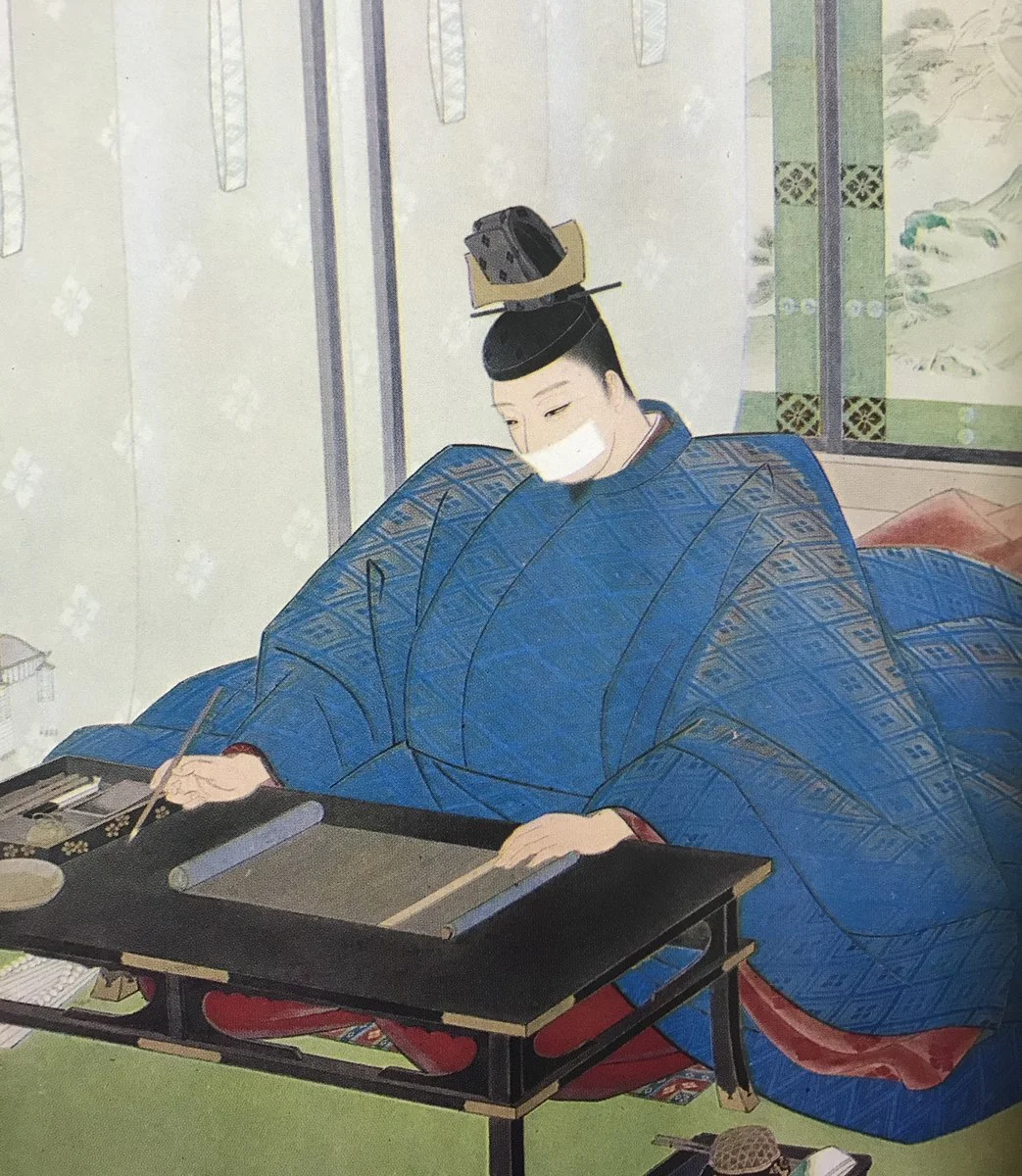
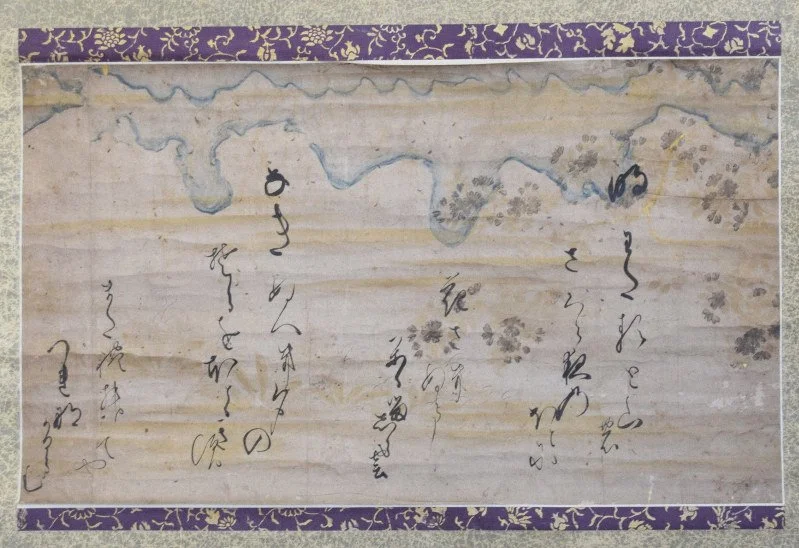
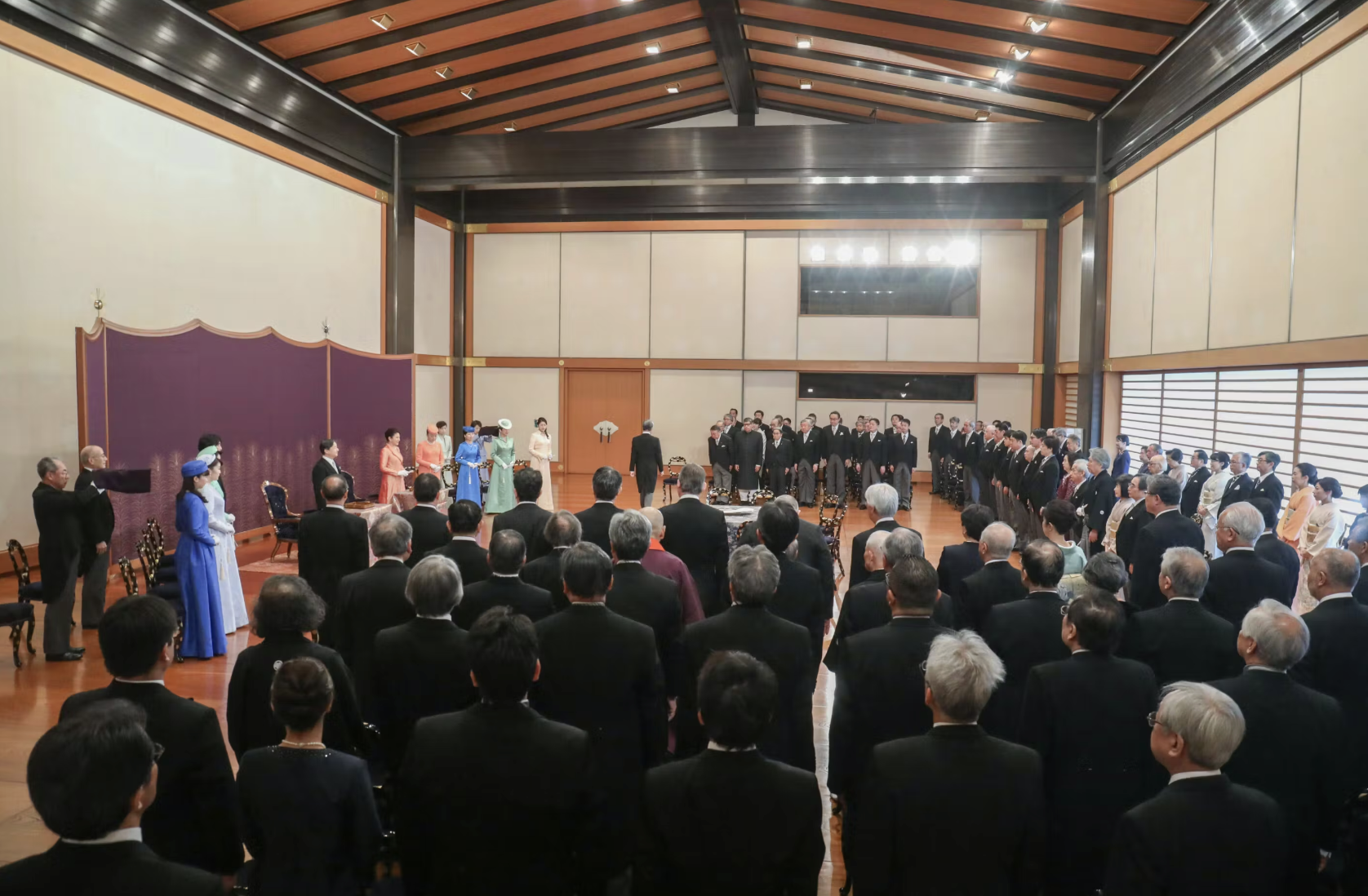
And yet there were people who sought out Emperor Go-Nara's calligraphy. People who felt that it had value. That "value" was not political power. It was a voluntary recognition of cultural and spiritual authority. Through all of Japanese history, the imperial house has remained at the center of the world of waka — classical Japanese poetry. Every January, the Utakai Hajime ceremony is still held at the palace: the Emperor and Empress read poems alongside compositions chosen from ordinary citizens — a practice of more than a thousand years, still alive. Even after being defeated politically and exiled to the island of Oki, the retired Emperor Go-Toba kept composing waka. The place where Kawabata Dōki delivered his morning rice cakes each day was the place that kept these cultural roots alive, and kept praying for the people.
But why could "prayer" and "culture" become pillars independent of power?
The answer lies in the continuity of the imperial line itself. Through the compilation of the Kojiki in 712, the origins of the imperial house were recorded as reaching back to the age of the gods. "Japan's oldest family" — that accumulation of fact. A shogunate lasting 300 years eventually ends. The Emperor remained.
Power can be replaced. What cannot be replaced is a continuity of that scale.
Prayer and cultural transmission could become grounds for legitimacy because they were built on top of a continuity that could not be replaced. That is the question worth sitting with.
What Kawabata Dōki kept delivering to the Gosho every morning was not loyalty to a ruler. It was participation in something that could not be replaced — a quiet service to the continued existence of a place that had prayed for the people across an unbroken line.
This is what parallax reveals. It cannot be seen from in front of the stone walls of the Tokyo Kōkyo. It becomes visible only when you stand in front of the clay walls of the Kyoto Gosho.
Epilogue: What Distance Lets You See
Walk the perimeter of the Tokyo Kōkyo. High stone walls, deep moats. A symbol installed, after the fact, into a vessel built for warrior power. In the middle of a modern city, a void cut from different time. "Empty center" — yes, you can see that. But when you understand why there is nothing there, the emptiness takes on a different meaning.
Walk the perimeter of the Kyoto Gosho. The clay walls are not low. But they carry a different quality than stone walls — something that resists easy translation into English. Not enclosing. Surrounding. Not defending. Being there.
For more than 1,000 years, this place was the center of Japan. Power changed hands continuously. This place did not change. Perhaps it did not change because it was never a place of power. And even now, the throne of accession is here.
Two places. The depth that only becomes visible when you stand in both. That is what parallax gives you.
A note on what comes next. This article measured the Emperor from two positions — Tokyo and Kyoto. But there is a third, older than either. Before Tokyo, before Kyoto, there was Nara — where the earliest outline of this country took shape. That is where Tennō II begins. What happened when that ancient structure met the modern world is the question for Tennō III.
