Tennō II: Two Basins - The Imagination of Governance
Prologue: Kyoto Is Not the Beginning
The previous article in this series approached the Emperor from two positions — Tokyo and Kyoto. The stone walls of the Kōkyo against the clay walls of the Gosho. Defense against permeation. What emerged from that comparison was something Japan had held for a very long time: the idea that political power and the authority that legitimizes it do not have to reside in the same place.
Kyoto was a good place to think about this. A city that remained a capital for a thousand years carries something that persists even after political power has moved elsewhere — an authority that outlasts the systems it once inhabited. That separation was what the first article tried to see.
But stopping the inquiry at Kyoto felt incomplete. Kyoto is one of the great centers of Japanese culture, but it is not the beginning. Behind its refined forms lies an older layer — a time before the city existed, before the rituals became institution, before the governance became politics. To follow that layer, the gaze turns naturally toward Nara.
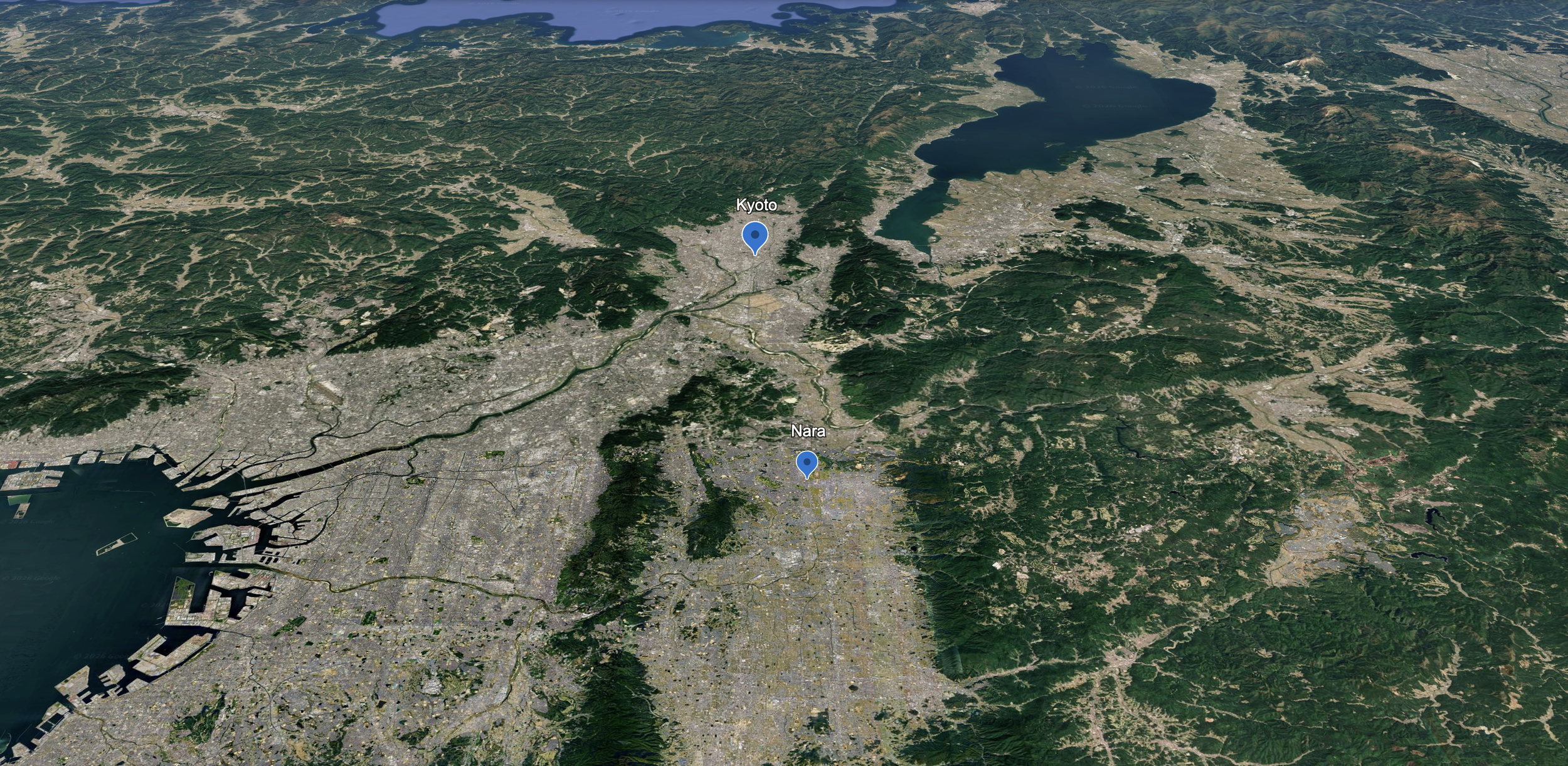
Nara is not simply the capital that preceded Kyoto. It is where this country first began to see its own outline — still unfinished, still deciding what it was. What Kyoto would later give formal shape to — institution, ceremony, culture — seems to have had deeper roots here. If the question is how the Emperor came to occupy the position he did — not as the strongest ruler, but as the center of an order that outlasted every ruler — the entrance to that question is not Kyoto. It is Nara.
This article is about the logic of governance that made the Tennō possible — where it came from, and what it asked of those who ruled. To follow that question, we leave Kyoto behind and descend into an older basin.
Chapter One: The Road Along the Mountains
The first time I visited the Yamanobe no Michi, I was there for work rather than out of any particular interest in ancient Japan.
About six months after I started working as a guide, I was put in charge of a week-long cycling tour of the Kansai region for foreign guests. The route set out from Kyoto along the Kamo River heading north, crossed the mountains, looped around the eastern shore of Lake Biwa through Ōmi-Hachiman, Kōka, Shigaraki, and Wazuka, entered Nara from the north, and returned to Kyoto via Uji and Fushimi. On the map it looks almost too varied to be real. The Nara day was built around the Yamanobe no Michi — a trail worn into the eastern foothills of the Nara basin, threading past burial mounds, rice paddies, and shrine forests through a landscape that Japan's oldest poetry and chronicles had been reading long before anyone thought to call it a path — running the full length of the basin's eastern edge.
I had once accompanied an experienced guide on this tour as an observer. But that day, Nara was under rain. The Yamanobe no Michi is narrow in places and breaks into unpaved stretches, and the guide himself had never actually ridden it by bicycle — there was no way to know what the surface would be like. After consulting with the guests, we gave up on the route that day and spent the afternoon around central Nara.
This time, things were different. I was the guide, and the only other person with me would be the driver. The support vehicle moved from hotel to hotel carrying the luggage — there was no margin to absorb problems on the road. I needed to know this route in my body before I brought anyone through it.
The official description of the trail already has its script: an ancient way connecting the foothills of the mountains that ring the Nara basin, where the place names and ruins and burial mounds named in the Kojiki and Nihon Shoki — Japan's eighth-century chronicles — and the Man'yōshū — the oldest surviving anthology of Japanese poetry, compiled in the late eighth century — appear one after another, drawing visitors into the original landscape of Japanese history. Reading that, you quickly understand it is an important place. But understanding and having been there are different things. I was embarrassed to admit it, but at that point I had never actually seen this trail with my own eyes.
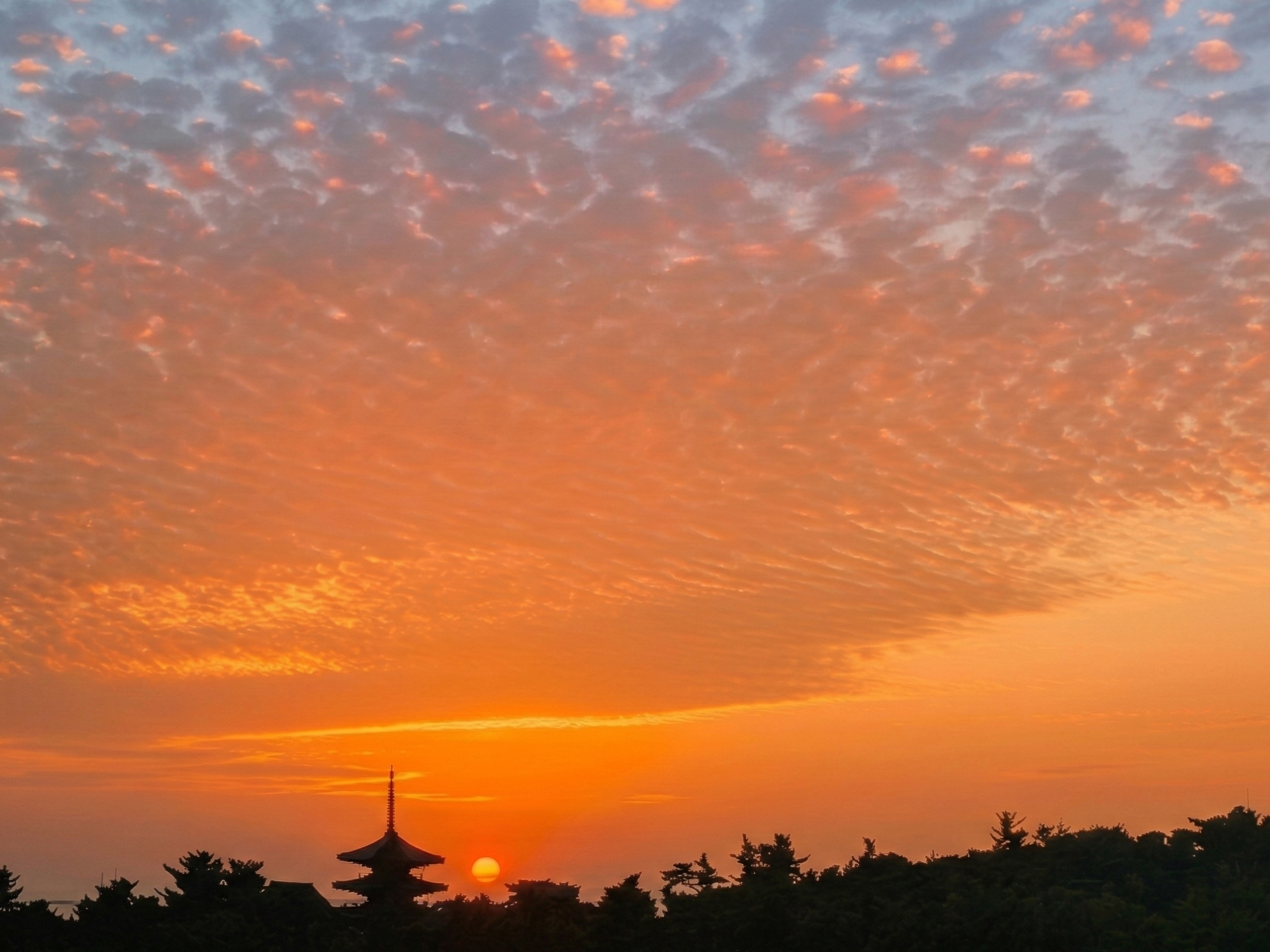
When I looked into it, there was plenty of information about hiking the route, but nothing that concretely described how to ride it by bicycle. The path is narrow, turns frequently, and apparently wanders into farm lanes and raised paths between paddies. In the end, there was nothing to do but ride it. I loaded onto my phone a set of GPS data passed on by a guide who had worked the tour the previous spring — data that no one had actually verified — and went down to Nara three days before the tour.
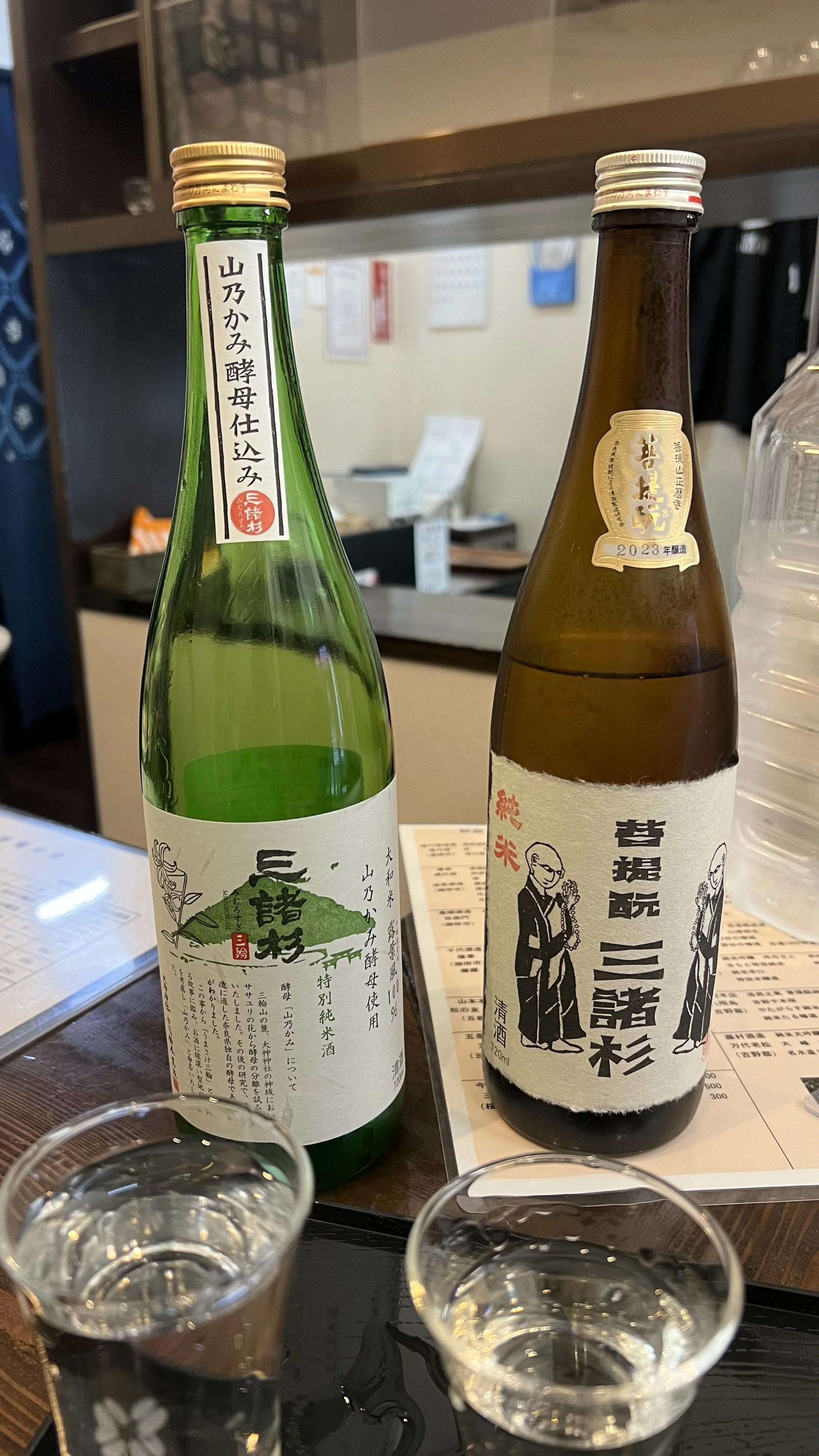
By then I had developed a small familiarity with Nara. It had been a place I hadn't visited since a middle-school field trip, but since starting guide work in the spring, I had passed through several times and found a few spots I returned to on my own. One of them was a sake shop in Naramachi — the old merchant district in the central part of the city — where sake made in Nara fills the refrigerators, and you can choose a bottle and drink it on the spot. I had already booked a room nearby so I could go.
Browsing the bottles that evening, I noticed that the shop had organized a small selection under two headings — shrine style and temple style. This wasn't a distinction about the fundamental character of the sake itself; it was a readable way of presenting differences in yeast origin and brewing approach. But the fact that the classification held so naturally — that in Nara, the division between shrine and temple was specific enough and real enough to organize a sake list — seemed to say something about the character of this place. Gods and Buddhas, sacred rite and institution: in this basin, they don't separate cleanly. They have folded into each other across a long time.

Compared to Kyoto, Nara tends to get passed through. Or people see the area around Tōdai-ji and Nara Park and leave with the sense that they've understood it. Kyoto's history is relatively visible in the city itself — the grid of streets, the imperial palace, the temples and shrines, the urban skeleton that has been rebuilt many times over but has held its shape. That skeleton gives time a visible outline.
Nara is different. The Nara basin holds multiple layers of time that remain exposed, its earlier layers still visible at ground level in a way Kyoto's are not.
Part of that difference lies in the nature of the capital itself. Before the building of Fujiwara-kyō in 694 CE — Japan's first grid-planned capital, built on the assumption that a capital could, and should, remain in one place — the palace moved with each new reign as a near-default. The Shinto-rooted sense that death carries spiritual contamination meant that remaining in one place was not assumed. Buddhism, among other changes, helped alter this logic of movement — but slowly, and incompletely. Nara still carries the traces of the time before that shift — the landscape itself seems to belong to it.
This is precisely what makes the Yamanobe no Michi the right thing to put in this itinerary. It covers too much ground to walk in a day, but by bicycle you can take in the whole eastern edge of the basin in one continuous movement. It may be the best way to feel Nara as a single geography rather than a collection of sites around the park.
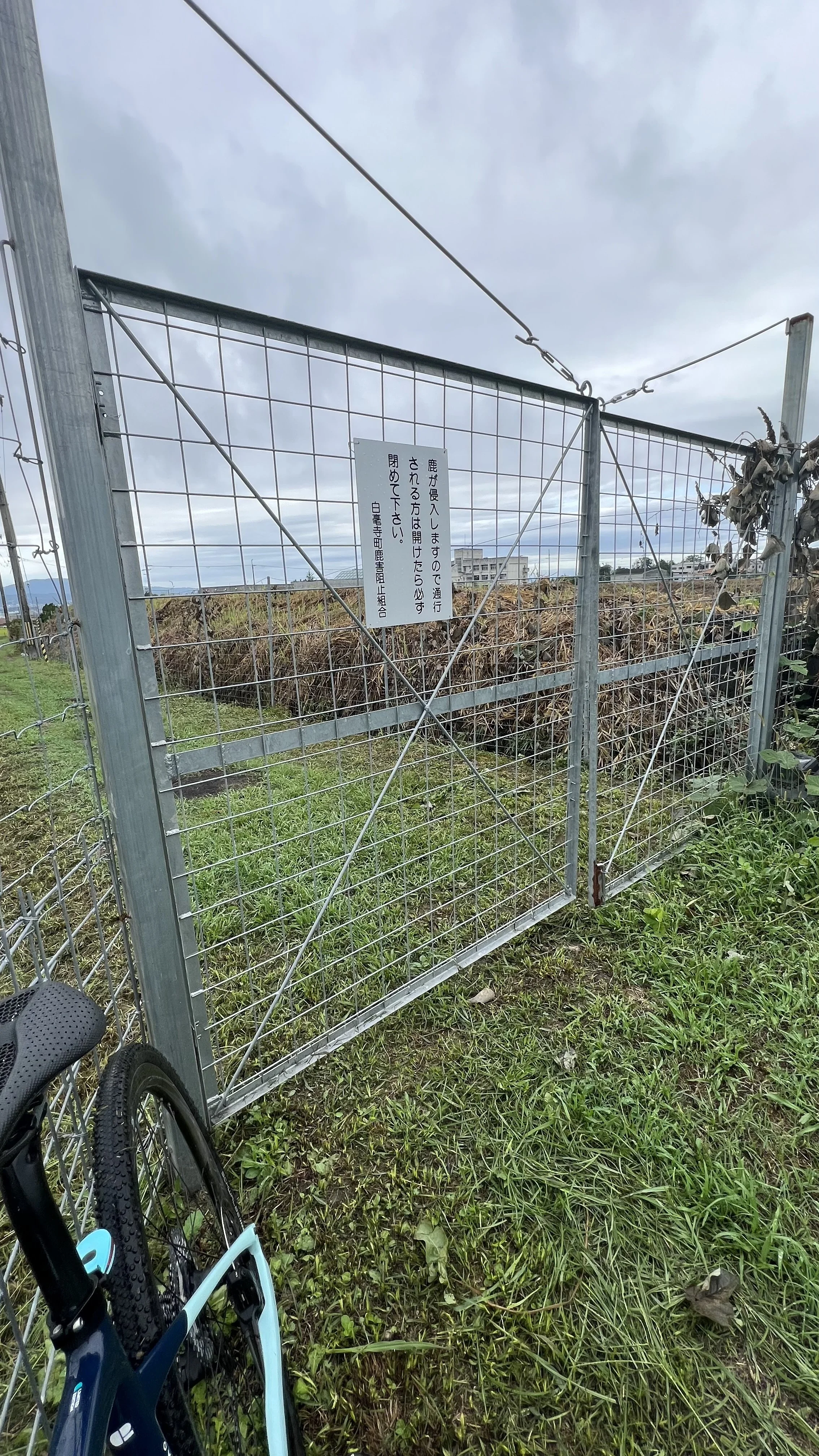
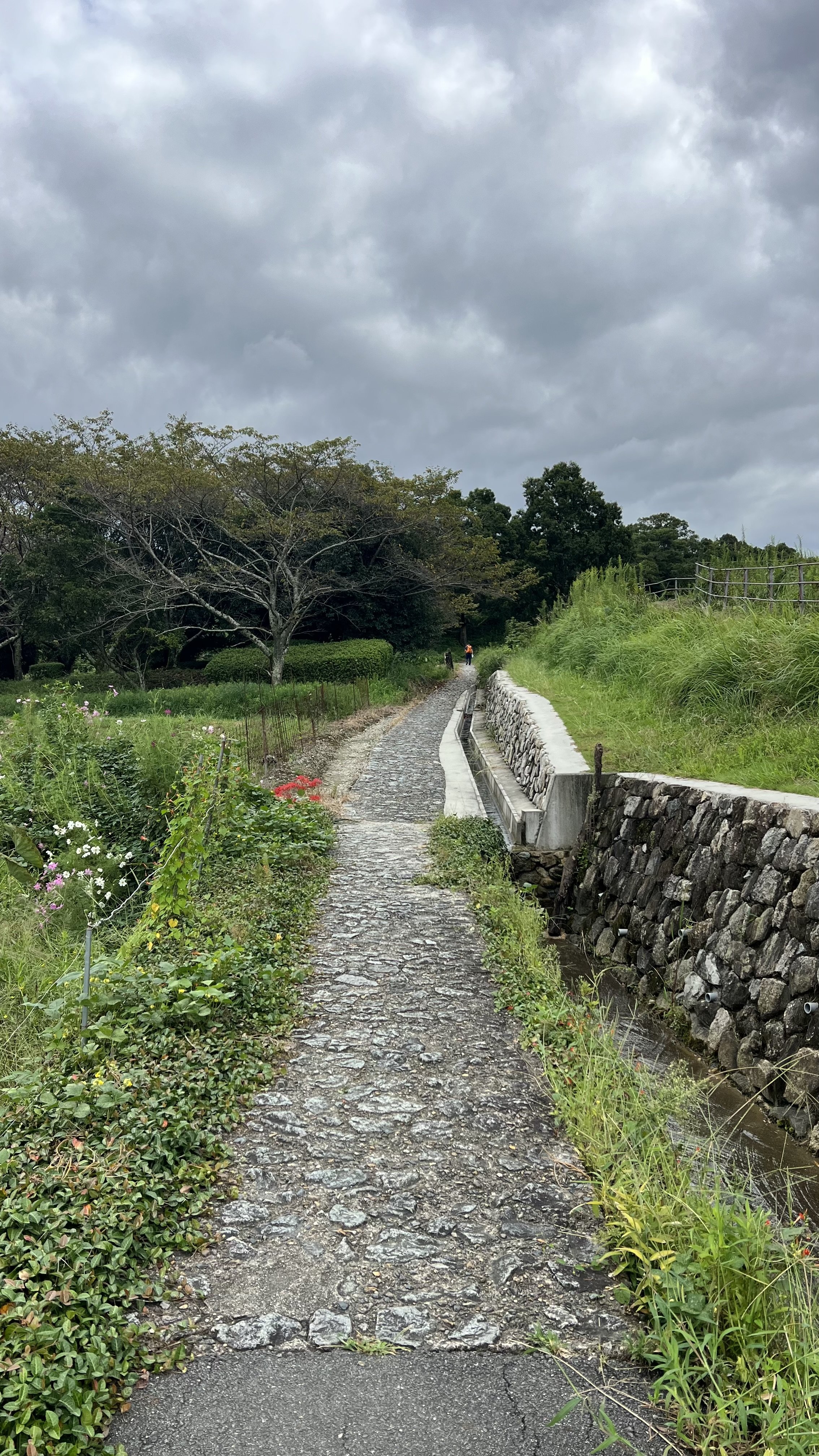
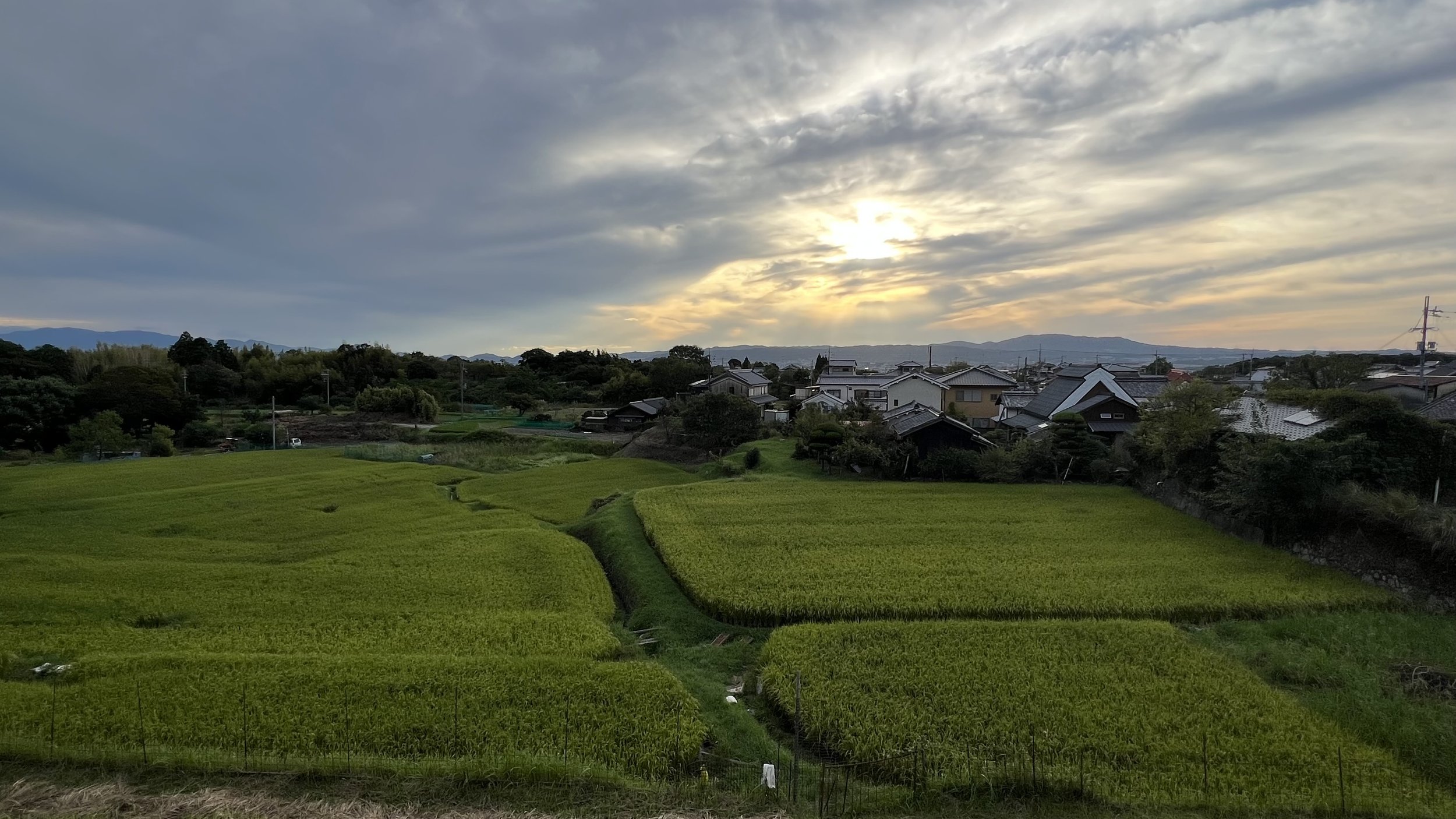
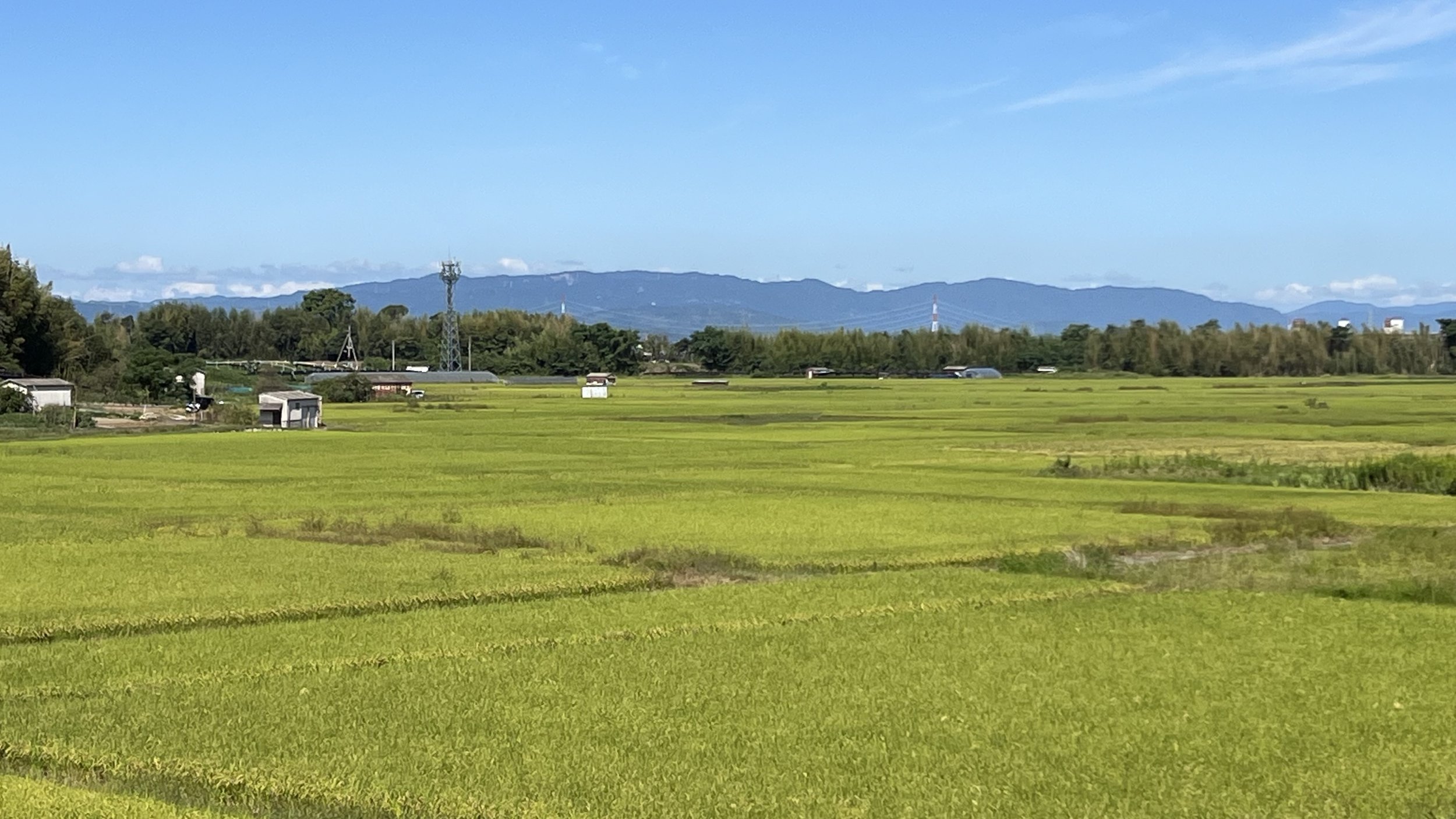
The next morning I set out early and headed south toward Sakurai. Since the tour day would run north from Sakurai back to central Nara, riding both directions would tell me more about the route — and there was no reason to bother dismantling the bicycle for the train. As I approached the ancient trail threading along the eastern foothills of the basin, the road grew gradually less certain. The pavement narrowed, then became the edge of a rice paddy. Deer fencing appeared — you dismount, open the gate, pass through, close it behind you. When I looked up, the rice was beginning to color.
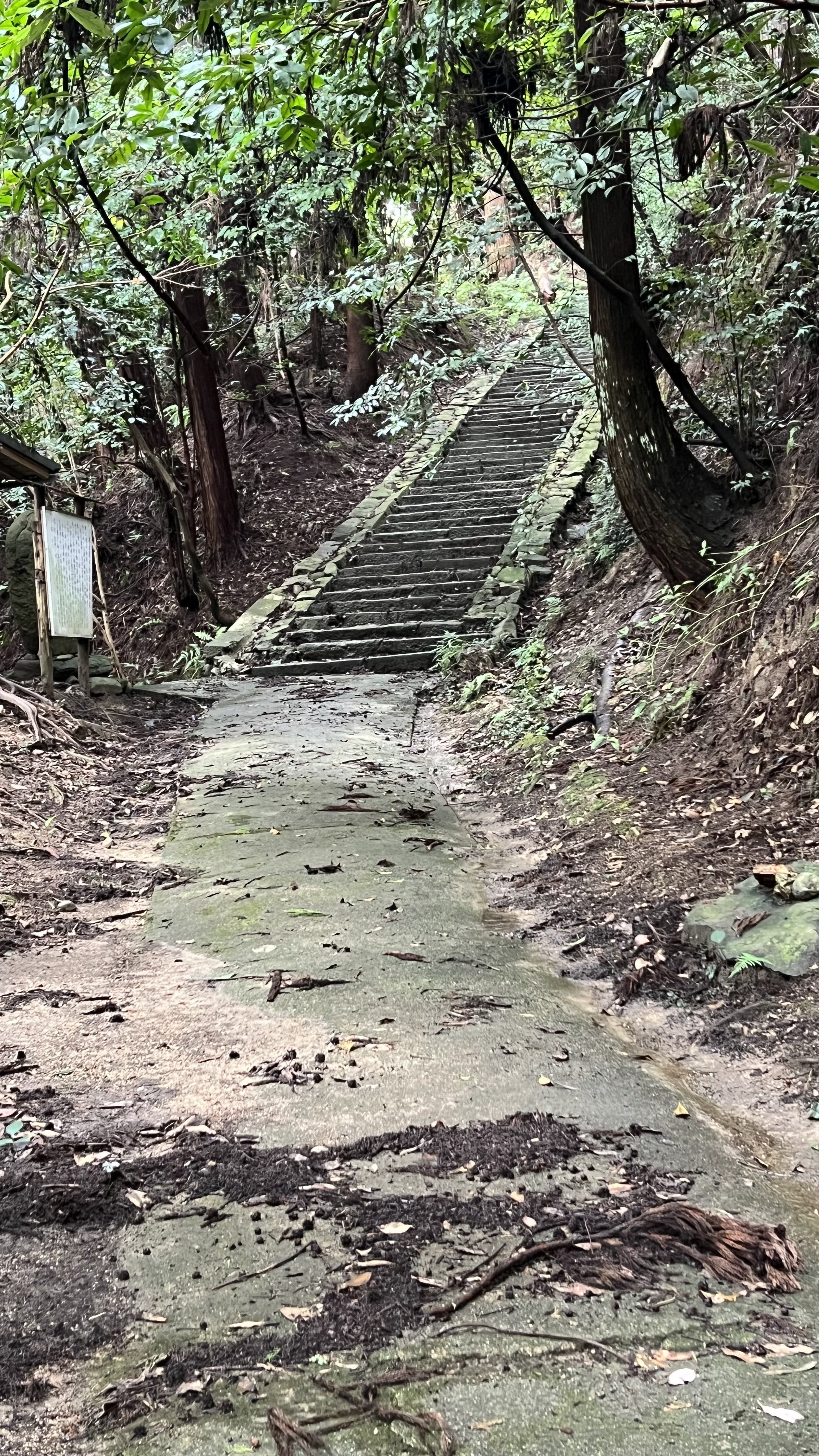
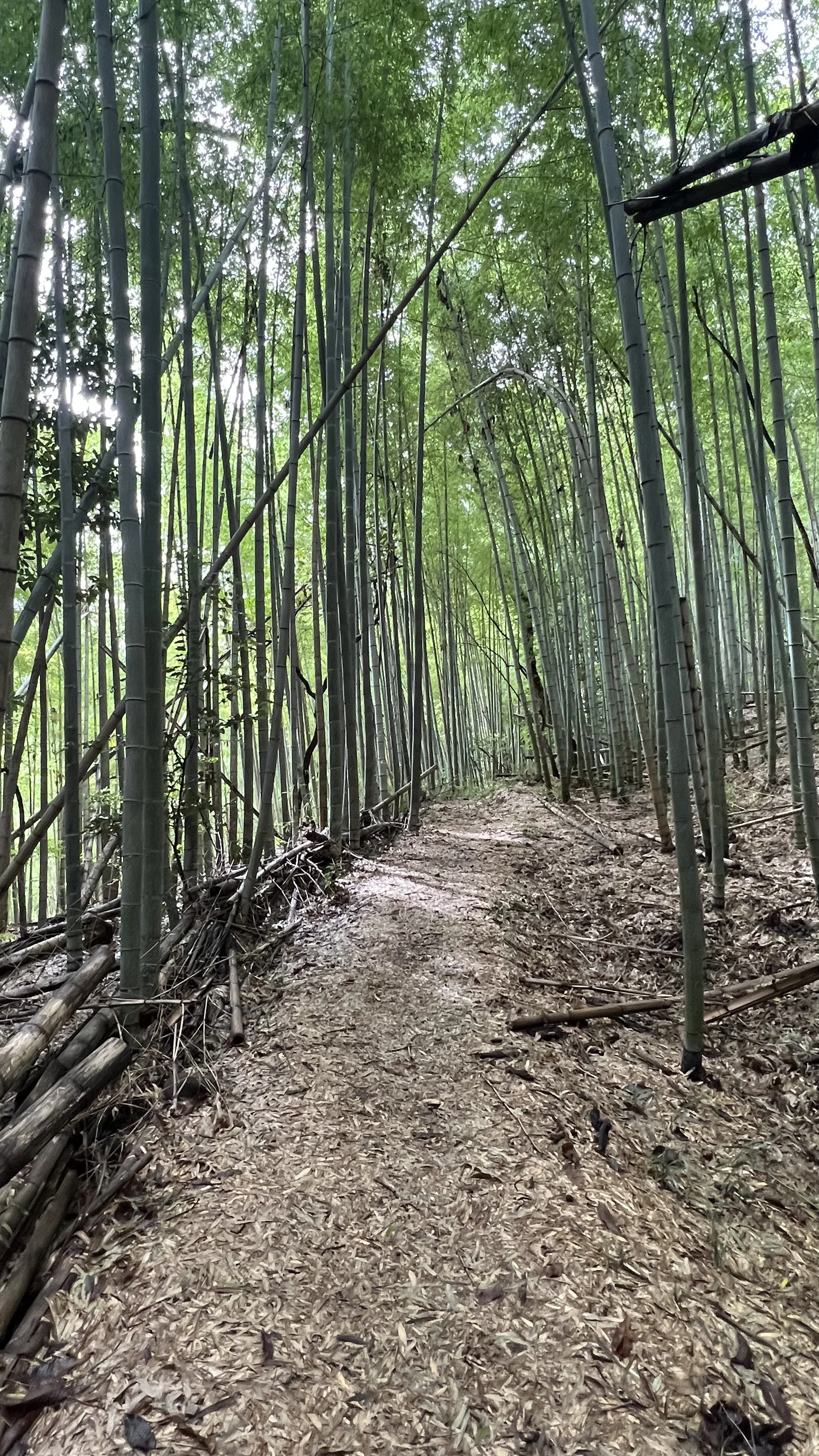
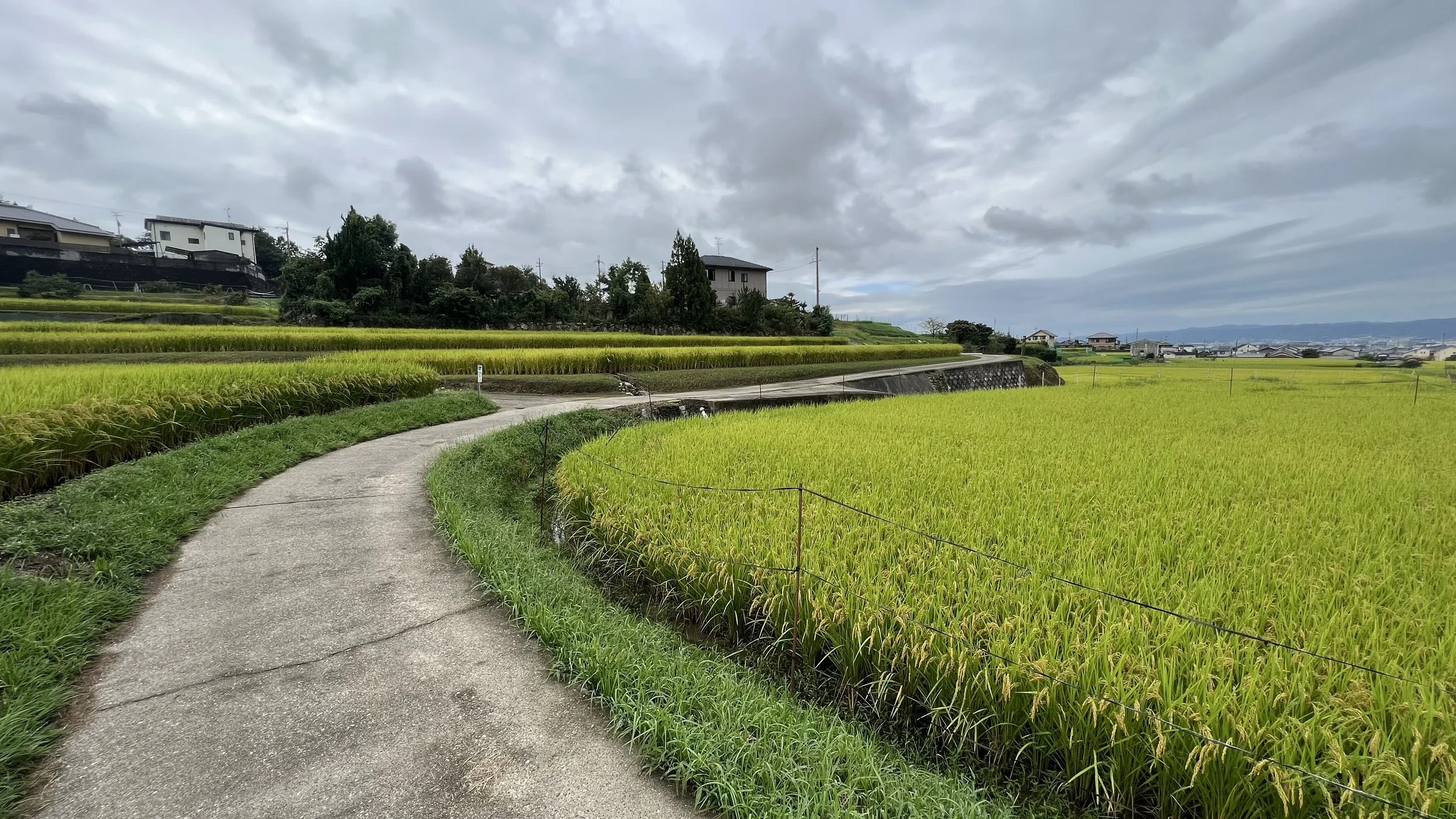
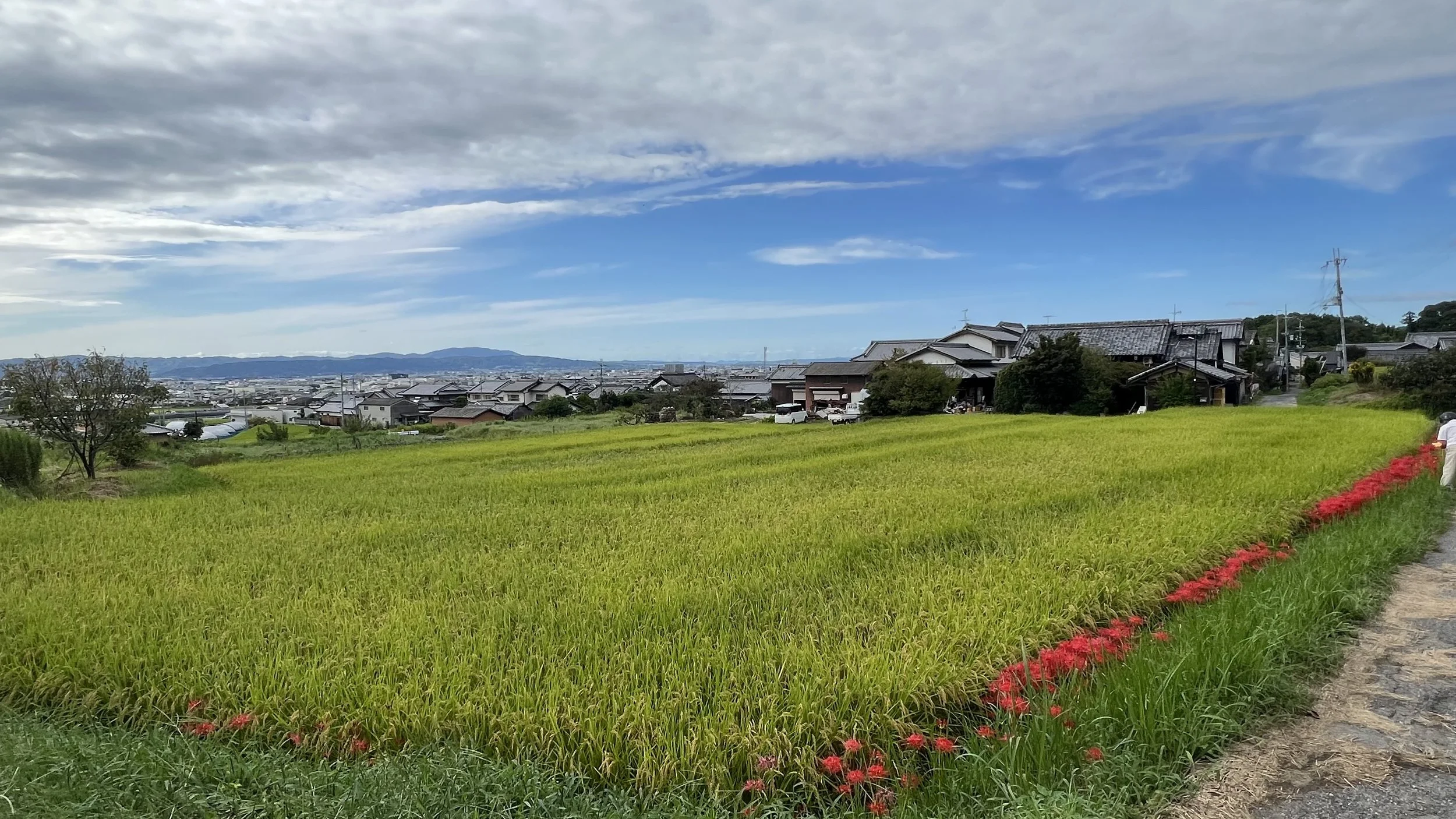
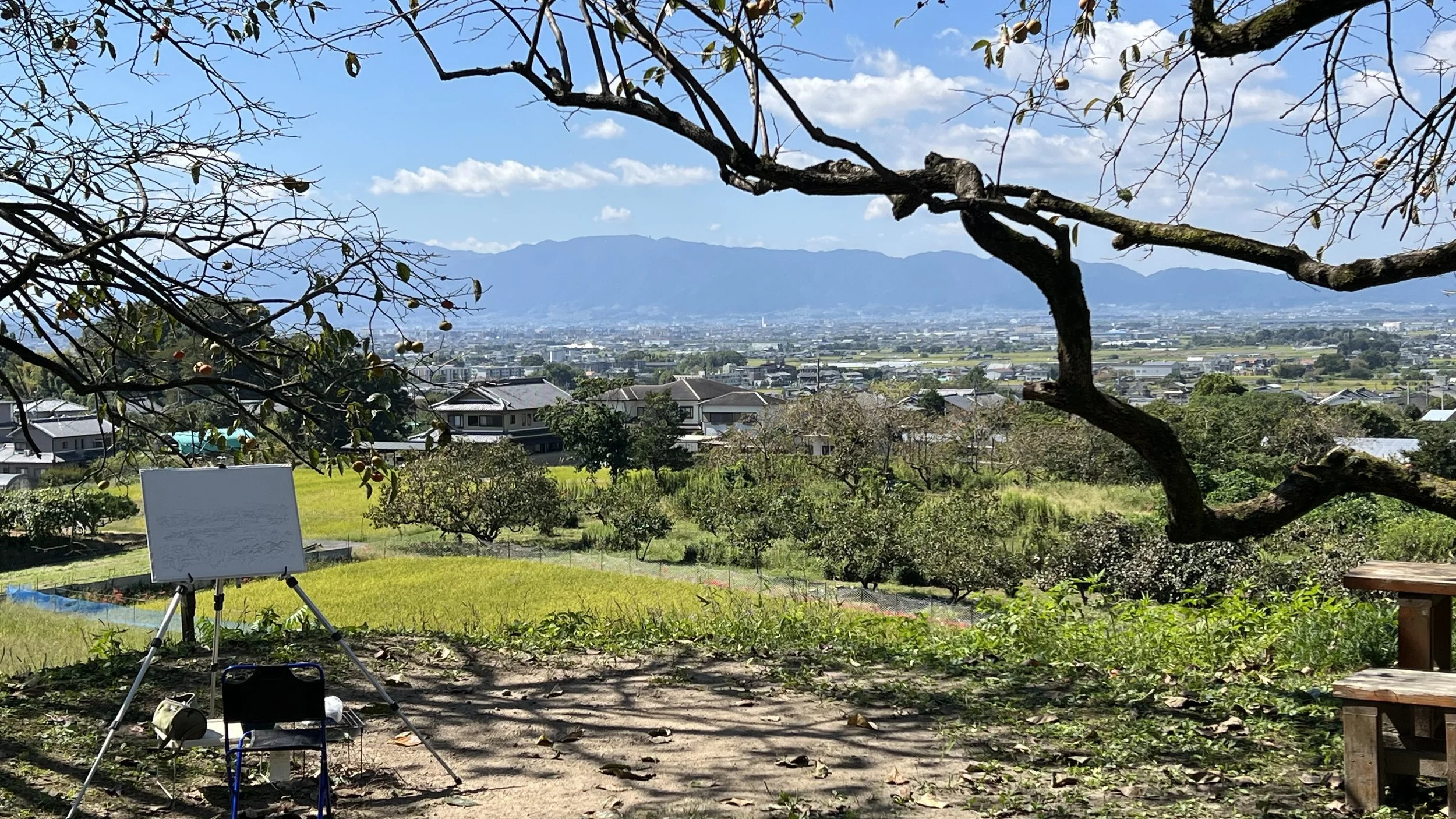
In terms of geography alone, the position was something like following the base of Kyoto's Higashiyama range. But the impression was entirely different. Above all, the field of view was open — the sky was large. Threading between paddies, passing the edge of reservoir ponds, looking back to see the basin held together like a single vessel. It felt less like riding along the edge of a city than moving through the inside of a much older geography.
Tokyo's landscapes overwrite themselves easily. A road I walked to school every morning as a child has become entirely different scenery; I could no longer trace where it was even from memory. Kyoto is the opposite — twelve centuries of urban structure hold the city's memory firm. Street names, the positions of temples and shrines, are continually referenced as things that should be there. But here, in this part of Nara, there was a different relationship to time. Carrying memories far older than Kyoto's, it made no effort to display them. The trail entered the back of a farmhouse, disappeared between fields, and I checked the map repeatedly, wondering whether this was really the Yamanobe no Michi. Not over-manicured into a tourist route, not entirely forgotten either. That restraint, paradoxically, was what made the depth of time here felt.
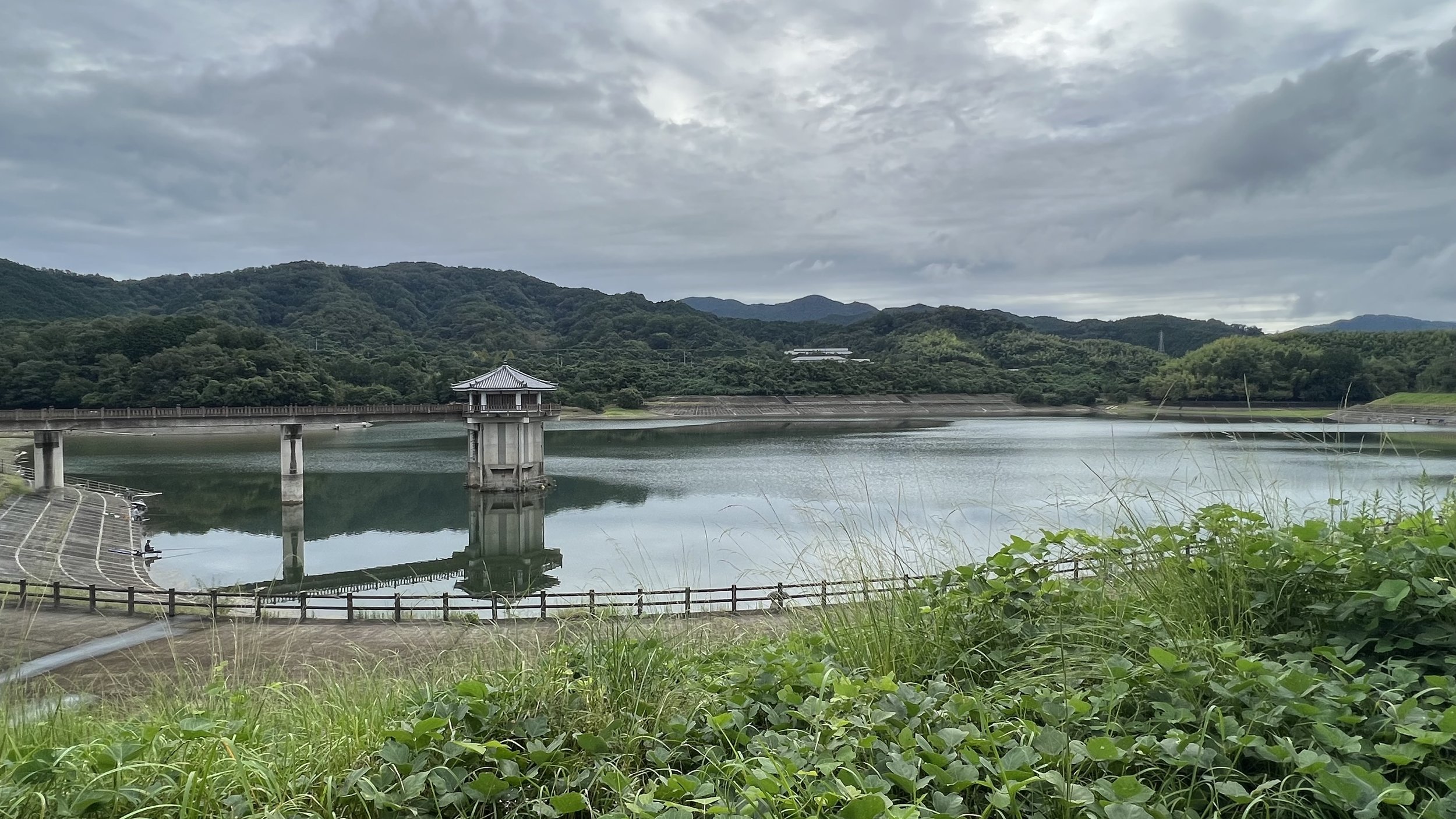
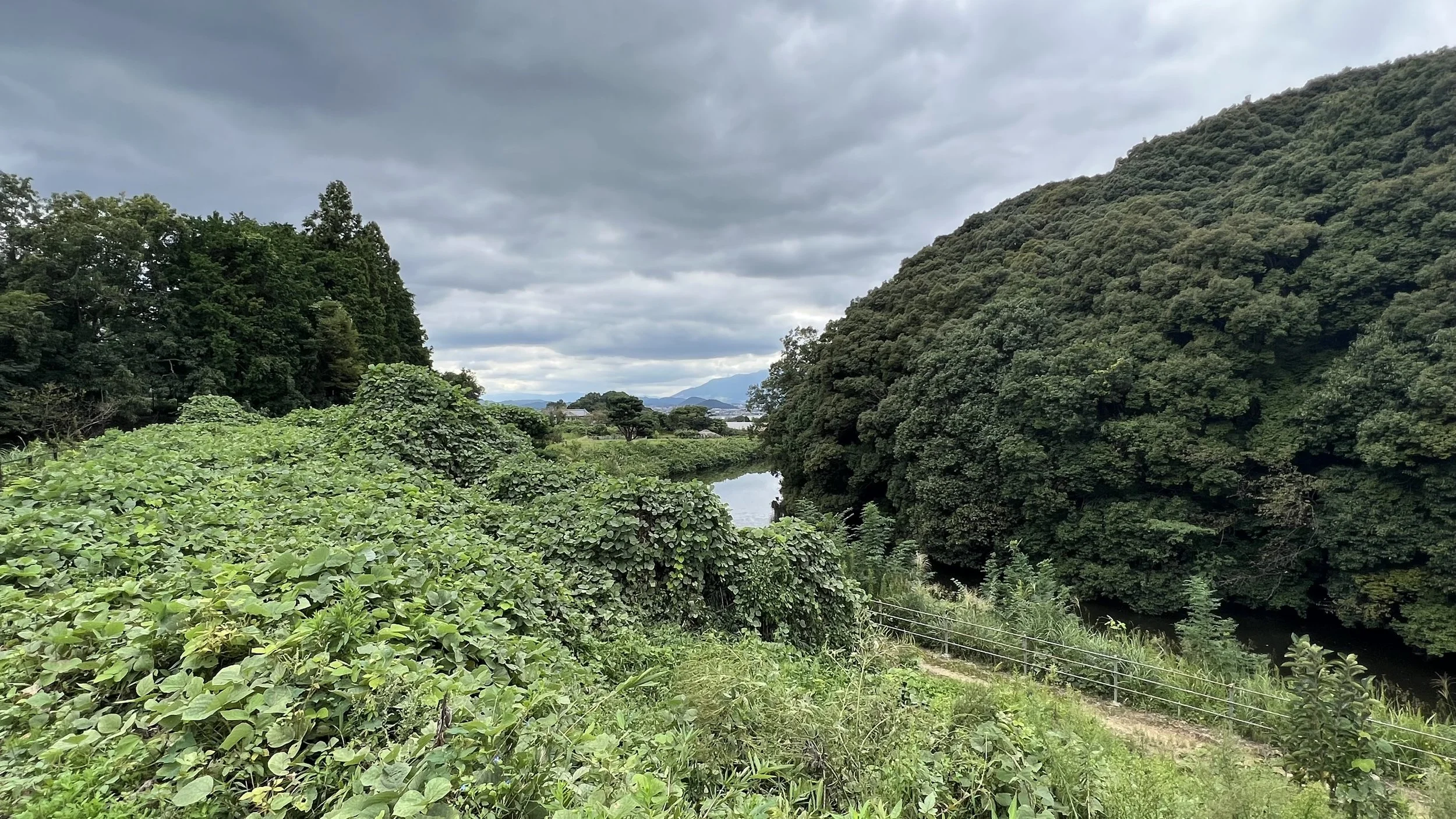
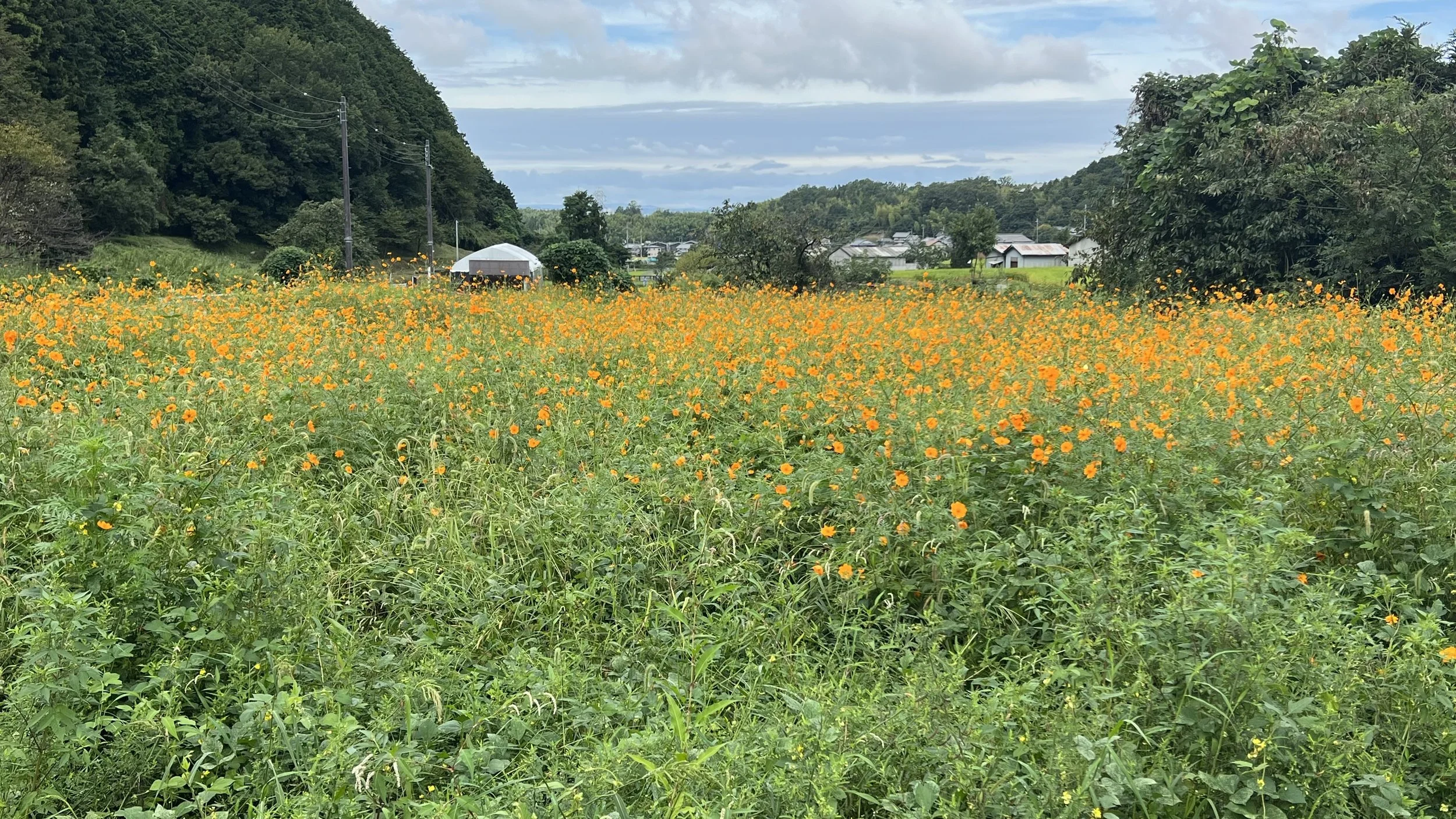
Riding slowly through it, I also noticed the frequency of reservoir ponds. Zooming in on the map, I found that a low wooded mound I was passing was an ancient burial mound — kofun, the keyhole-shaped tombs built across Japan from roughly the third through seventh centuries CE, the burial monuments of the Yamato ruling class — the early Japanese state centered in this basin. This happened more than once. Reservoir ponds, paddies, burial mounds, mountains — all appearing in strange proximity within the same landscape. Unlike Kyoto's urban structure, the places of production, prayer, and death were not clearly separated here. That is what made the Nara basin look less like a finished capital than a landscape that still holds an earlier stage within it.
The trail ends, more or less, at Ōmiwa Jinja — the Ōmiwa Shrine — at the base of Mount Miwa. The mountain is not especially high. Nothing about it would stop you if you came to it without context. But standing at the shrine, I began to understand why this particular mountain had been the religious center of this basin for as long as anyone could trace.
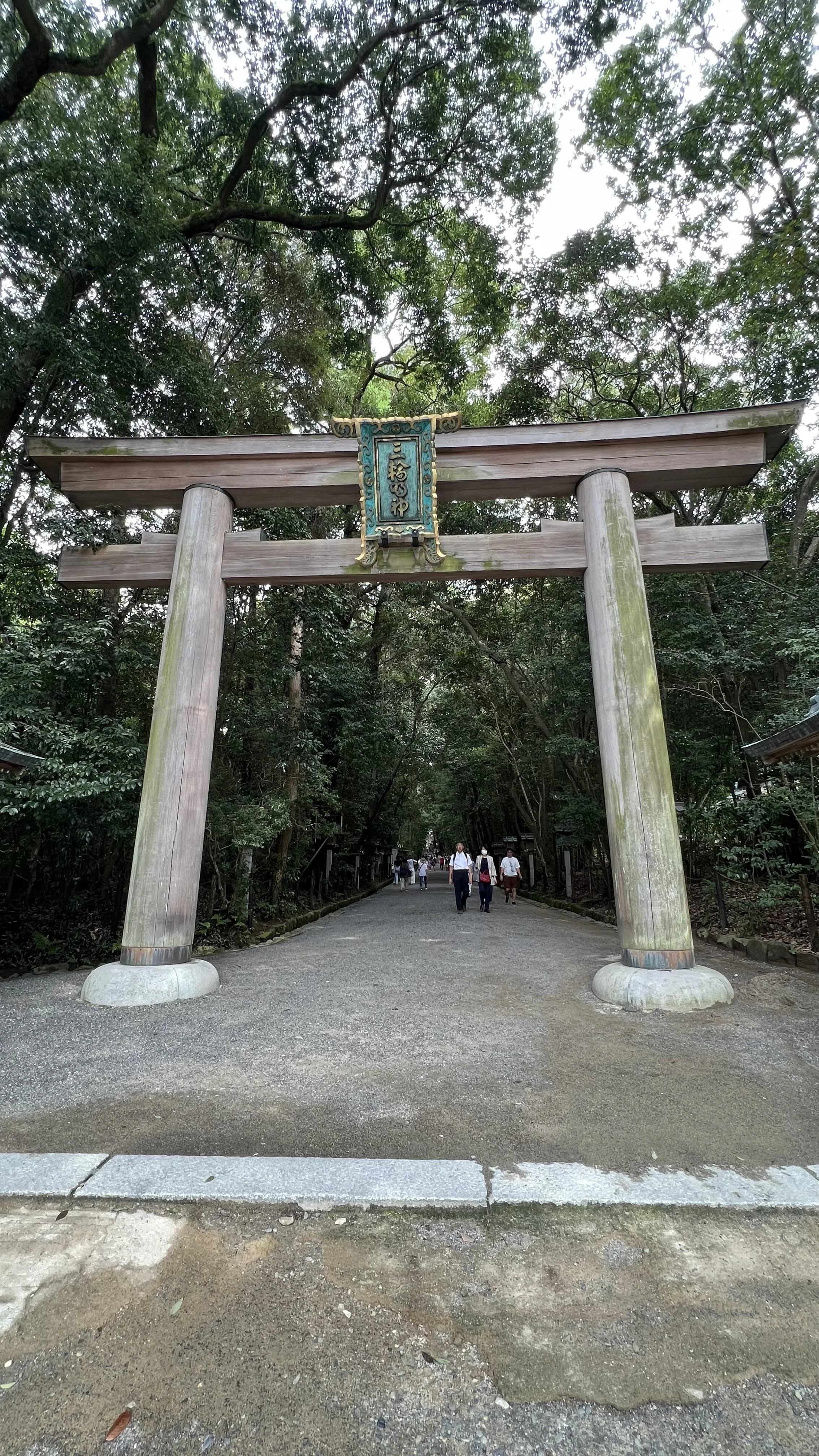
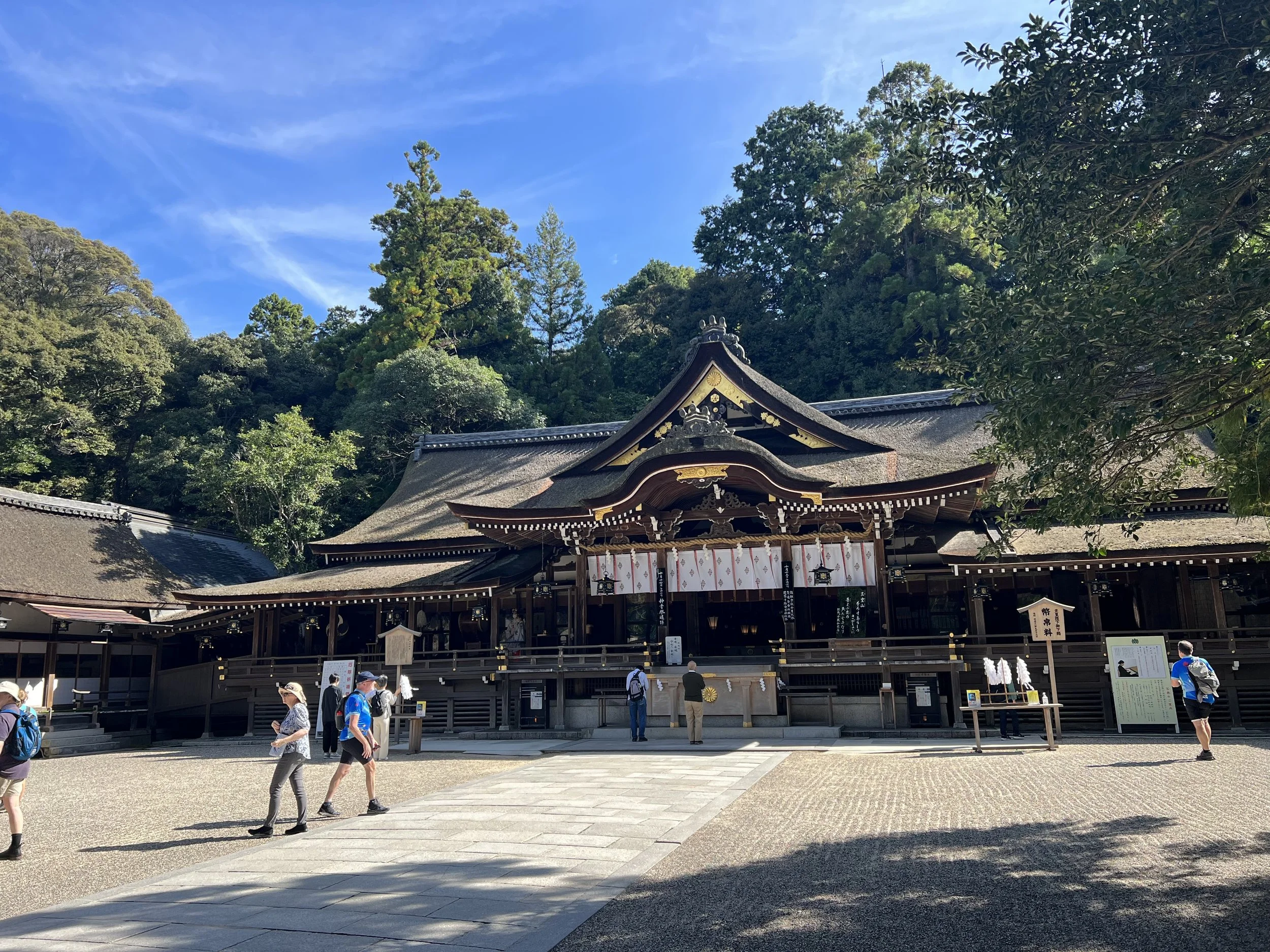
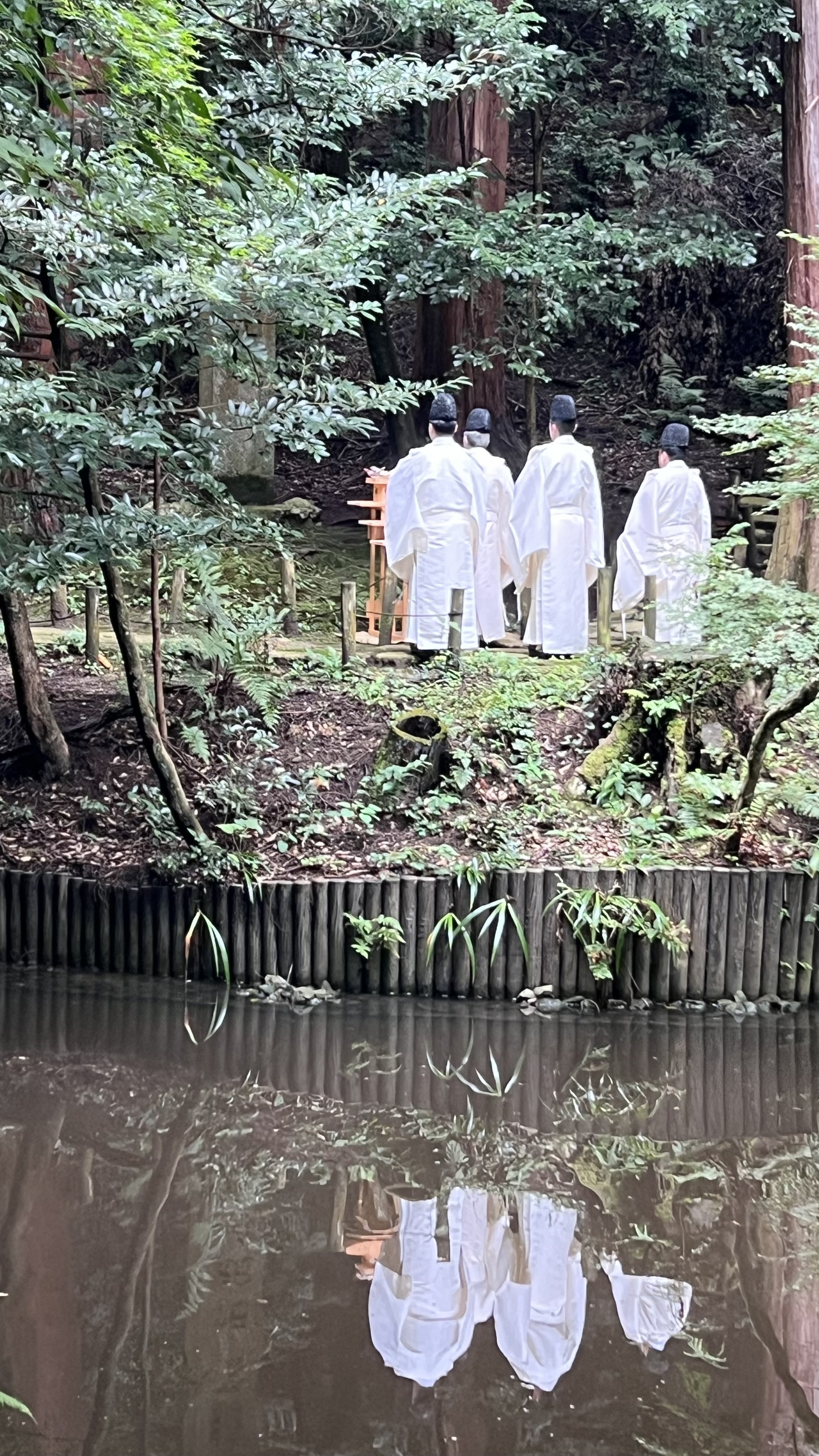
The Kojiki — Japan's oldest surviving record of myth and history, compiled in 712 CE — records that Ōmononushi — the deity enshrined here — requested of his own will to be enshrined on this mountain. And the form of worship reflects something very old: Mount Miwa itself is the go-shintai — the sacred body in which the divine is present — and the shrine has no honden, no inner sanctuary building to house the deity. In most Japanese shrines, the deity is enshrined in a structure at the rear of the compound; here, there is none. The mountain is the shrine. This precedes what we normally think of as shrine architecture. The mountain has also been maintained as a forbidden zone since records begin — a protected sacred ground held untouched while everything around it was cleared, farmed, built over, and rebuilt again across more than a millennium. The result is an atmosphere that the adjacent landscape does not have: a density, a stillness that belongs to a different order of time.
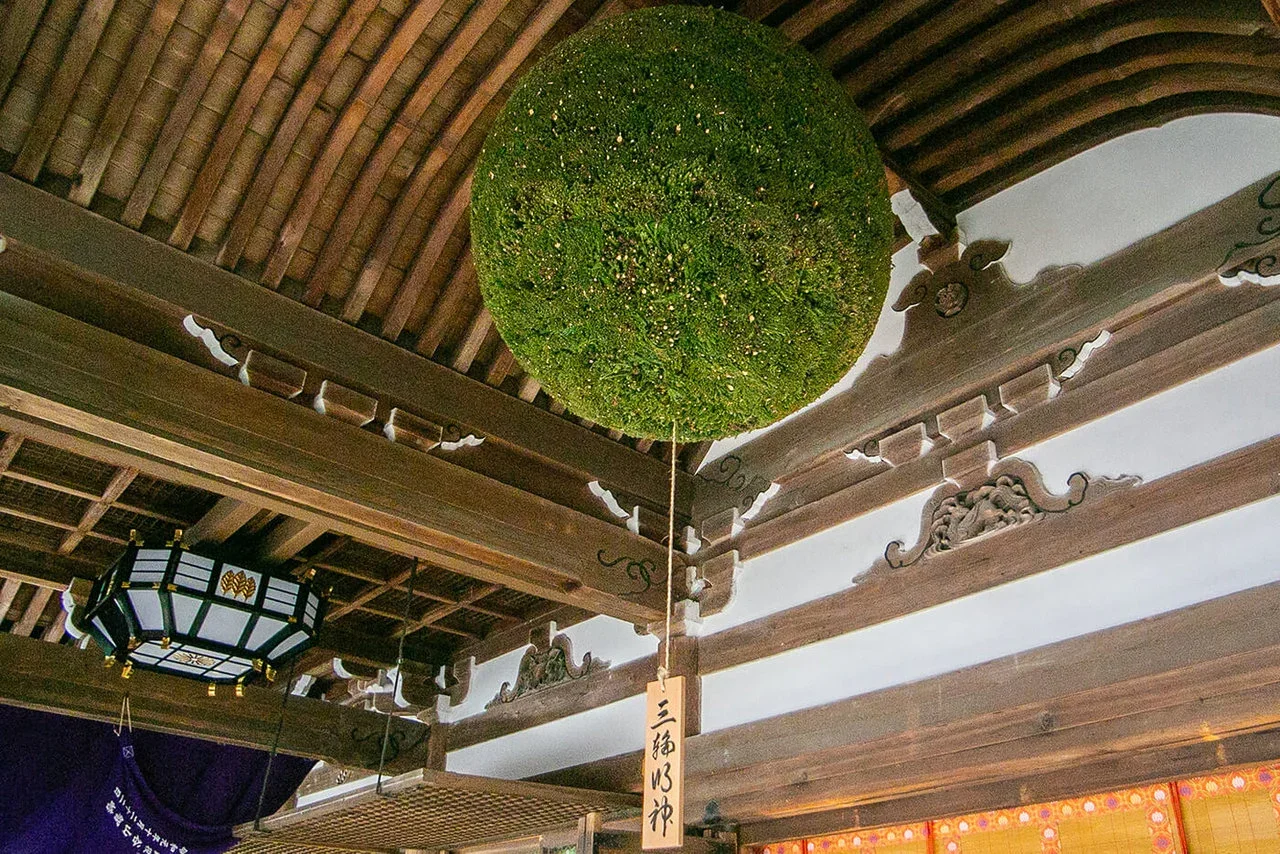
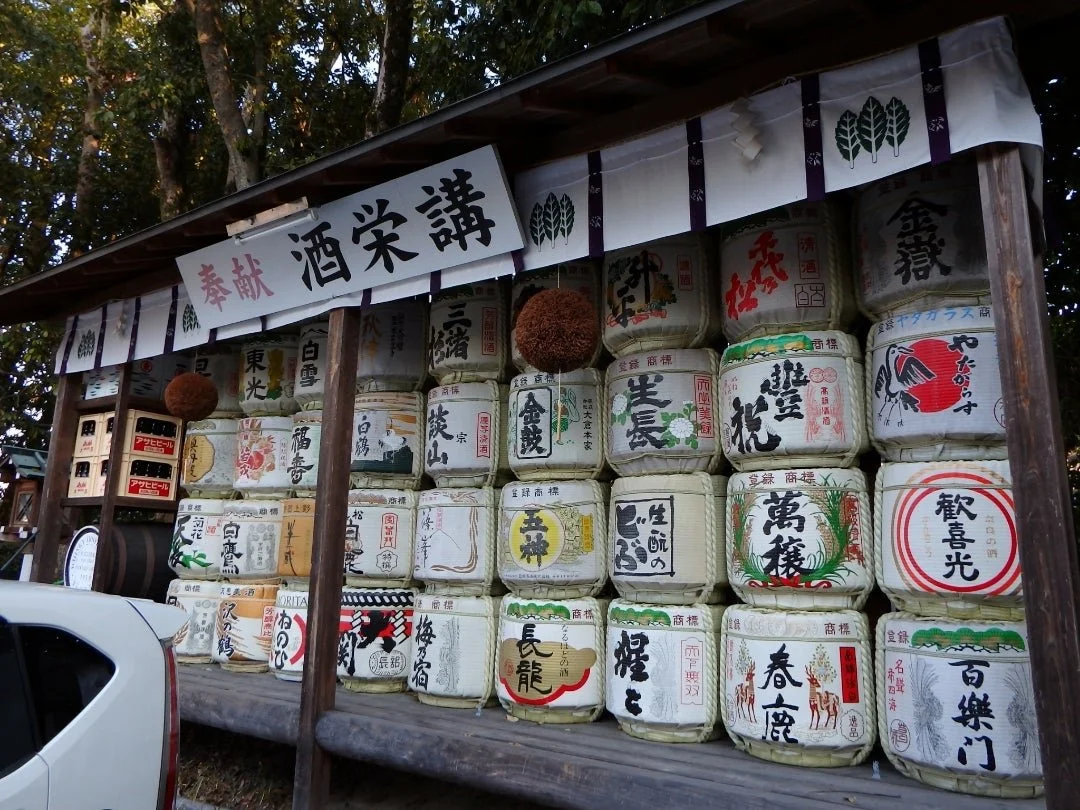
Ōmononushi is also known as the god of sake-brewing. It is said that Takahashi Ikuhi no Mikoto — the founding ancestor of the tōji, the master brewers — brewed a fine sake with the deity's help, and at the new-sake season, sugidama are sent from this shrine to sake breweries across the country — the balls of cedar leaves that hang from brewery eaves as a sign that new sake has been made. One of the bottles I drank the previous night at the sake shop in Naramachi had been made with yeast cultivated from the sasayuri lilies growing within this shrine's sacred grounds.
Chapter Two: Before Kyoto, Before the Capital
To understand why this basin mattered, geography comes before myth.
The Nara basin is a landlocked flatland surrounded by mountains. By the standards of the Japanese archipelago it is not an exceptionally large plain. But as a place for an early political center to take root, the conditions are almost perfectly assembled. Water can be channeled. Rice paddies can be opened. People can gather and form an order with coherence. And the place is not entirely exposed — the mountains create a perimeter, the passes through them are few.
Equally important is that it is not sealed. Rivers connect to other regions; the mountains are low and gentle, with routes through their gaps. Enclosed enough to hold together, open enough to receive. People and goods and ideas could enter, and once inside, could accumulate.
The abundance of reservoir ponds also says something about the character of this basin. How to secure the water that the paddies need must have been the unavoidable problem of life here. That problem connected not only to agricultural technique but to the capacity to organize people, gather labor, and transform the landscape itself. The paddies spread before me were not simply natural features — they were visible as part of a geography that had been worked over across a very long time.
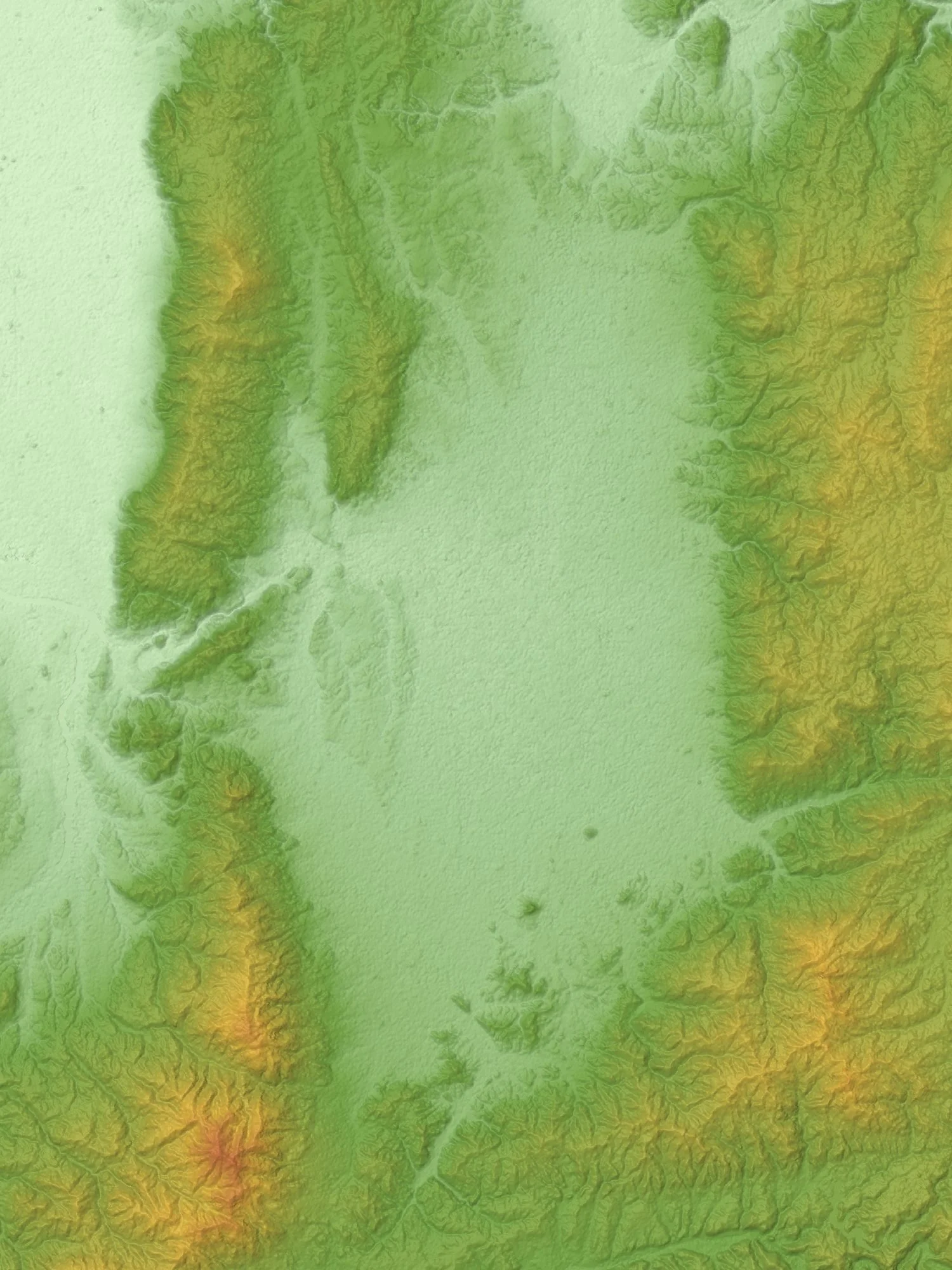
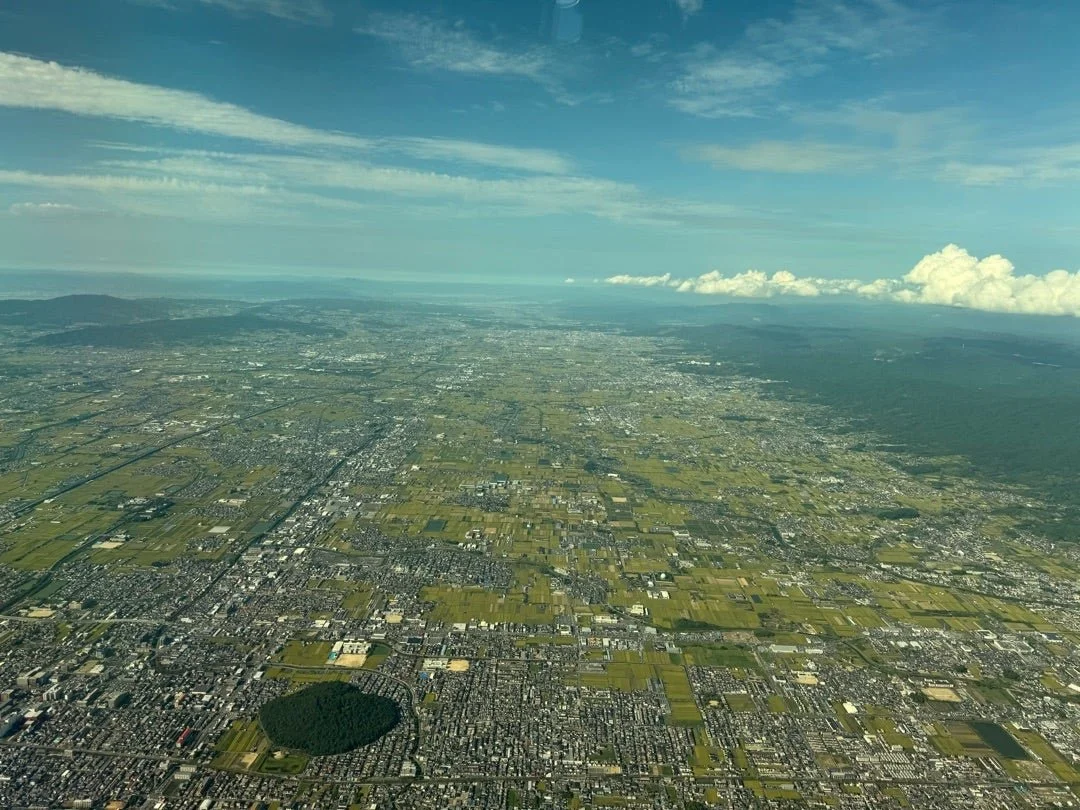
The Nara basin also holds multiple layers of time that have not been resolved into a single story. There is a layer predating the full reception of Buddhism, and a layer after it. A period when the palace moved with each reign as the default, and then the period when the idea of a permanent capital — a kyō designed for continuity, like Fujiwara-kyō and Heijō-kyō, built on the model of Tang Chinese city planning — first appeared.
In this respect, Nara looks quite different from Kyoto. Kyoto also contains many overlapping periods — but they overlap in the way that different eras of architecture and institution and memory are held as a mosaic inside a single large urban structure. One great urban skeleton, into which various ages have been woven. In the Nara basin, an earlier layer is still exposed at ground level. The pre-capital period and the period when the capital began to be fixed are visible in the same basin without fully separating.
So to call Nara simply "the capital before Kyoto" is not enough. Here there is time that predates the idea of a capital as a fixed thing. And on top of that, a newer layer that accepted Buddhism and the idea of urban permanence. What makes the Nara basin distinctive is that these multiple layers have not been tidied, as later cities were — they remain visible together in the landscape, as if the terrain itself still holds them.
Chapter Three: A Shrine Older Than the State?
The signage at the shrine described it as Japan's oldest. That gave me pause.
Shinto does not begin in a founding moment. If you consider forms of reverence like iwakura — the worship of rocks as dwelling places of the sacred — or kannabi — mountains and hills understood as the bodies of deities — these reach back without a clean edge into prehistoric practice, continuously, perhaps to the Stone Age. The question of which shrine is "oldest" may not be well-formed.
My own vague understanding, before arriving here, had been that the shrine most clearly connected to the mythology of the state's founding was Izumo Taisha — the Grand Shrine of Izumo, associated in the mythology with Ōkuninushi, the great deity who ruled the land before the handover. Izumo seemed to me the clearest place where a shrine and the story of how this country came to be were linked at large scale. So it was a little surprising that Ōmiwa Jinja, at the foot of this relatively unremarkable mountain, was described as older.
The answer came into view when I thought more carefully about the sequence.
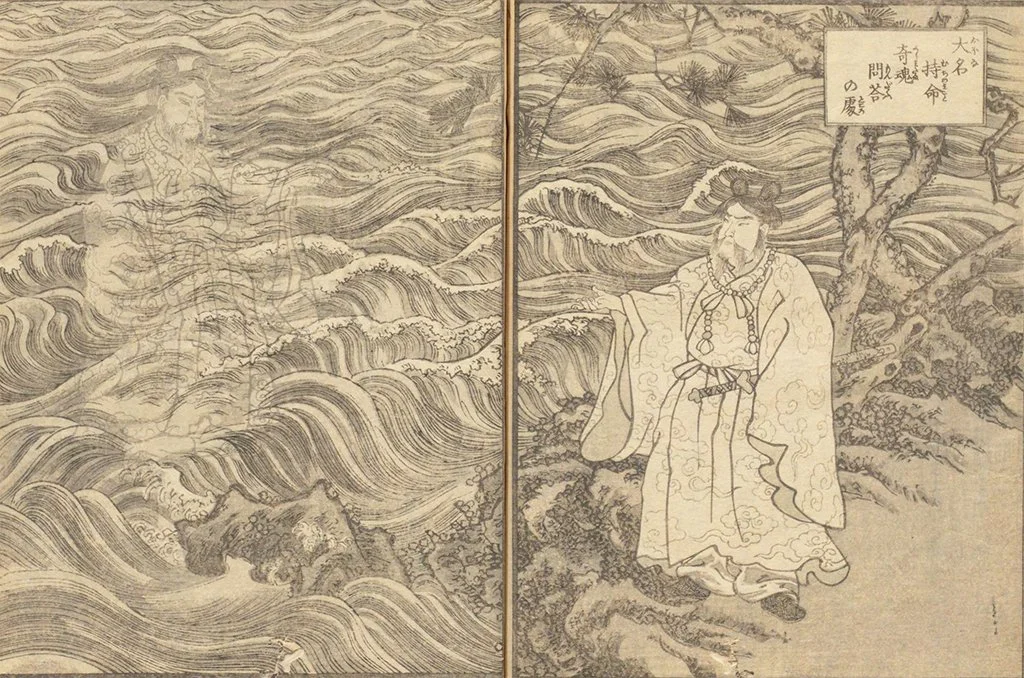
Ōmononushi — the deity of Ōmiwa Jinja — appears in the Kojiki during the period when Ōkuninushi was still in the middle of building the land, before he had handed it over. It is said that Ōmononushi came from the direction of the sea, glowing, and asked to be enshrined on this sacred peak of Yamato so that he could help Ōkuninushi complete the work. In the myth, the enshrinement of Ōmononushi at Miwa happens while Ōkuninushi is still building the land — before the heavenly deities have even made their claim. Miwa precedes the handover. If Izumo Taisha was established as the result of a mythological event — the transfer of the land between the deities — then a shrine that predates that event belongs to a still earlier layer of worship. The origin of the state and the origin of the sacred rite do not necessarily belong to the same moment in time. That was something I had not clearly understood until I stood here.
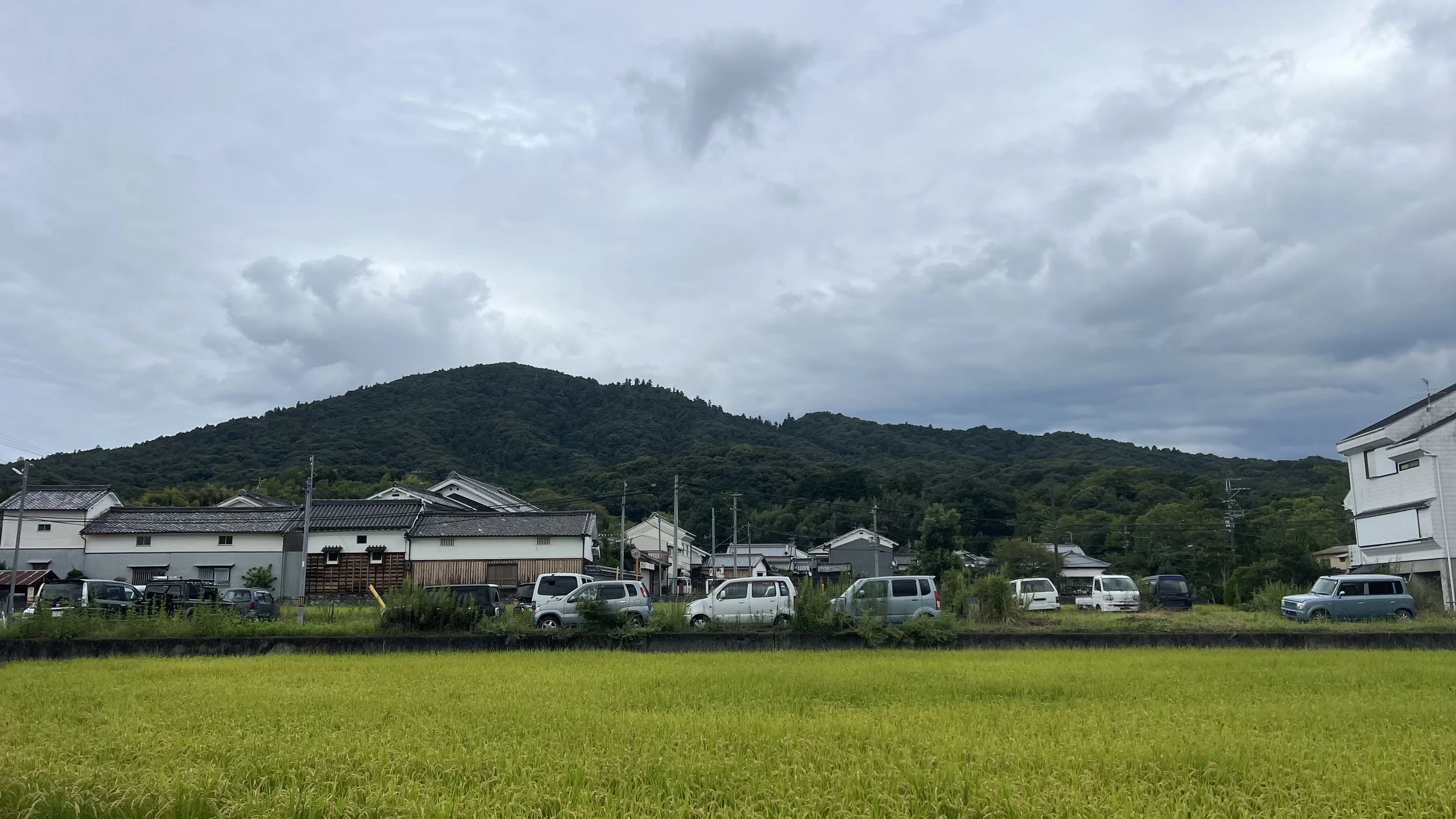
Seen that way, Mount Miwa begins to look like something more interesting than "Japan's oldest shrine." When the state came to tell the story of its own origins, it could not ignore what was already here. Ōmiwa Jinja is not a supporting actor in the story of state formation. It is a prior sacred site that the state had to incorporate into its own narrative — a place that was already there when the new order arrived, and could not be set aside.
How did that older sacred center come to be repositioned within the mythology of state formation? To follow that question, I needed to look again at the myth of the handover — kuni-yuzuri — and what kind of story it actually was.
Chapter Four: The Handover
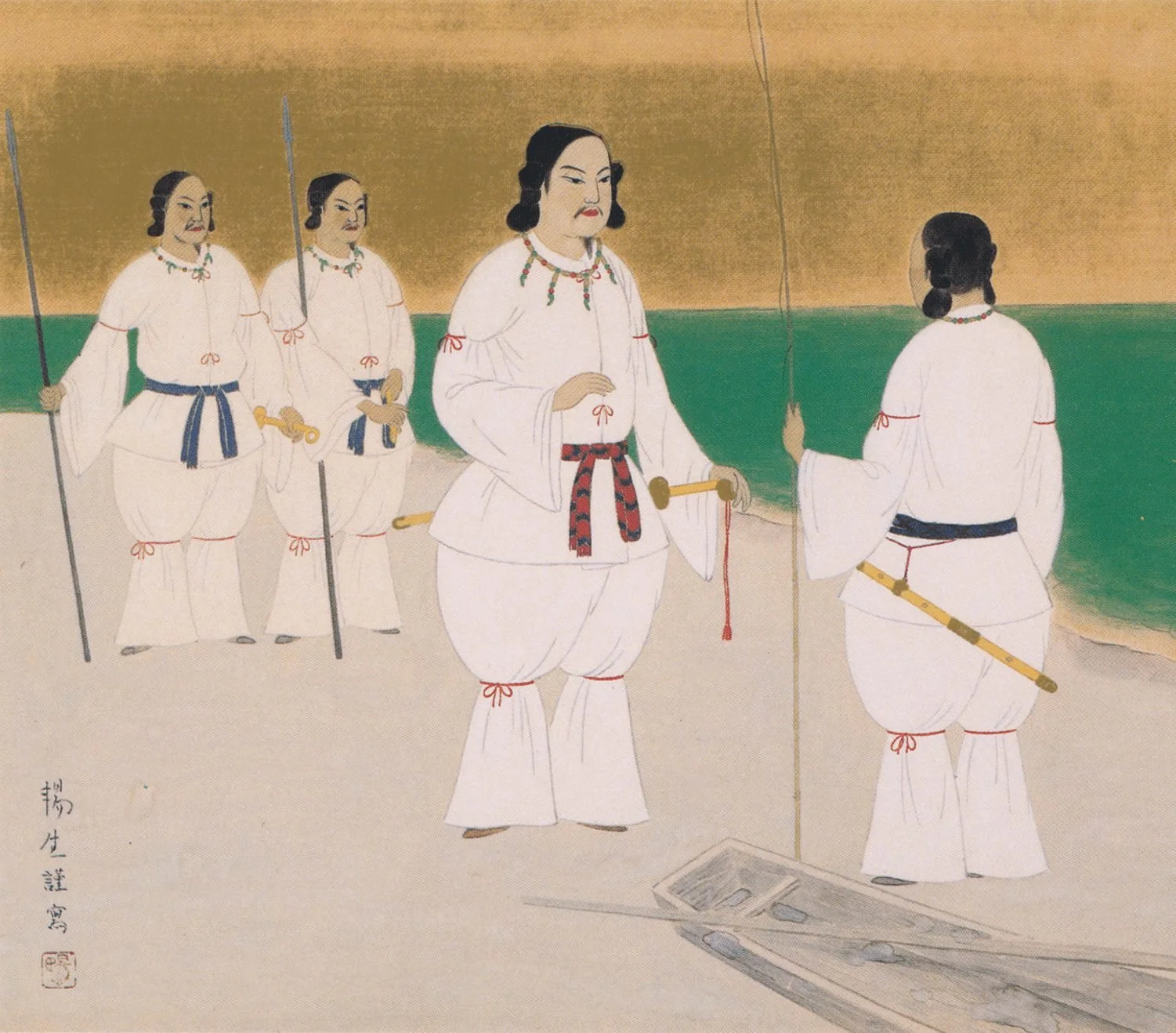
Reading the myth of kuni-yuzuri — the handing over of the land — as a simple story of one ruler replacing another misses what is most important about it.
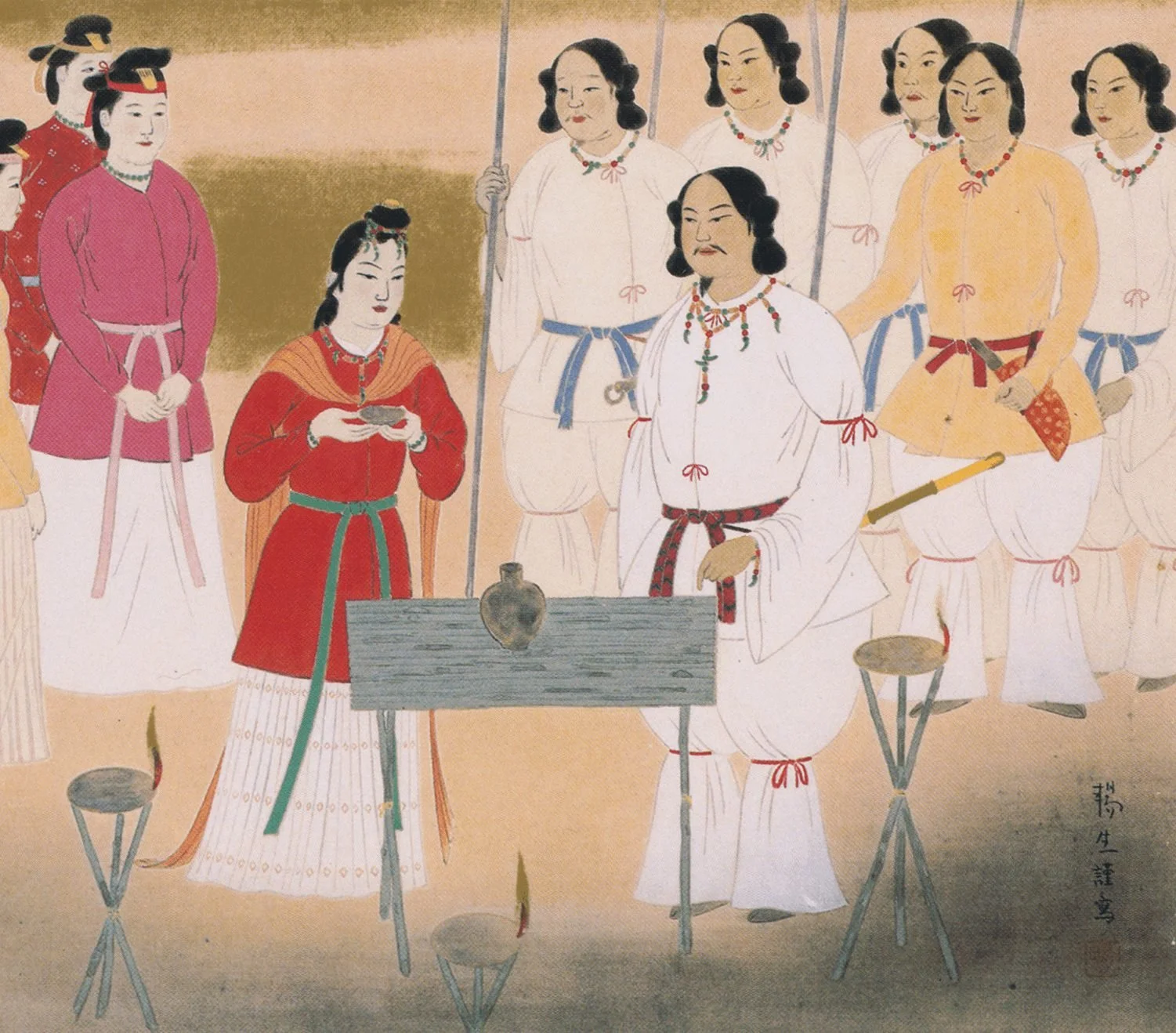
The outline of the story is this. The land has already been built — shaped by a deity who has governed it. The heavenly deities look down and send word: this land is to be governed by our descendant. The earthly deity, after extended negotiation, agrees, withdraws, and is enshrined in a great sanctuary in exchange.
What matters is how the Kojiki names the land itself. When Amaterasu — the Sun Goddess, the central deity of the heavenly lineage — sends her grandson Ninigi down to earth, she describes what he is going to: "This land — rich with reeds, heavy with rice across uncounted autumns — this is the land our descendant shall shirasu." The land is not empty. It already has a name, a character, a description: a land of rice, of sustained cultivation, of accumulated time. And the word used for how the heavenly descendant will govern it is shirasu.
The same word appears in the scene where the handover is demanded. The heavenly messengers tell the earthly deity, in effect: bring this land to submission as the land that the descendant of the heavenly deities shall shirasu. Here too, what is at issue is not who owns the land but rather by what principle it will be governed, and by whom.
What makes this story strange, if you come to it from outside Japanese tradition, is what does not happen. If this were a conquest narrative — the stronger party displacing the weaker — the earthly deity would be defeated, removed, perhaps destroyed, and the new order would replace the old. Instead: the earthly deity withdraws, yes. But he is enshrined. He is given one of the most important sacred sites in the archipelago. He does not disappear. He is given a new position within the order that has superseded him.
The old order is not erased. It is repositioned.
Here is the heart of the myth. The handover is not simply a story about who rules. It seems, rather, to concern how the land, the deities, and the existing order of sacred rite are to be placed within a new story. The new side does not destroy the old — it builds its legitimacy on top of it. The side that yields does not become a complete loser — it is positioned as indispensable to the establishment of the new order.
Seen this way, kuni-yuzuri might be better called a reorganization of order than a transfer of land. The fact that the land was already built by someone is not denied. What is altered is the principle by which it will be governed. So this mythology is not about the creation of the world; it is about the redefinition of who governs a world that was already there.
And the key to that redefinition is the word shirasu. It appears in Amaterasu's words; it appears in the scene of the demand. The land is placed not as something to be held, but as something to be shirasu'd. What the handover truly transfers, it seems, is not the land itself, but the governing premise — the assumption of how that land is to be treated. That premise has a name.
Chapter Five: Shirasu and Ushihaku
Shirasu and ushihaku. Neither survives in everyday modern Japanese; both require explanation even for Japanese readers today. But between these two words lies the core of the kuni-yuzuri myth.
Broadly put, ushihaku leans in the direction of "possessing" and "holding as one's own" — a word for governance that tilts toward ownership. Shirasu opens in the other direction: toward "knowing" and "governing." The precise ancient meanings are debated by scholars, and we should be careful about drawing too sharp a line. But that a difference exists — between rule as possession and governance that transcends possession — is something that reading this text plainly allows you to feel.
This distinction is difficult to render directly in modern language. Ushihaku is close to "to possess and rule"; shirasu is close to "to govern without owning" or "to rule through knowing and attending." To ushihaku is to hold the land as your own; to shirasu is to stand above the land without making it your private property. What transfers in the kuni-yuzuri myth, I believe, is precisely this premise.
In this respect, kuni-yuzuri is a deeply unusual story. A deity who has built the earthly land yields it to the heavenly side — which under ordinary logic might simply be conquest. Yet the myth frames it as negotiation. And the deity who yields is enshrined in a great sanctuary and maintains an important position within the new order. The victors do not erase the defeated; they acknowledge the power of what was there before, and build a different logic on top of it.
That logic is shirasu. The land is no longer held as someone's private possession — it becomes something to be governed under a heavenly order. The ruler is no longer the owner of the land but the one who takes responsibility for that order. What is happening is not simply a transfer of dominance but a transformation in the relationship between power and authority. A shift from the logic of "the stronger seizes the land" to the logic of "the land belongs to no one; what matters is how it is governed."
In the East Asian context, China has the distinction between wangdao — the kingly way, governance through virtue — and badao — the hegemon's way, governance through force. Shirasu and ushihaku connect to this contrast in certain ways. But China also has the logic of the Mandate of Heaven (tianming): Heaven's mandate withdraws from a dynasty that has lost virtue and transfers to another. Legitimacy can move to a different lineage. The heavenly order can work to justify dynastic replacement.
In Japan, things work differently. The heavenly order is indeed important, but it does not point toward dynastic change. Rather, at the moment of kuni-yuzuri, the legitimacy of governance seems to be mythologically fixed, once. The new order does not fully deny the authority of the earlier deities — it places itself on top of them. And in the history that follows, while the actual holders of political power change repeatedly, the imperial line itself remains unbroken.
Compared with the Western Divine Right of Kings, the difference is also striking. In that tradition, God grants authority to the king, and the king's power is guaranteed by God. But the logic of shirasu does not strengthen the absolute power of the ruler — it moves the ruler away from ownership of the land. The ruler is not the one who "has" the land; rather, standing above it without privatizing it, the ruler is the one who takes on a certain order. That difference is not small. In the first framework, the ruler becomes stronger; in the second, the ruler is placed at one remove from the land itself.
This is precisely why this logic fits so strangely well with the subsequent political history of Japan. Political power frequently left the Emperor's hands. There were Fujiwara regents, retired emperors governing from the cloister, shoguns, warrior governments, the modern state. Yet the Emperor did not disappear. Because the Emperor had never been positioned, from the beginning, as the owner of the land. The transfer of political power to a different holder is not the same as the breaking of the imperial line. That gap was prepared at the mythological stage — and that may be the true significance of the logic of shirasu.
To put it another way: what changed in kuni-yuzuri was not who "holds" the land. What changed was the premise itself — whether the land should be held at all. The land becomes not something to be seized but something to be known, prayed for, and governed. Kingship is shifted one register, from being the center of force to being the center of an order.
The imagination of governance in which the land belongs to no one and what matters is how it is governed — the fact that this was prepared at the mythological stage may not be entirely irrelevant to those thinking about politics today.
Chapter Six: Why the Line Could Continue
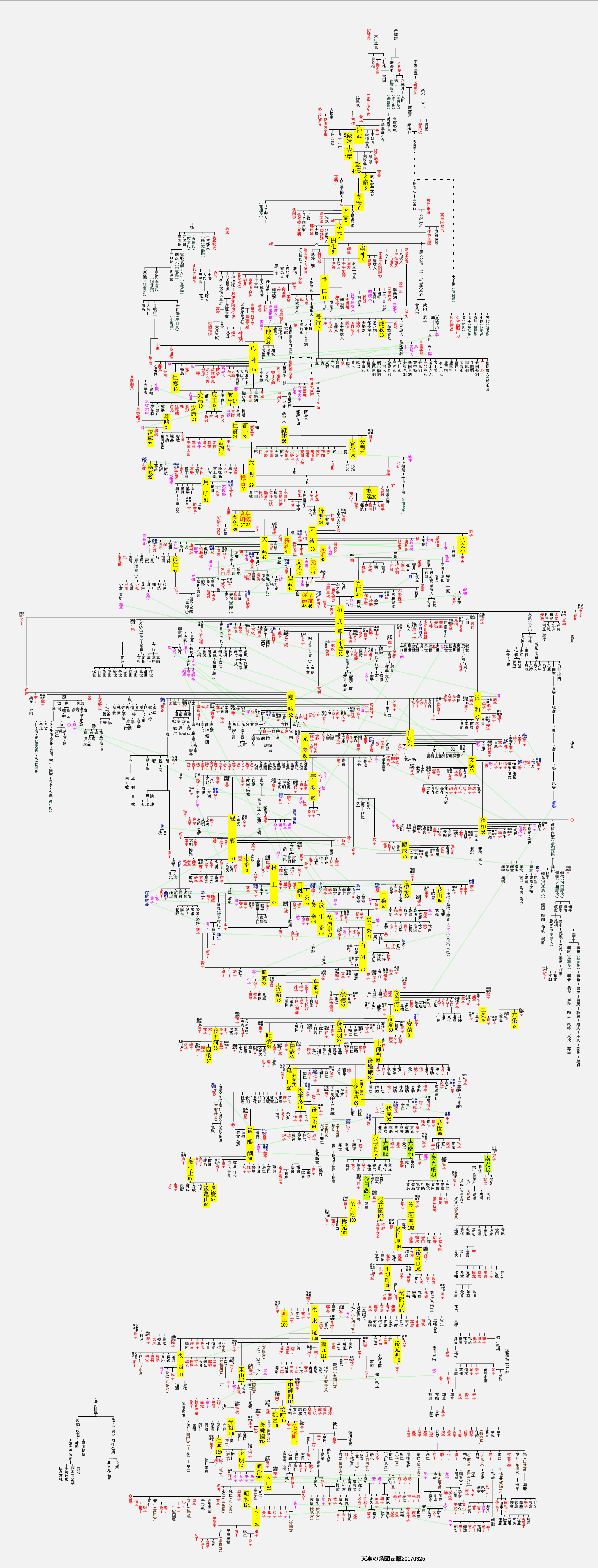
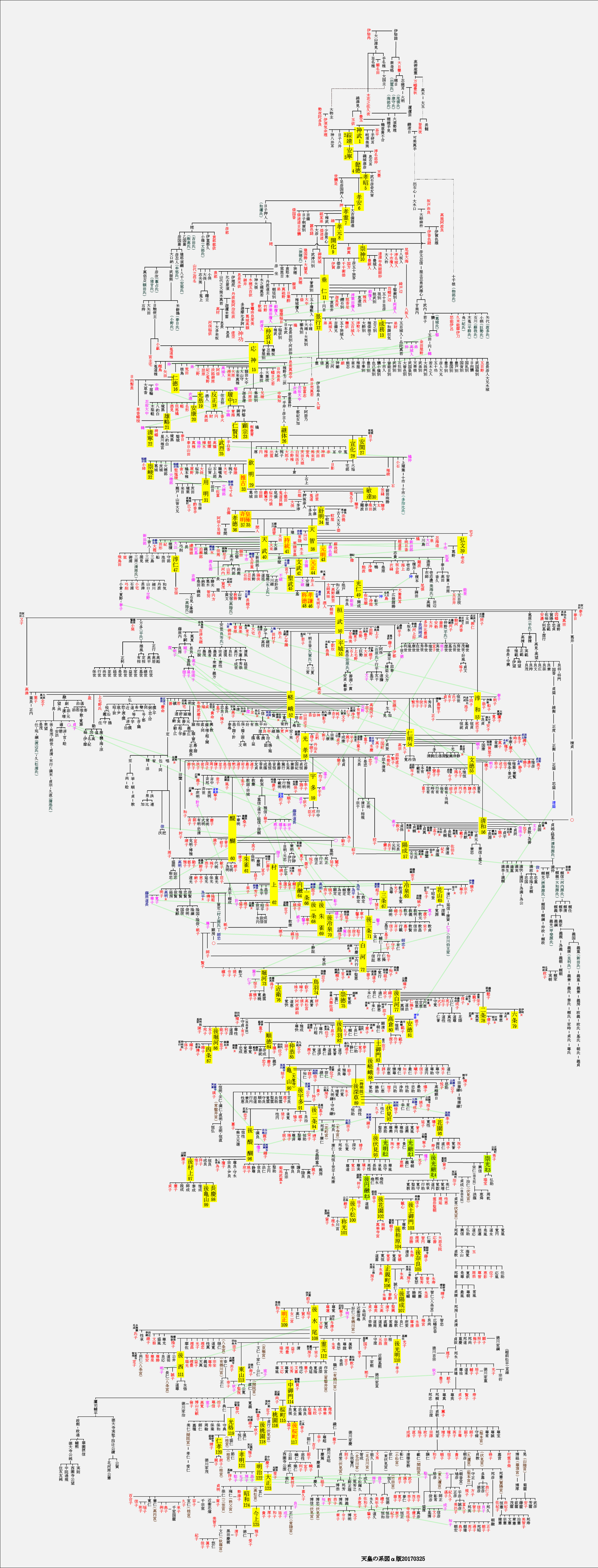
Why did no dynasty replacement happen in Japan?
The question has no simple answer. History contains its share of accident and contingency; it cannot be reduced to a single logic. And Japan's history is not without violence, suppression, and the brutal exercise of power. But there remains, as a characteristic, the fact that dynastic replacement of the kind seen in many other parts of the world simply did not occur.
One way to think about it: the mythology prepared a certain political imagination in advance. If a country is someone's private possession and the ruler is the one who holds it by force, then when a stronger rival appears, dynastic change is the natural outcome. But if the ruler is positioned as the one who takes on an order without owning the land, things change. Seizing power and ending the imperial line are no longer necessarily the same thing.
Japanese history proceeded exactly in this way. The Fujiwara clan moved politics but did not become Emperor. The shoguns held military power but did not replace the imperial line. The modern state sought concentrated sovereignty but did not abolish the imperial institution — it reorganized it into a different form. Across all of this, there is a structure in which the political center and the center that symbolizes the order are slightly offset from the beginning.
That offset was something I felt when I looked at Tokyo and Kyoto side by side in the previous article. The Kōkyo is close to the center of modern state power. But the Kyoto Gosho, though it was once the political center, maintains a different kind of centrality — one that has already stepped back from politics. Stone walls and clay walls. Defense and permeation. The difference felt less like a design choice than something like a long habit of this country — the habit of not placing power and authority in the same location.
Where did that habit begin? The ancient layer of sacred rite in the Nara basin. The myth of kuni-yuzuri. The logic of governance called shirasu. None of this alone explains everything. But it does seem as though the footing was established here — the conditions under which the Emperor could be positioned not as the strongest ruler but as the center of an order that transcends the land.
And on that footing, the imperial line could continue even as power passed to other hands. Because the Emperor was never mythologized, from the beginning, as the one who monopolizes power. On the contrary: the imagination of governance that made the Emperor possible required standing above the land without owning it. In that sense, the continuity of the imperial line is not simply the product of contingency — it is also the result of a positioning established at the start.
This is not a reason to idealize Japanese politics. The actual history contains violence, suppression, and power struggle. But it remains true that the history of who actually ruled and the history of where final legitimacy was located did not completely overlap. There lies the specific character of the imperial institution in Japan.
To collapse that specificity into the meme that "Japan is special" and call it sufficient is to let go of the question. What matters is to ask what governing vision could sustain a structure in which power and authority are offset. Tracing that question back to Nara, the Emperor begins to look less like the center of the state than the figure who, generation after generation, has personally embodied the governing ideal our forebears embedded in this country's founding myth.
Epilogue: Pedaling Through Time
The next morning I set my navigation for Kyoto.
Nara to Kyoto: a little over fifty kilometers. An estimated three hours. After four days of working toward Nara from Kyoto the long way around, the number looked newly small on the screen. Of course — take the long way and the distance grows. But seeing it like that, on the navigation map, made me feel again how nearly adjacent these two basins actually are.
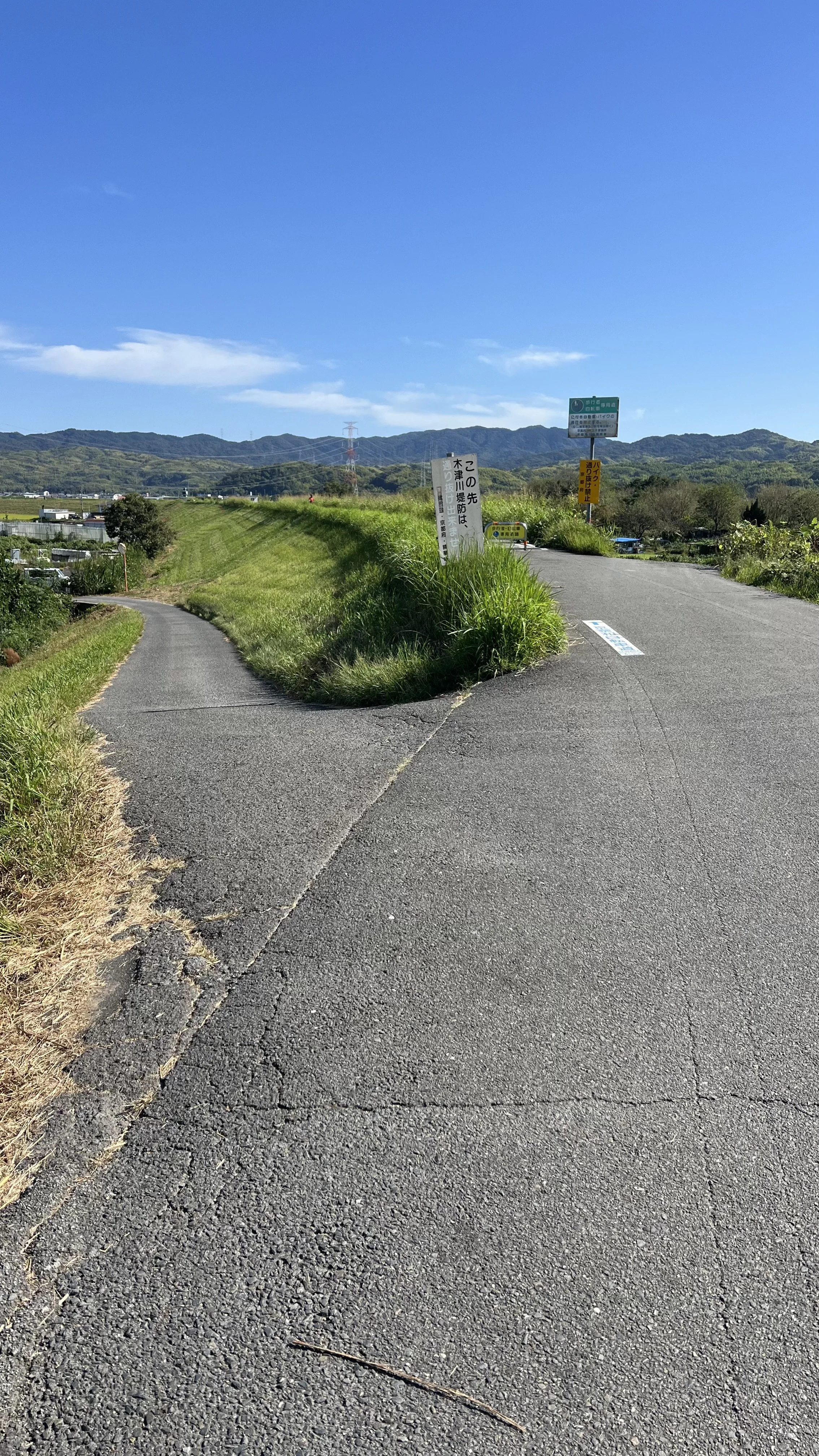
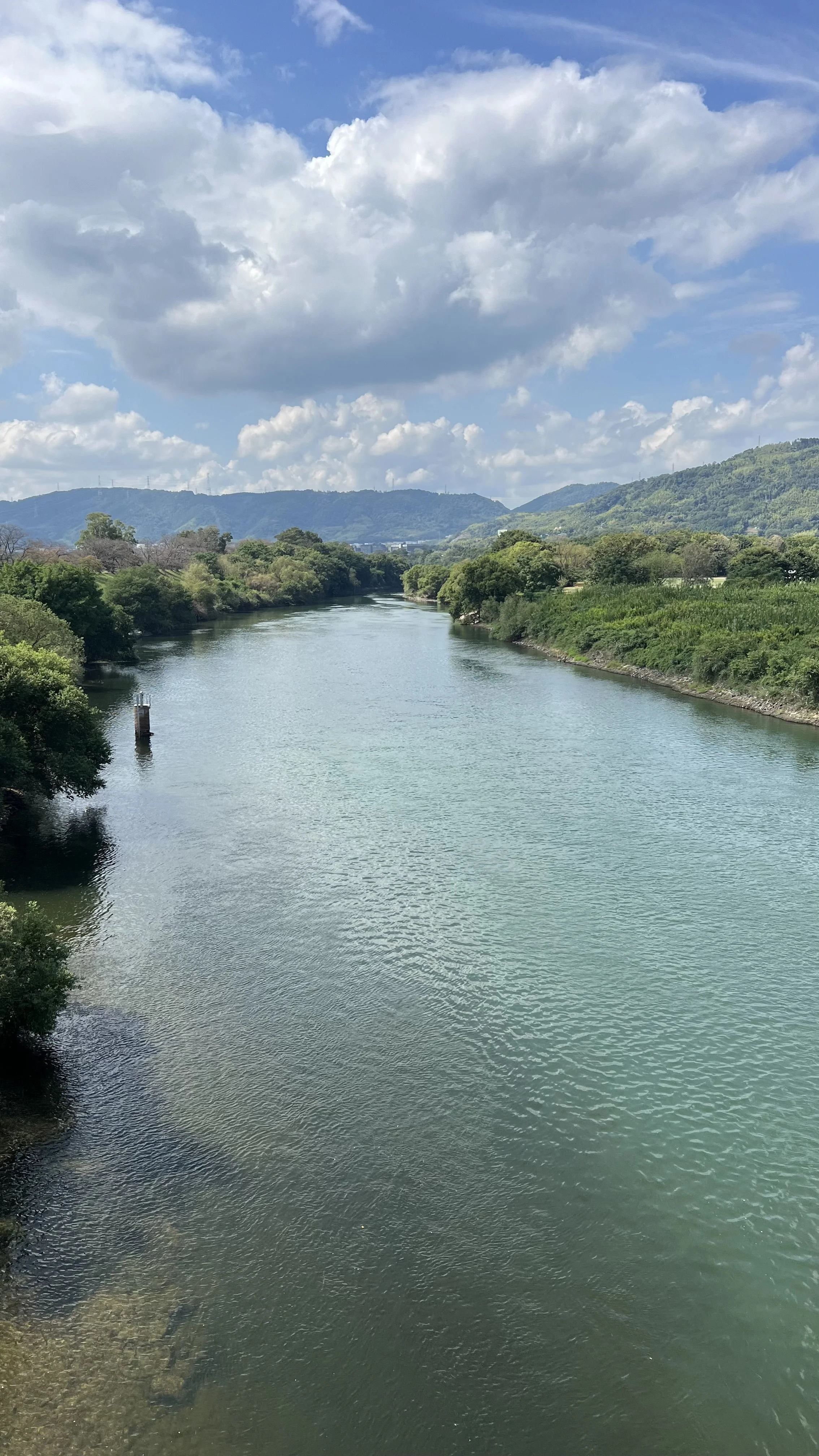
About ten kilometers out, I joined the Keinawa Cycling Road along the Kizu River — a paved path running along the embankment northwest toward Arashiyama, forty-five kilometers of open riding. Coming up onto the embankment, the view opened at once. Ahead: the mountain range edging the Kyoto basin. Behind me: the ridge cupping the Nara basin. The Kizu River flows between the two. Riding along the embankment, watching my position move on the navigation map, I understood clearly where I was. But my mind kept moving between different eras and perspectives, unable to settle.
The experience of actually riding the Yamanobe no Michi had become a catalyst for the knowledge I had accumulated — something wordless was stirring. Left overnight, it had begun to move quietly again from the moment I started pedaling. Something in me had begun to ferment.
As I rode, various images rose and dissolved without forming into anything coherent.
Ten years before the capital moved to the Heian-kyō that underlies present-day Kyoto, Emperor Kanmu built Nagaoka-kyō — in 784 — even further west, and made it the capital. How large was Kanmu's party, and which road did they take? Packing up, moving people, leaving the palace and heading north. What were they thinking? At least the shape of those mountains hasn't changed, I thought — and was surprised at myself for thinking it.
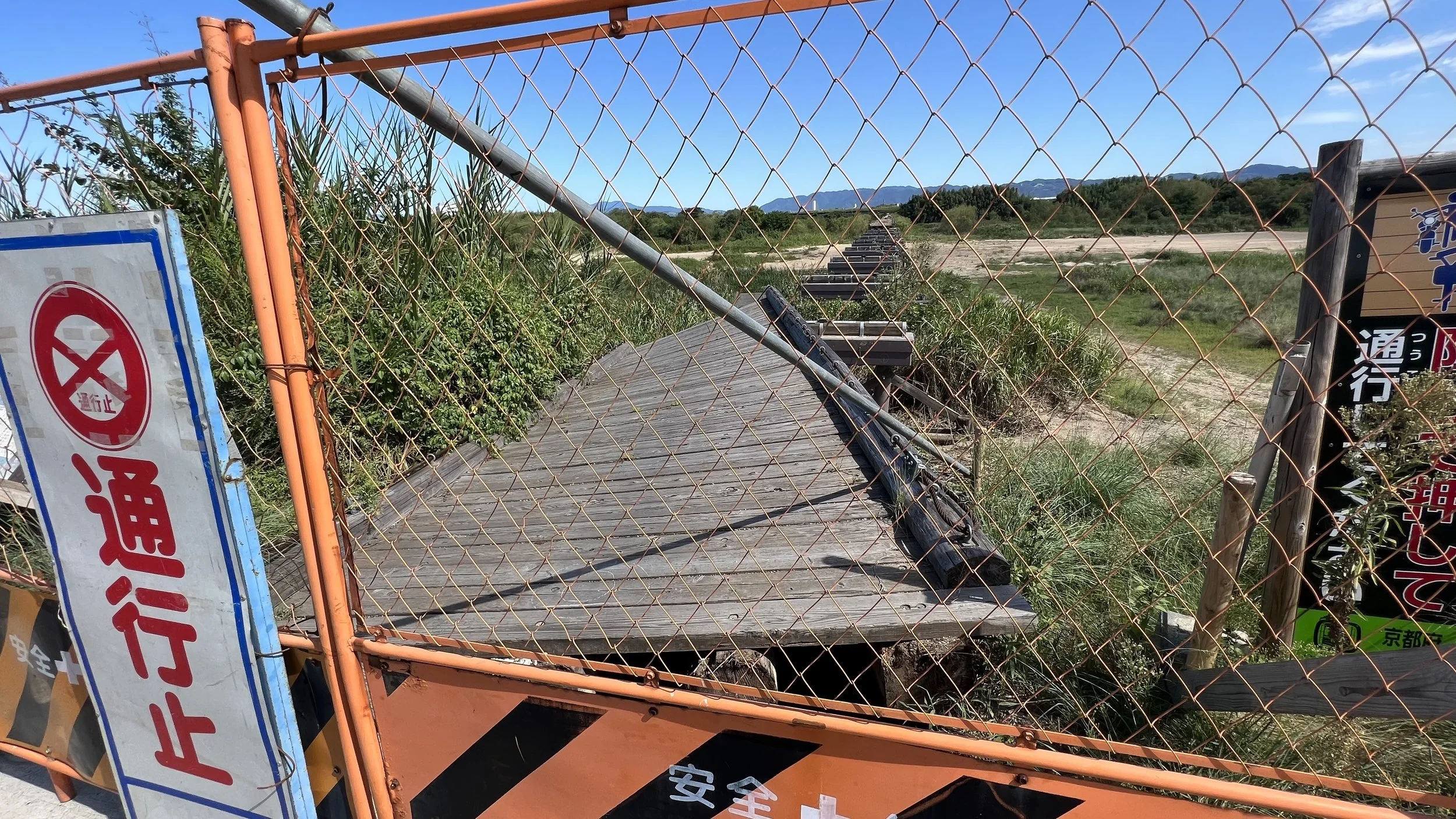
Just before Uji, I found that the Kamitsuya Bridge on my route had been washed out. The bridge planks were tilted; a barrier stood across the path. There had been a flood. I had to detour. And I remembered reading something: that the abandonment of Nara as a capital was not only about escaping the influence of Buddhism. As the population of the capital grew, the surrounding mountains were stripped for fuel and lumber. The slopes lost their capacity to hold water; the rivers flooded; disease spread. A failure of environmental management had helped push the basin to its end. The river may quietly remember that.
I kept pedaling and thought about the myth of kuni-yuzuri. The heavenly deities and the earthly deities. The gods who came from elsewhere and the gods who were already here. The victors do not erase the defeated; instead, both parties are transformed in the same place, and something new emerges. Like the brewing process of Japanese sake — multiple fermentations proceeding simultaneously in a single tank. In the closed vessel of an island country, different cultures do not simply replace each other. They act on each other and become something else. Not victory and defeat, but fermentation.
I also thought about the Emperor. He has too little control over his own circumstances to be called a ruler in any ordinary sense. I feel no envy. If anything, something closer to gratitude, or to a kind of apology. Someone whose individual selfhood has been surrendered from the outset — one who has long existed in that form. Service to the gods, to the state, to the people. For the sake of a certain stability, the freedom of one human being has been offered up from the start.
Was that chosen? Was it a position that hardened gradually through relationships of power? By the time the mythology was being compiled, perhaps this political role was already understood. Perhaps the mythology was shaped this way in order to make that integration — of heavenly and earthly deities — the foundation of the new country — and in that mythology, the ruler was placed not as the one who possesses the land, but as the one who stands above it and prays without cease.
No answer arrives cleanly. They probably cannot come, and the only option is to pass the question on to the next.
The question does not end here. The ancient logic prepared in myth was eventually going to be translated into an entirely different grammar — the grammar of the modern state. The Meiji Restoration was that attempt at translation. What it managed to carry across, and what it could not. The parts that connected, and the distortions those connections produced. Riding along the embankment, tracing with my eyes the mountain range that continued toward Kyoto, the question was still reaching further ahead.
