Independent Research and Itinerary Review in Japan
For operators building programmes in Japan, and for those approving itineraries they cannot verify from abroad.
Tokyo-based. National Government Licensed Guide Interpreter.
I make no bookings and take no commission.
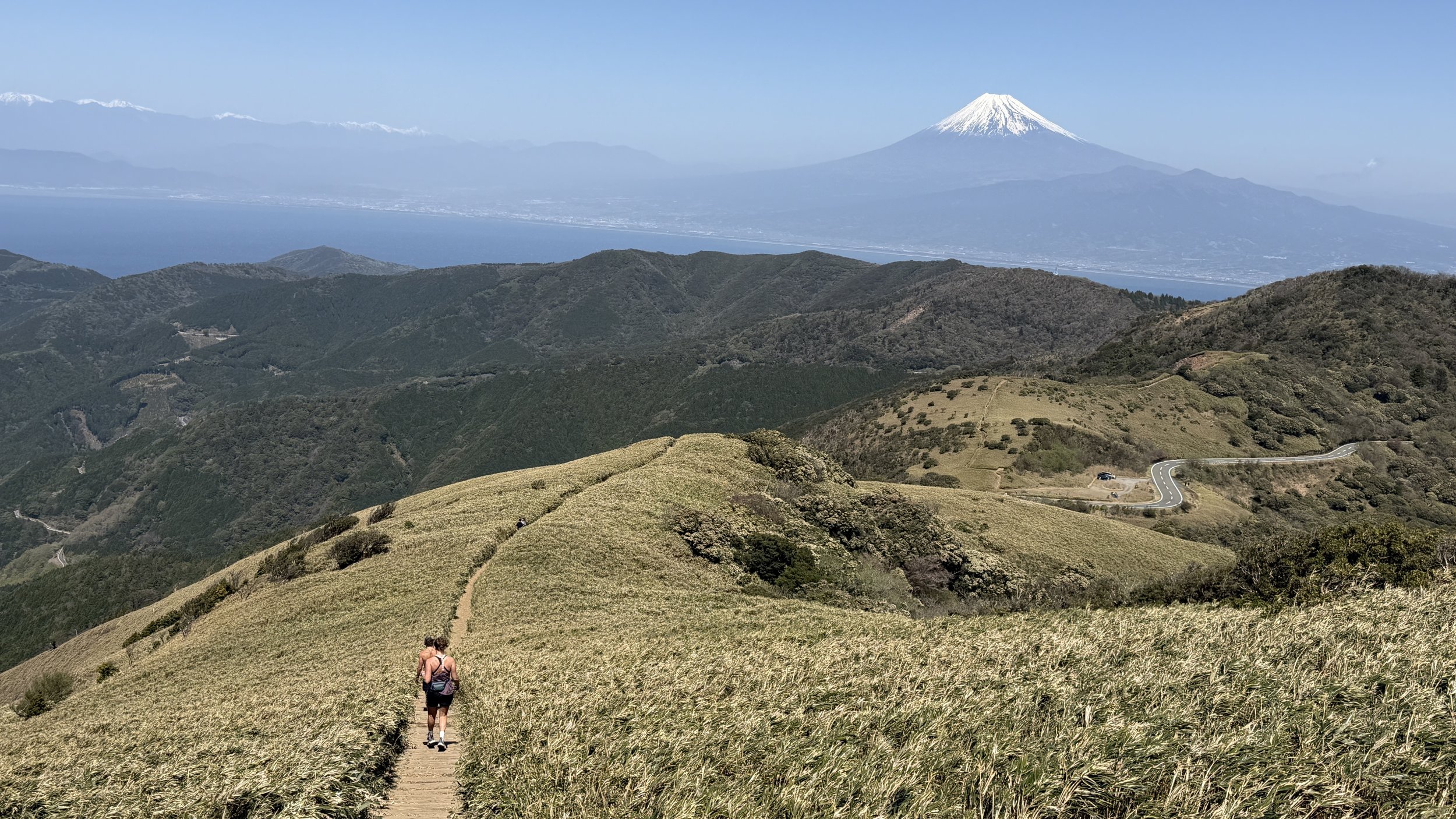
West Izu Skyline. Route research, spring 2026.You
are probably here because one of these is true.
You are building a programme in Japan and cannot send someone to look at it.
You have a proposal from a land operator, and no independent way to test what it says.
You are approving an itinerary for a private client that somebody else designed.
Sending your own staff costs a week and an airfare.
Most of what you need to know is not written down anywhere — not in English, and often not in Japanese either.
The Gap
The gap is not language.
-
No.
The decision has already been taken. "Difficult" is how a settled refusal is phrased — there is no easier version to find.
-
No — or it never reached anyone who decides.
Often the polite end of a conversation. Ask who else has to see it, and by when.
-
Conditionally. The conditions have not been stated.
"Basically" reserves the exceptions. For a group booking, the exceptions are the whole question.
-
There will be dashi in it.
Stock made from bonito or dried sardine is the base of most dishes, and is not counted as an ingredient. Meat-free means nothing visible on the plate.
-
For three kei cars.
Spaces are counted, not measured. Ask for the number, the height and width limits, and whether a vehicle can stay overnight.
None of these are mistranslations.
Every one of them is an accurate rendering of what was said.
No Stake
What I don't do
I don't make bookings, and I take no commission from any hotel, restaurant, or supplier I recommend. If a property isn't right for your group, I have no reason not to say so.
When you need arrangements made, I'll introduce you to a registered land operator — and I'll have no financial interest in which one you choose.
Work
How far I go
-
Whether a region can carry your programme. Whether an itinerary someone else wrote will hold up on the ground. Or a draft itinerary, on paper, for you to take to your own operator.
You receive: a written answer, the reasoning behind it, and the points that will fail first. -
Properties, routes and segments checked in person against your group's actual constraints, not against a general standard.
You receive: findings property by property and segment by segment, in a fixed format, with the source and the confidence marked on every line. -
I travel a departure as an independent observer, separately from your trip leader, and watch the plan meet the ground.
You receive: where the two diverged, and what to change before the next departure. -
Questions answered as they come up, within an agreed turnaround.
You receive: a standing answer to "can someone check this before we commit." -
One specific question about Japan, answered in writing. One organisation, once. Credited in full against any work commissioned within ninety days.
Fees are quoted per assignment. Expenses are billed separately, at cost — I don't fold them into a day rate.
Format
What a report looks like
The format is fixed, so that two assessments can be compared. It is not a narrative.
-
capacity, room configuration, meals, cycling provision, vehicle access, operations, price, verdict
-
group seating, timing, how dietary requirements are actually handled
-
measured figures, road environment, operational logistics, experiential value
-
transfer times measured door to door, the vehicle size the approach will actually take, where it waits and turns, luggage handover and who moves it, bike shipping and overnight storage, support-vehicle access and stopping points, rail transfers with bikes and luggage, driver hours
-
seasonality, risk, reception, overall verdict
-
source, date, who said it, and how confident I am
Every line carries one of three marks: published figure, confirmed by phone, or unverified. Where I could not confirm something, it says so. Nothing is smoothed over to make the report look finished.
Questions
What gets asked
These are questions in the form they actually arrive in. Not a list of services.
-
Sixteen guests, eight twins, one night, one support van, lockable bike storage, breakfast at 06:30 — can this ryokan take it?
Can the dining room seat sixteen in one sitting, or will it be two?
Will the support van clear the approach, and where does it park overnight?
This segment is 62 km with 900 m of climbing. What does it take a mixed group, with the lunch stop, in late October?
If someone stops riding at kilometer 40, where do they wait and how long is the pick-up?
The hotel says it can do vegetarian. What will actually arrive at the table?
Two guests want singles. Does the property have them, or will it split a twin and charge for both?
Can bikes be shipped ahead to this address, and who signs for them?
What closes in this area in February, and what replaces it?
Is there a toilet between these two points, and is it open in winter?
-
My client has been offered this three-night sequence. Do the transfers work, or is one of these days a train day in disguise?
The itinerary allows ninety minutes here. Is that a visit, or a photograph?
This property is described as having a private onsen. Is it private, or a reserved slot in a shared bath?
My client will not walk more than two kilometres. Which of these five sites remain?
Can this restaurant take six at 19:00 in early April, and will it accept a booking from abroad?
The operator recommends this driver-guide. Is that a guide who drives, or a driver who talks?
What does this cost when it is not sold as a package?
Which of these three properties has actually hosted guests with no Japanese — and which has only said that it can?
If your question isn't here, it is probably still answerable. If it isn't, I'll tell you that instead of guessing.
Who

I guide in Japan for overseas operators — Backroads, SpiceRoads and Exodus among them. That is guiding work, not consulting work, and I describe it that way because the distinction matters when you are deciding whether to trust an assessment.
National Government Licensed Guide Interpreter (English). Based in Tokyo.
I write about Japanese history and landscape on the blog, and in Japanese at note.com. The research habit on this page is the same one behind those essays: go and look, read the primary source, and say plainly where the record runs out.
The guiding side of the work is described on the About page.
Conflicts
Before you ask
I take no commission and make no bookings.
I don't work for two operators selling the same area at the same time. Where that comes up, the earlier engagement holds, and I say so at the enquiry stage rather than afterwards.
Where I have guided for an operator, I tell you which one before we start.
For public-sector work in Japan, I apply a twelve-month interval between working for an area's public body and working for an operator selling that area.