Nikkō: Strata of a Landscape — The Mountain of Gods and Buddhas, the Lake That Had No Fish
Prologue: The Black, Still Surface
It was the third evening of the tour.
My guests were dining at their hotel, and that night I had no reason to join them. The evening before, we had shared a group dinner at a sushi restaurant near their hotel, and I had visited the same place on our first day to make arrangements — a small reconnaissance meal. It is a remarkable restaurant for this deep in the mountains, far from any coast, and the chef and his staff are unfailingly warm. I look forward to returning every time. But three consecutive nights of sushi seemed excessive, even for me.
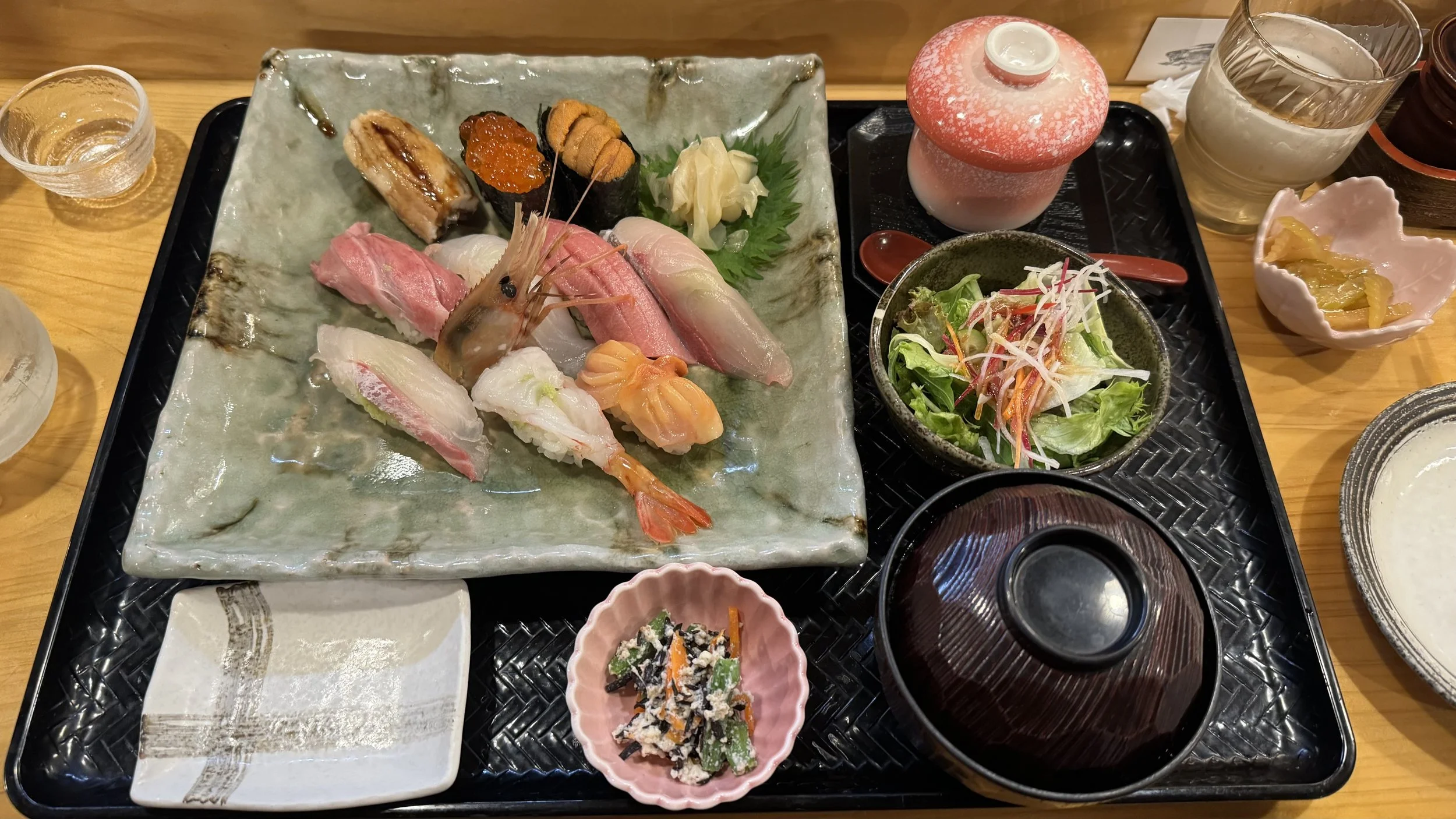
On a weekday, the shores of Lake Chūzenji grow quiet early. The town is well known as a tourist destination, yet by the time the light begins to fail, most of the shops along the main road have already closed. Everyone, it seems, takes dinner at their hotel. I walked along the lakeshore looking for somewhere to eat and gradually became aware that this might be more difficult than expected. It wasn't that I couldn't decide what I wanted — it was that I couldn't find anywhere open.
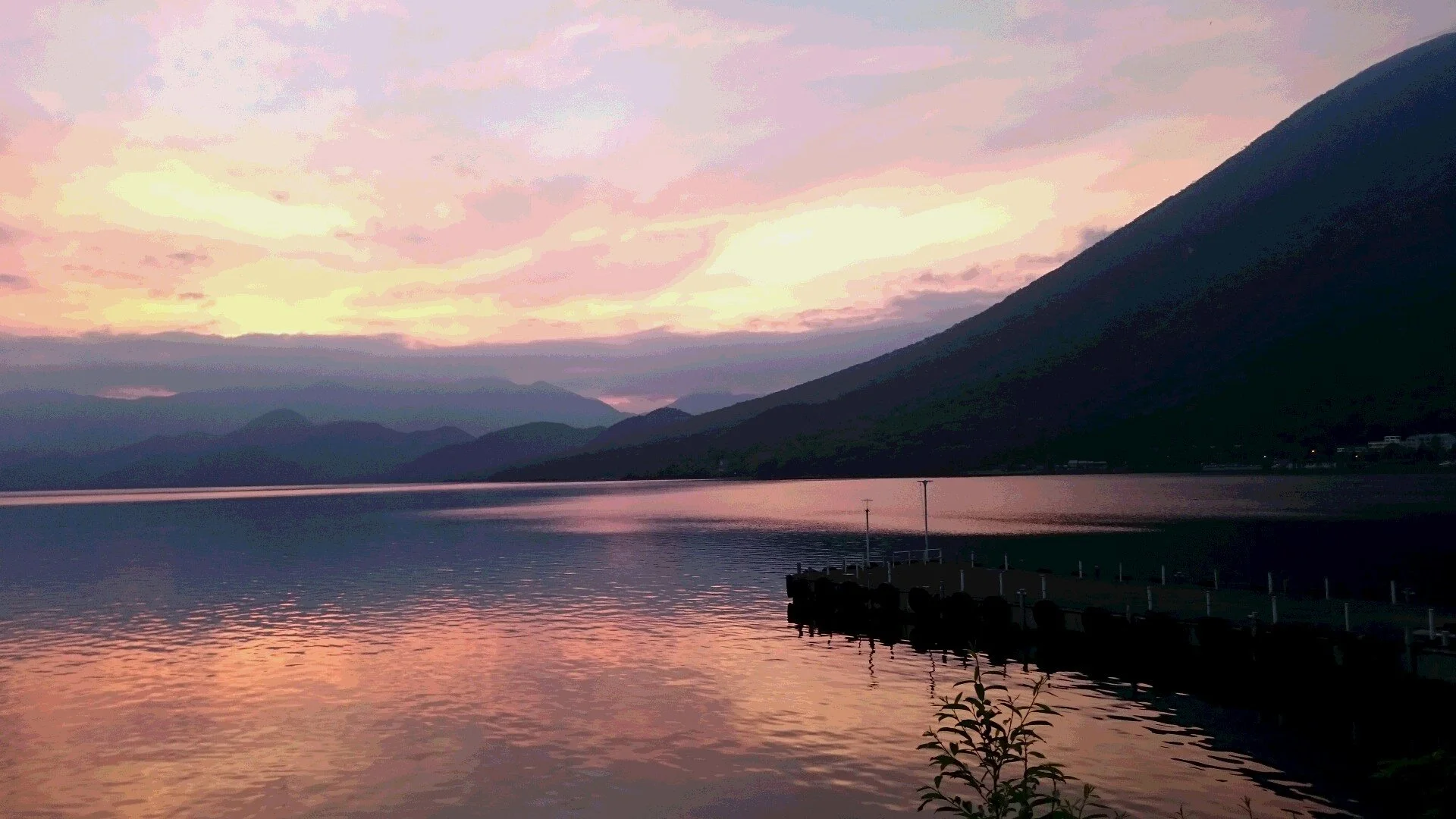
The sun had already dropped behind the mountains. Only the sky held the last of the light. Along the shore, a handful of tourists pointed cameras at the lake; the path where I walked was otherwise empty. I had half-resigned myself to turning back when I noticed a small bistro, a French flag hanging above the door, with its lights on. It was a little early for dinner, and there were no other customers inside, but the windows held a warm color. I opened the door and spoke to the chef — a quiet, gentle-looking man — who told me a reservation wasn't necessary and welcomed me in.
I ordered a glass of Tempranillo and chose a few dishes from the menu rather than the set course.
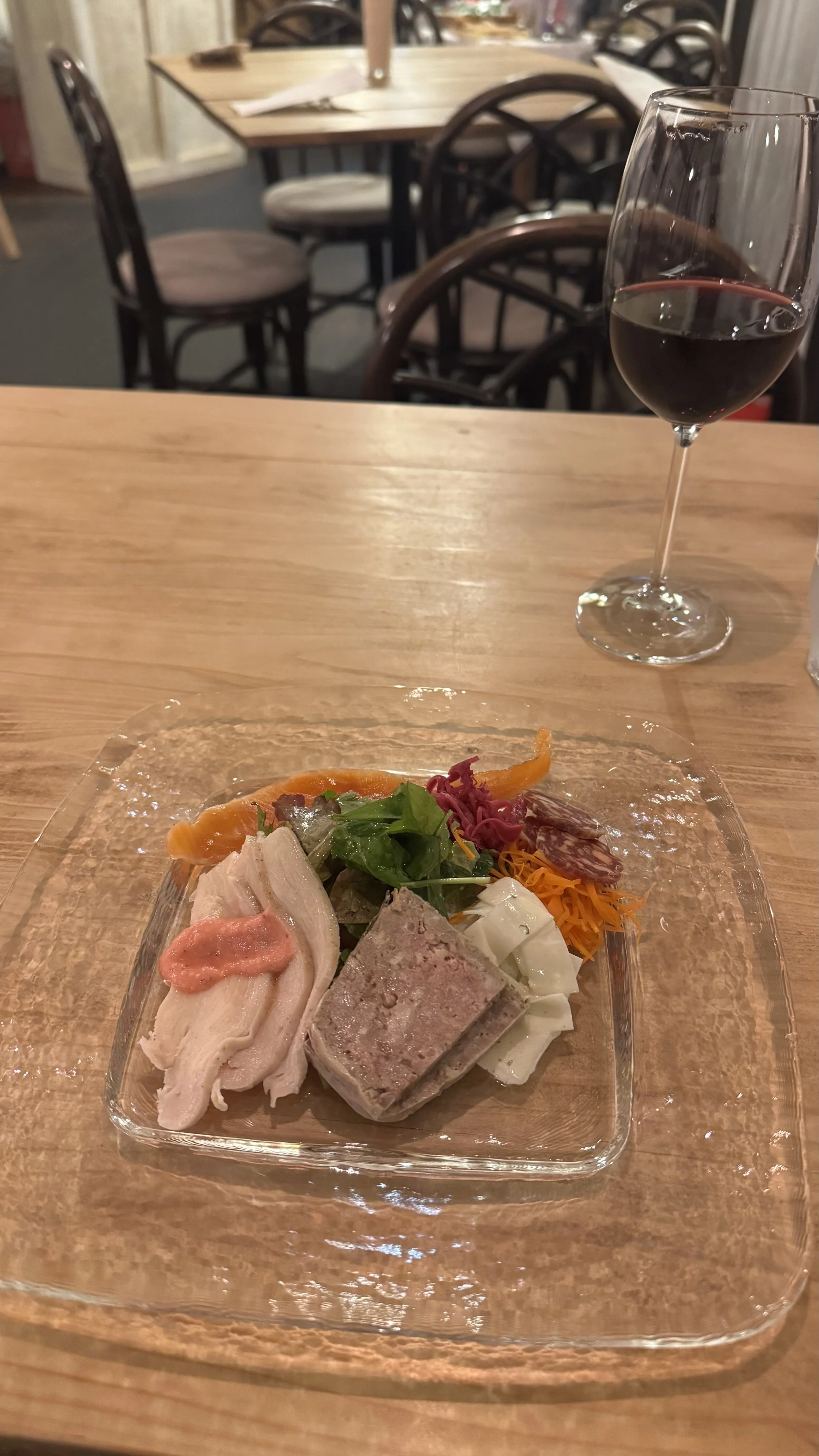
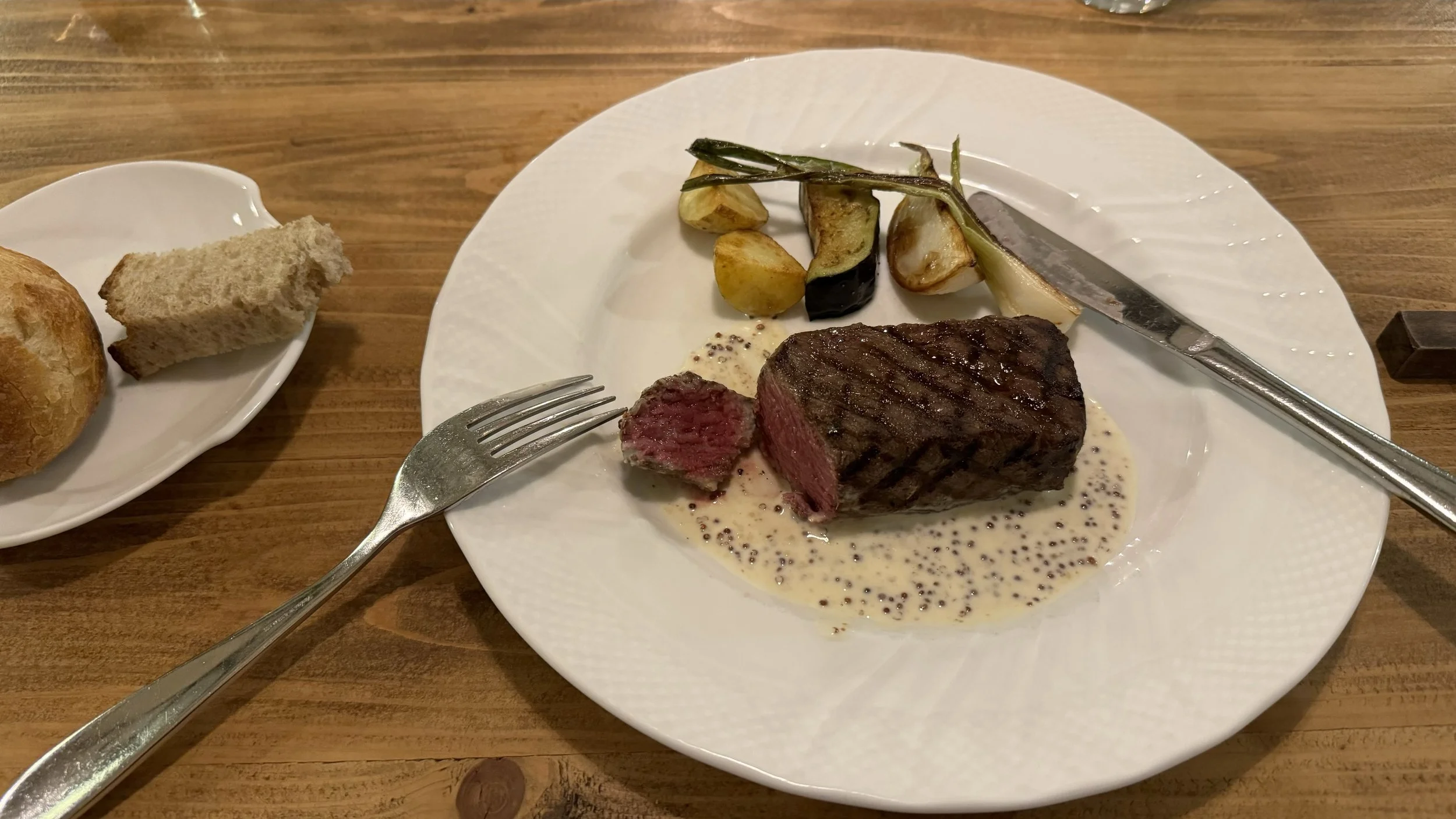
The first time I saw the name Tempranillo, I remember thinking: that sounds like tempura. A friend had introduced me to the wine years ago, and I had liked it since. I had half-remembered that tempura came from the Portuguese, and wondered vaguely that evening whether the two words might share some root. They don't — the etymologies are entirely separate, though both words, as it turns out, trace back to the Iberian Peninsula by different paths. Tempranillo comes from the Spanish temprano, meaning early, for the grape that ripens ahead of others. Tempura derives from the Portuguese têmporas, referring to the Catholic Ember Days when meat was avoided and fish and vegetables were eaten instead. That kind of thing — a connection that feels meaningful, dissolving into pure coincidence on examination — is one of the pleasures of traveling alone. The mind wanders where it likes.
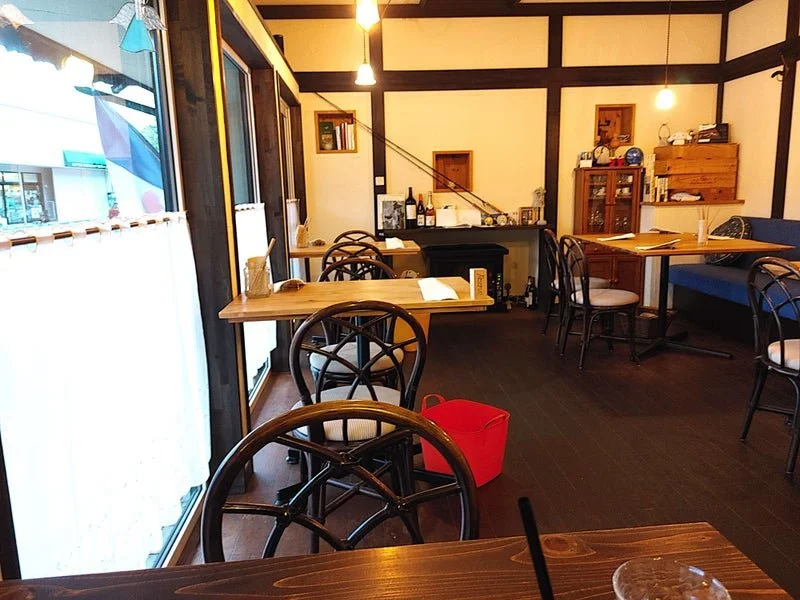
As the evening darkened outside, the light inside the bistro seemed to deepen. Time moved slowly. It was quiet, unhurried, slightly detached from the ordinary world. I looked around the room and noticed that the shelves and walls were hung with fly-fishing gear — reels, rods, old equipment arranged not as tools but as fragments of memory. I fish, and I fly-fish, but I had never fished Lake Chūzenji itself. My usual grounds are the mountain streams, where the rhythms are different — different tackle, different silences. I had always meant to try the lake someday.
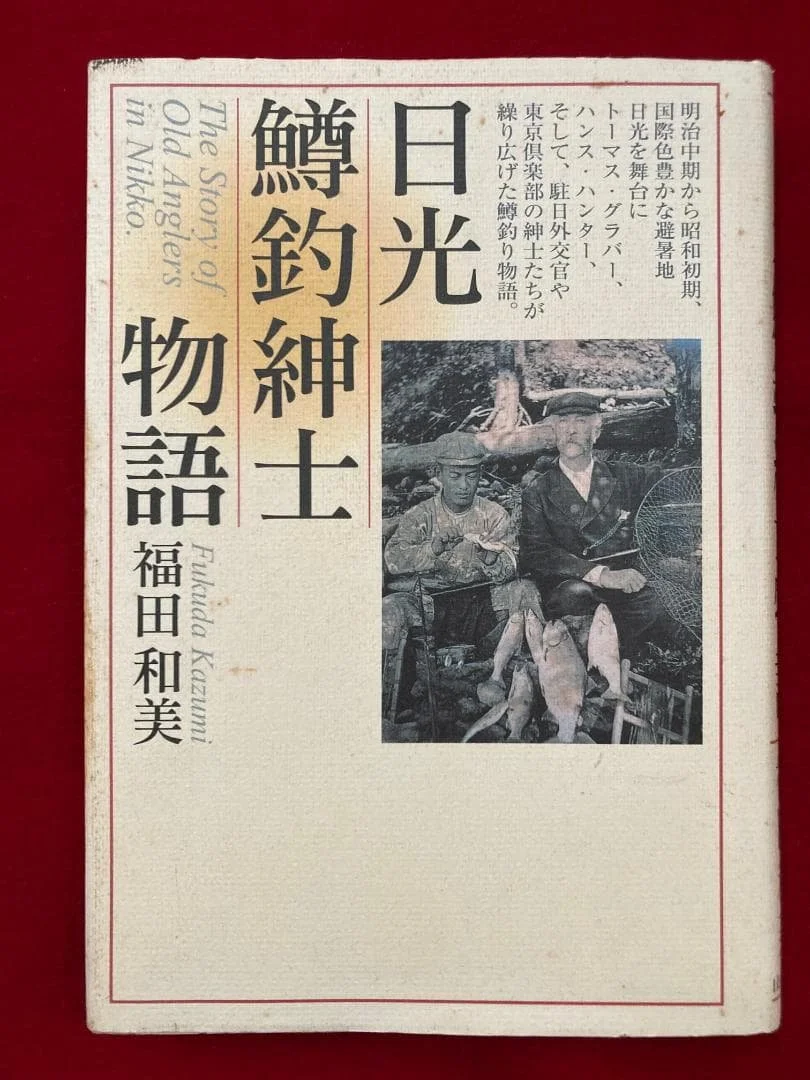
With some time before the food arrived, I got up and walked over to examine the gear. Among the books on the shelf, one caught my eye: Nikkō Masu Tsuri Shinshi Monogatari — roughly, The Gentleman Anglers of Nikkō. The cover photograph was old: a foreign man posed with several large trout and a Japanese attendant. The back cover promised to explain why Nikkō had become a sacred site for Japanese fly-fishing. Among the names listed there — names of figures who would appear in the story — I noticed Thomas Blake Glover.
I had heard that Nikkō was one of the places where fly-fishing first took hold in Japan. I also knew Glover — a Scottish merchant who had been active in Japan from the final years of the Edo period through the Meiji era, known to most Japanese through his residence in Nagasaki. But I had never associated Glover with Nikkō. That connection didn't fit anywhere in the picture I carried.
I brought the book back to my seat and opened it. There I found the sentence: Lake Chūzenji, originally, had no fish.
It wasn't quite surprise — more like placing your foot on a rock that shifts unexpectedly underfoot, that faint lurch that fly-fishers will recognize. For anyone who fishes, a body of water is assumed to contain fish; that is the prior condition. Of course the species vary, and stocking is always a factor. But a lake that had no fish at all — that, at least for me, was a fact that inverted the image of Chūzenji entirely.
I turned and looked out the window. The lake, which had still been holding a last trace of reflected light, had gone black.
In the years following the Meiji Restoration, a man named Hoshino Teigoro — village headman at the foot of Mount Nantai — had carried iwana (Japanese char) up from the stream below Kegon Falls and released them into the lake. That was the beginning. At the time, the switchback road that would later be called the Iroha-zaka did not yet exist; only a steep pilgrim's path, cut through sheer rock faces for mountain ascetics, connected the town below to the lake above. I found myself wondering what effort that must have taken, and what had driven him.
I wanted to read on, but the food arrived. By the evening's end I had barely crossed the threshold of the story. While waiting for dessert, I looked the book up on my phone and found it long out of print, selling for well over ten times its original price. Everything seems available now — and yet the things you most want to find are still the hardest to get hold of.
I didn't buy it that night. But I enjoyed imagining the story that followed. Fish entering a lake that had had none. What happened next. How that became possible. And how, of all places, this had become one of the origins of Japanese fly-fishing.
That night, with the black lake outside the window, I sat with a glass of wine and began constructing a story I hadn't yet read.
1. A Fisherman's Eye
When you're fishing, you appear to be looking at a landscape. But most of the time, you're looking at something much smaller.
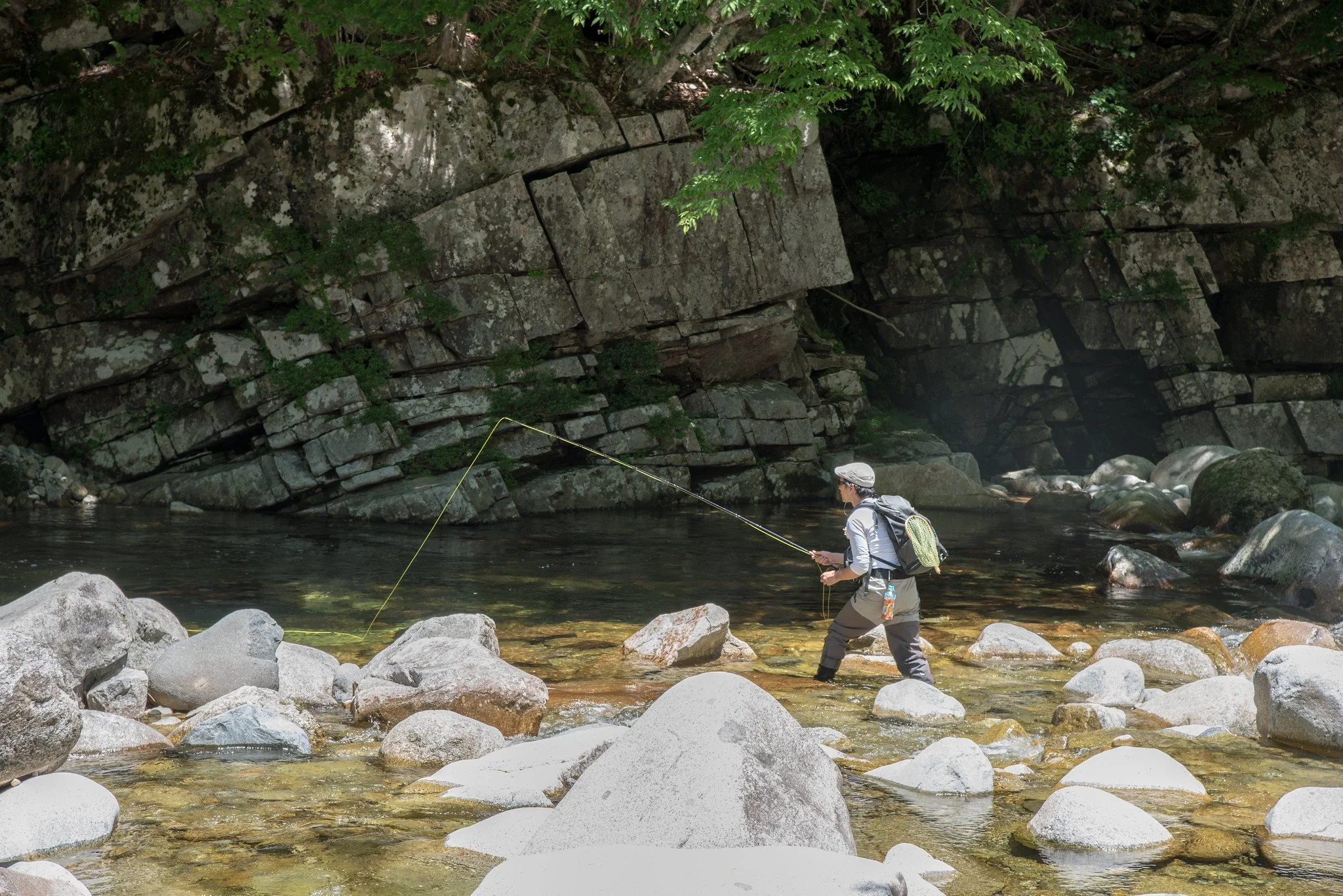
The line of the current. The direction of the wind. A shadow at the edge of the grass. The pause before a rise. Fly-fishing, I think, is less about movement than about observation. Not so much defeating the water as adjusting yourself to its conditions. You choose a position, send out the line, wait; if nothing happens, you begin again. In that repetition, your relationship to the thing in front of you shifts. And then, for a moment, you look up and notice the surrounding landscape. The edges of yourself soften.
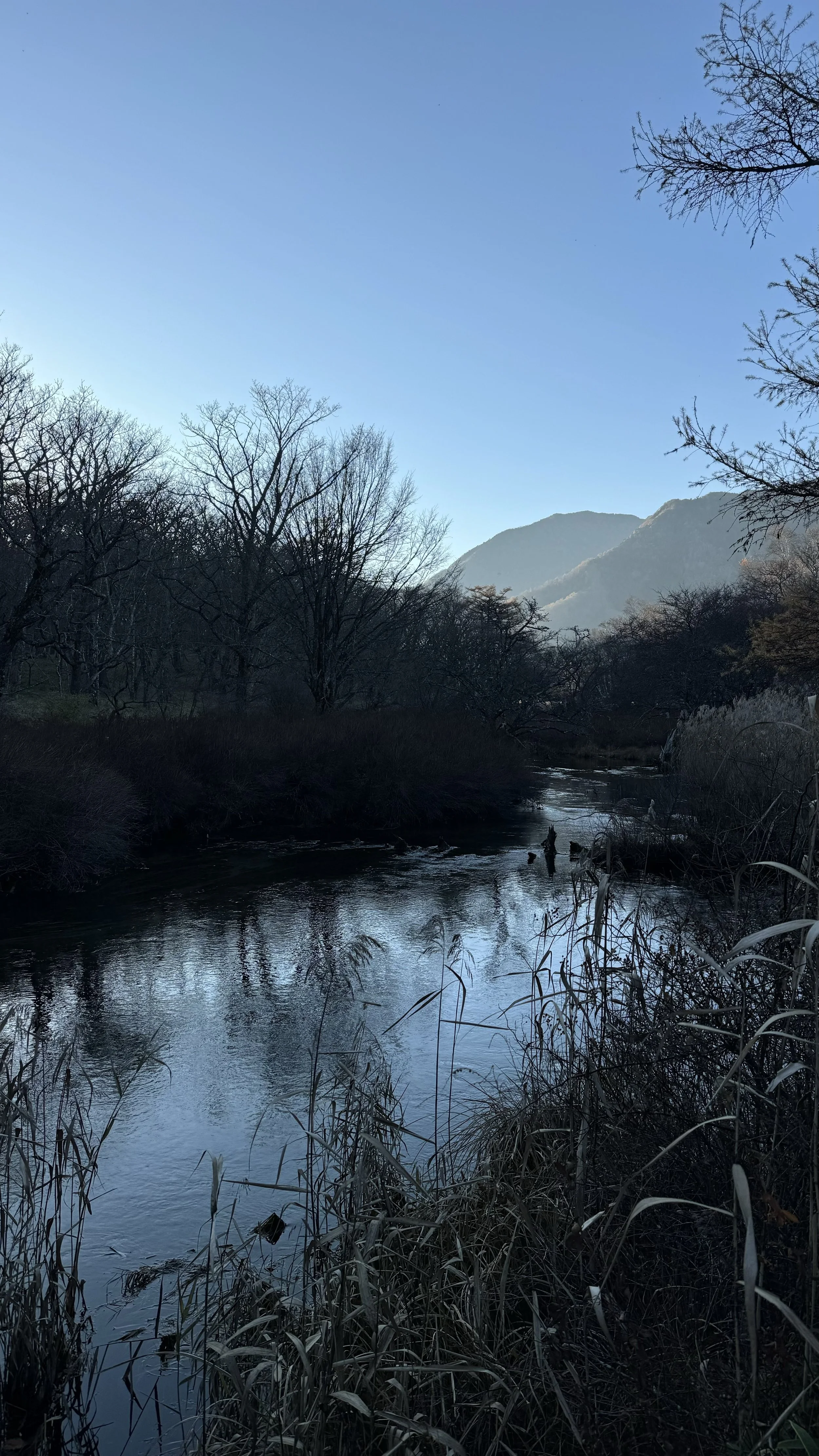
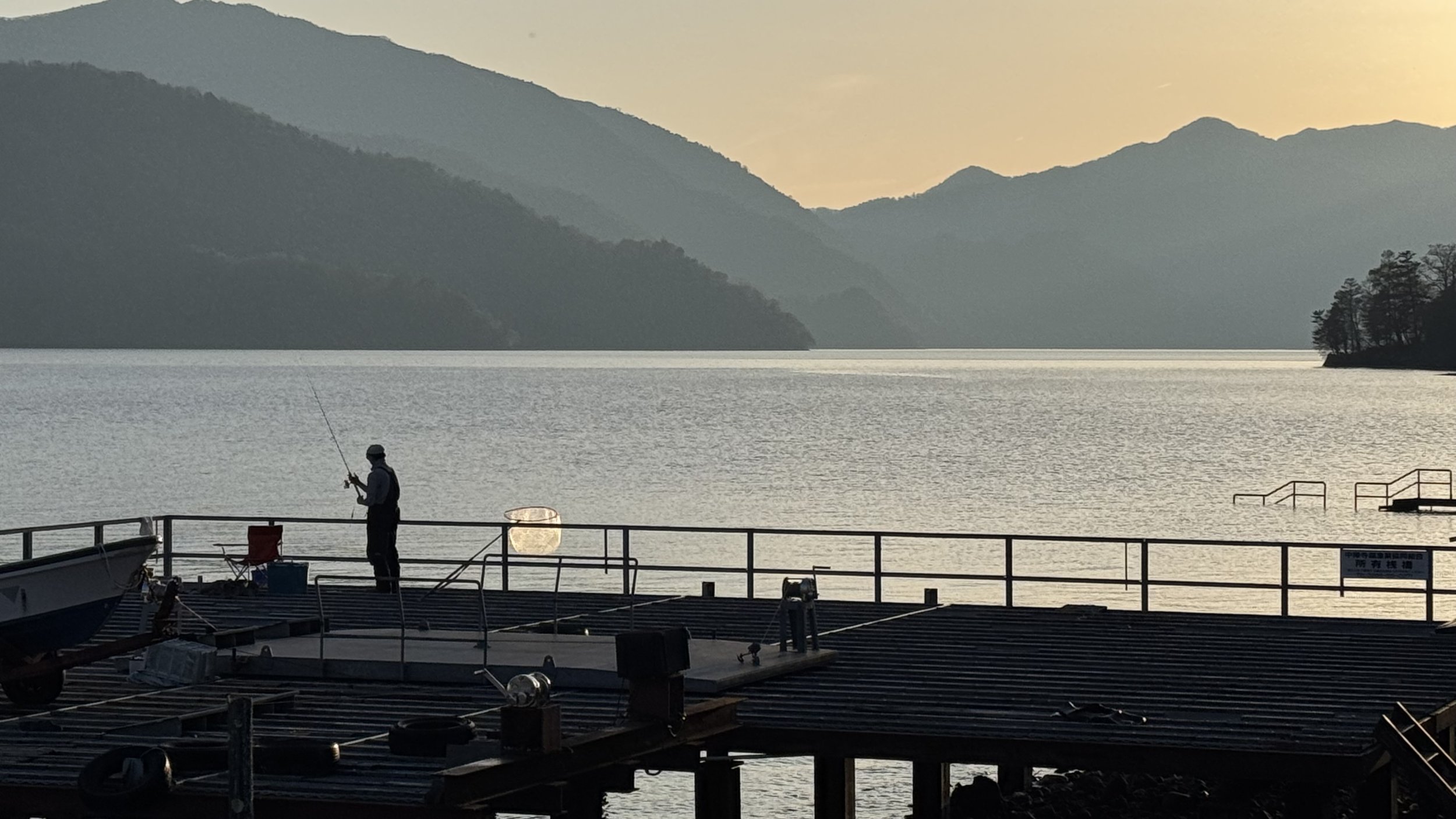
The waterways of Oku-Nikkō — the inner highland area beyond the town — are suited to that kind of time. Lake Chūzenji, the Yukawa river — not simply because the scenery is magnificent, but because the landscape doesn't rush to demand meaning from you. Standing there, you feel less inclined to search for words than to remain, simply, as a part of the place.
For a long time, I saw Oku-Nikkō as a tourist destination of great natural beauty, and as a fishing ground reachable from Tokyo in a day. Clear water, fish, hot springs. On clear days the view of Mount Nantai and Senjōgahara — the Battlefield Plain, named not for any human conflict but for a divine one: according to legend, the god of Mount Nantai and the god of Mount Akagi in the neighboring province of Gunma fought here for dominion over Lake Chūzenji, the former taking the form of a great serpent, the latter a giant centipede — is expansive and clean. There are shrines and temples along the shore that suggest a long history. But those had always been background. In my order of attention, that was their place.
Which is why the fact of Lake Chūzenji having no fish was not simply a curiosity. It had the power to displace the entire way I had been reading the landscape.
The lake and its river: not nature simply given, but nature as an outcome. The fish that are there: not random or incidental, but the result of something more specific. Once I began thinking in those terms, I felt as though a layer of history — one I had scarcely registered before — was folded into the landscape behind the water's edge.
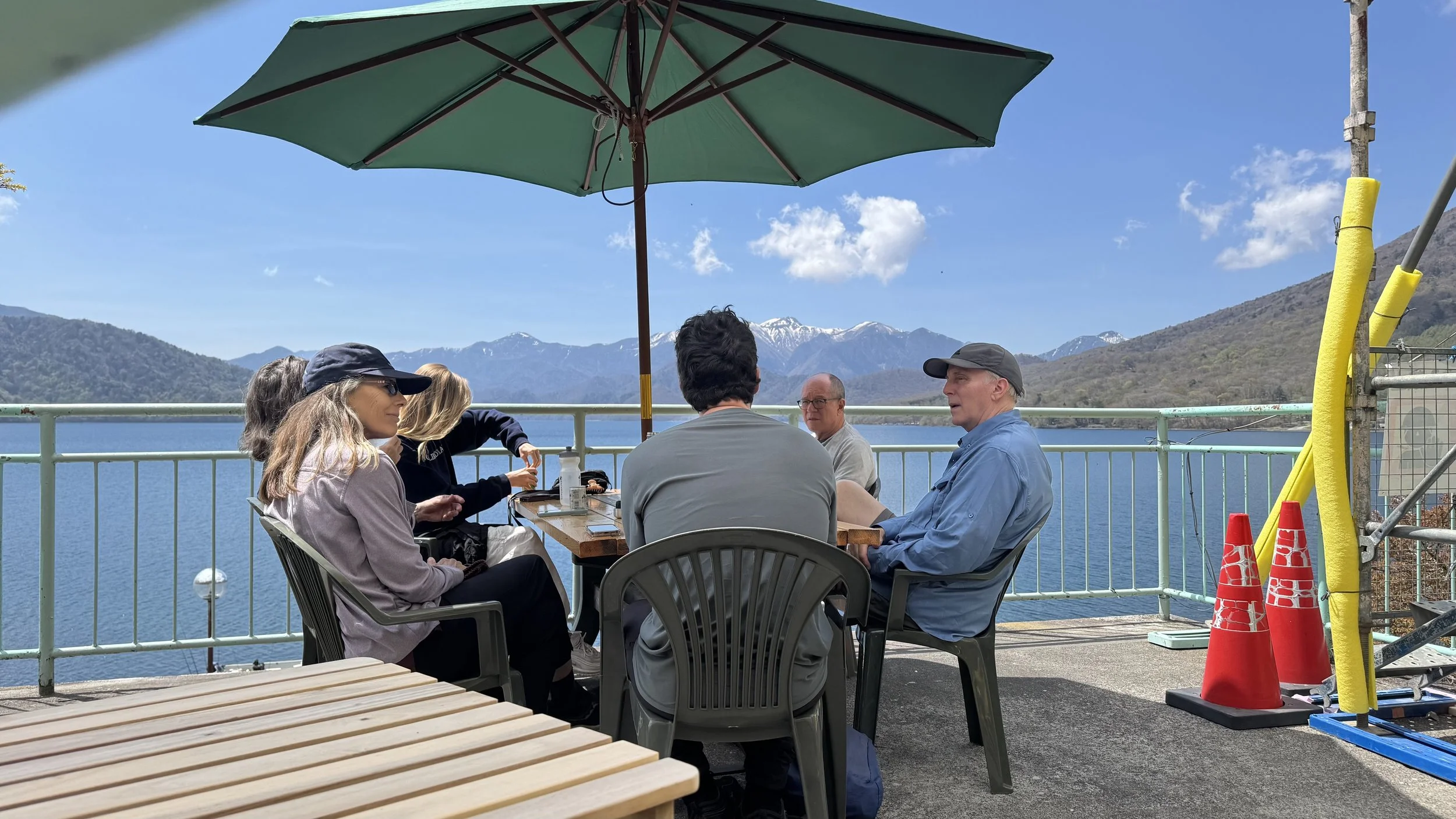
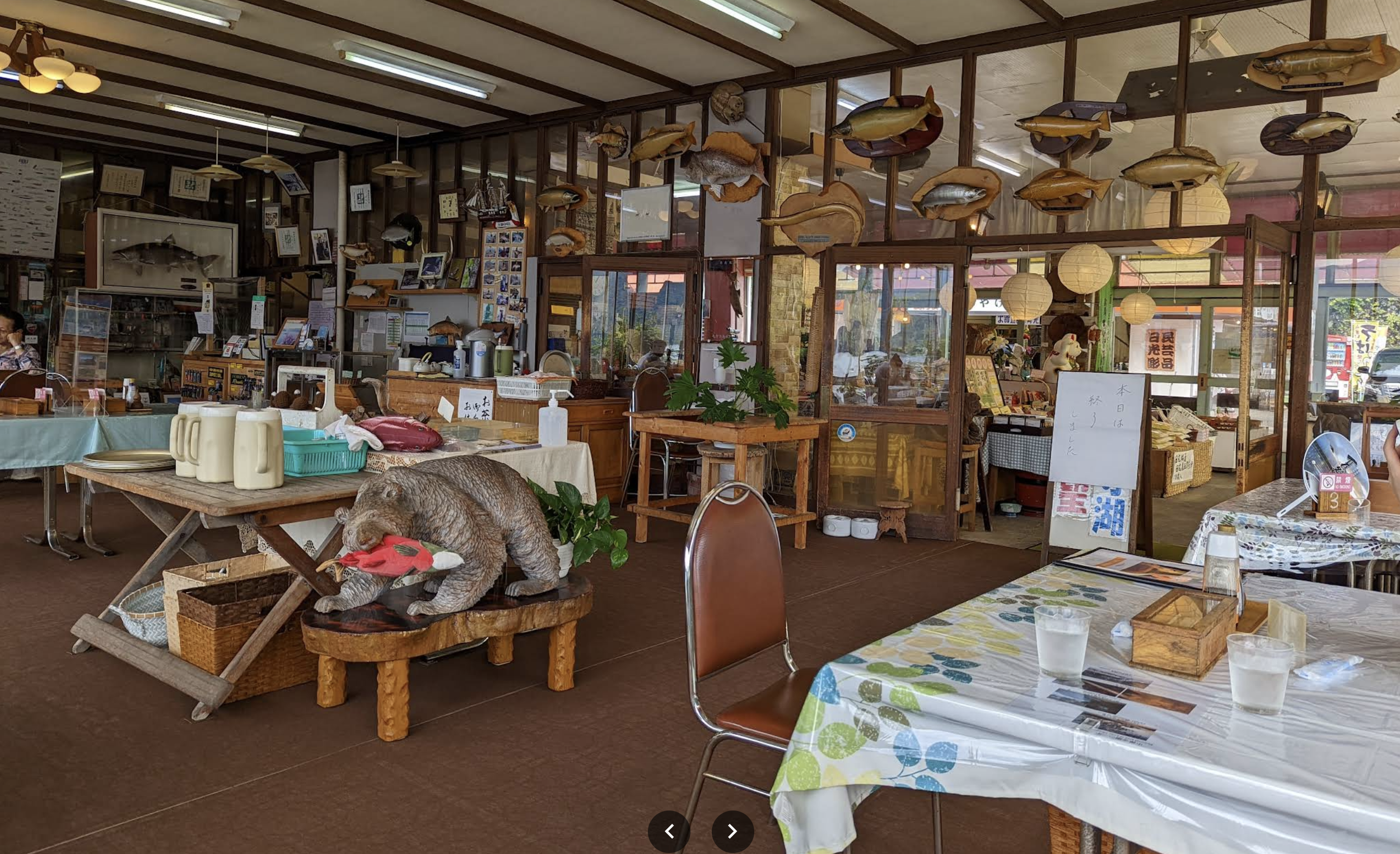
Today, Chūzenji is known as a trout lake: himemasu (kokanee salmon), rainbow trout, brown trout, lake trout. On the third day of that tour — the same day I stumbled into the bistro — I had lunch with my guests at a restaurant on the lakeshore that also serves as a boathouse, where many anglers gather. The windows face the lake and the interior is circled just below the ceiling by taxidermied fish, looking down at the tables. The Japanese record for lake trout is on display there. The himemasu I've eaten at that restaurant is the finest freshwater fish I've had anywhere. The place embodies, in the most direct way possible, what this lake has come to offer.
But historically, that is not how the lake began. The record shows that in 1873 — the sixth year of the Meiji era — Hoshino Teigoro released the first iwana into the lake, followed over subsequent years by the introduction of other species. Lake Chūzenji as a lake containing fish is a modern condition, not a natural one.
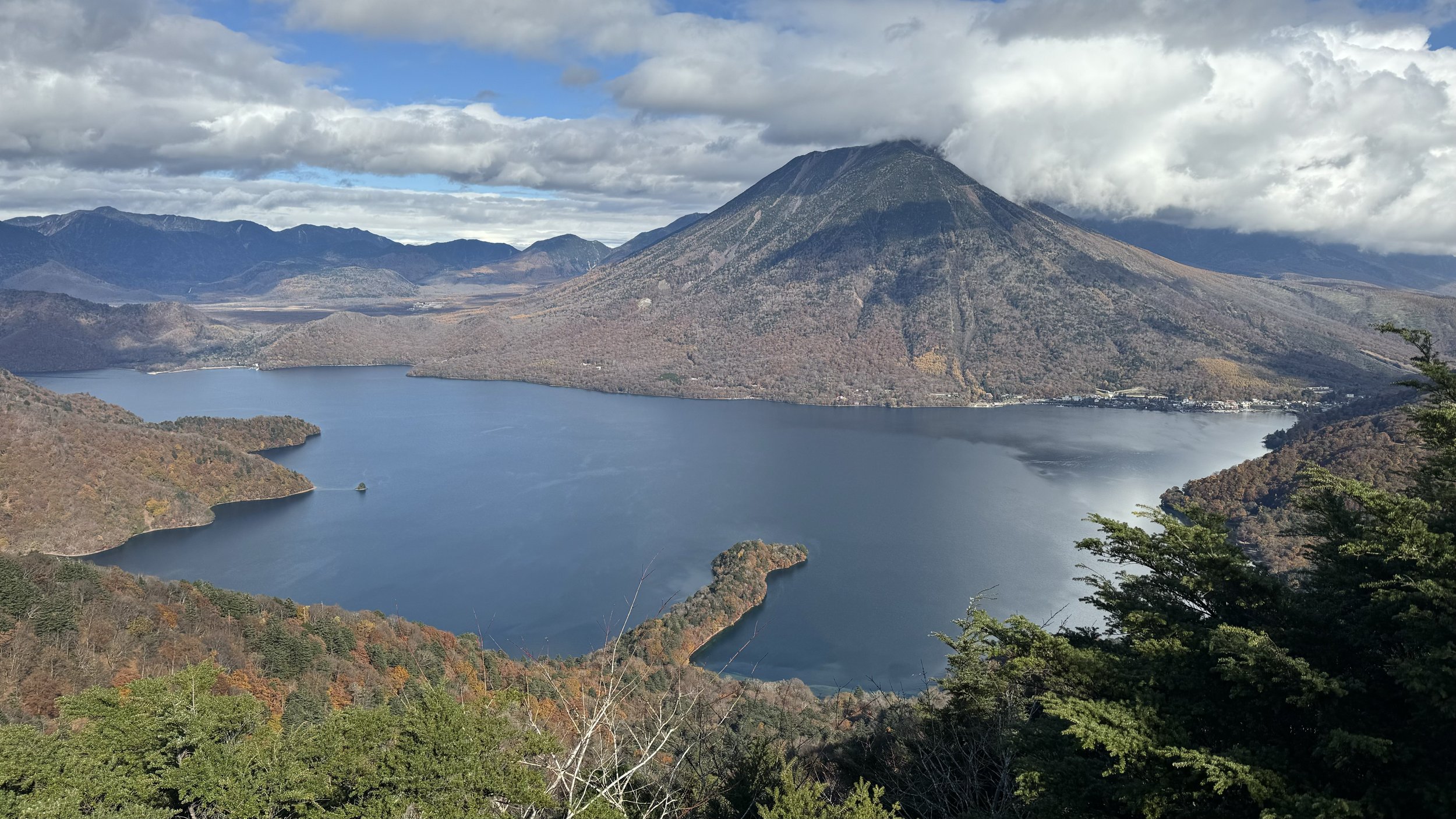
The primary reason there were historically no fish in Chūzenji is geography. The lake was formed by volcanic activity on Mount Nantai — at 1,269 meters above sea level, the highest-elevation natural lake in Japan. Its outflow drops through Kegon Falls, one of Japan's three great celebrated waterfalls, in a sheer 97-meter plunge before entering the Daiya River below. That waterfall blocked any upstream migration from below.
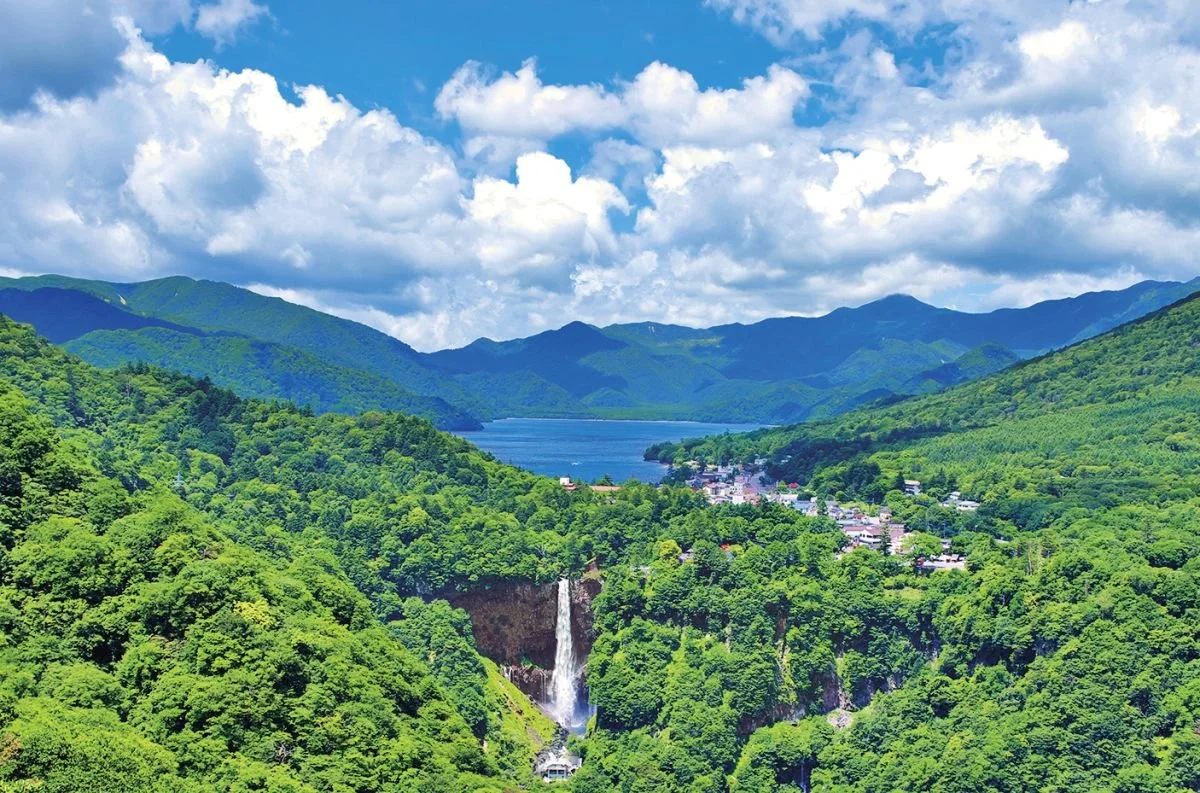
But geography alone doesn't fully account for it. "Fish cannot ascend naturally" and "people do not bring fish up" are two different things. For a fisherman, the first is obvious; the second demands an explanation.
2. The Sacred Precinct and Its Prohibitions
For a long time, Lake Chūzenji lay inside a sacred precinct.
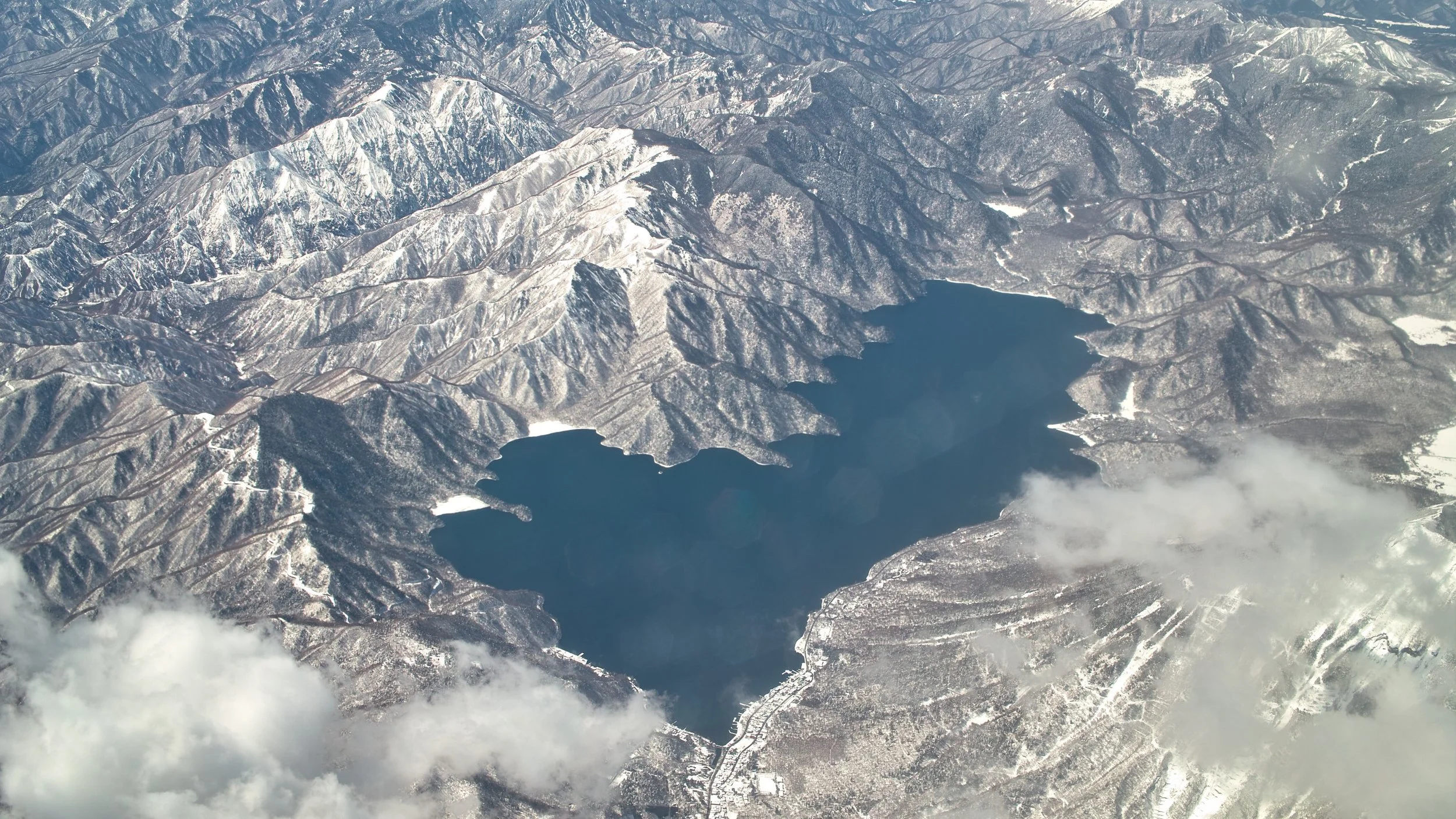
The grounds of Futarasan Shrine — whose object of veneration is Mount Nantai itself — extend across an enormous area that includes the Iroha-zaka switchback road, Kegon Falls, and the lake. The lake was not an independent natural space; it was held as part of the order of a sacred site. And within that order, the introduction of fish was forbidden.
Why would a sacred site prohibit stocking fish?
One reason is that a sacred precinct is a defined space — a place where certain things are fitting and others are not. Ascetics practice there; pilgrims pray; ritual observances are performed. Introducing fish to be caught and eaten is a secular intervention that alters that definition. "This water belongs to the gods and Buddhas; it is not a place for human use as a resource." That boundary was the substance of the prohibition.
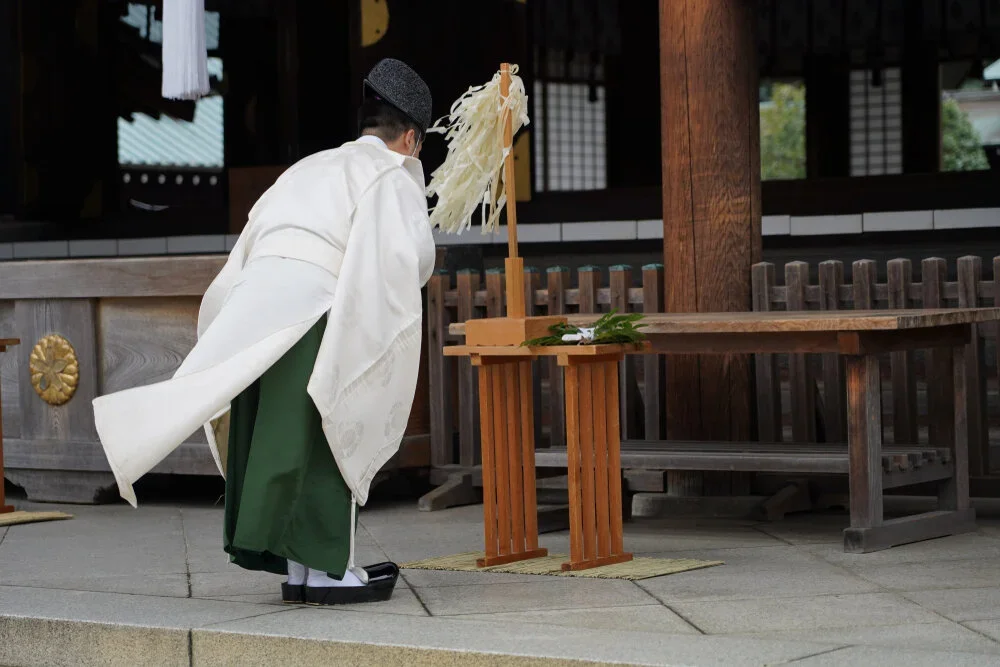
The other reason lies in the Shinto concept of ritual impurity. Death, blood, and the taking of animal life have long been considered sources of defilement that cannot be brought into sacred space. To catch a fish is to take a life and draw blood. Performing that act within the divine precinct would compromise its purity. The ritual purification rites required before Shinto ceremonies follow the same logic.
In an earlier piece, I wrote about the Ōmiwa Shrine at the foot of Mount Miwa in Nara, whose mountain is itself the object of veneration. There too the same logic operates: the entire mountain is held as sacred space, entry is strictly restricted to this day, and traditions of no hunting and no fishing have kept the mountain in its "untouched" condition. Chūzenji's prohibitions rested on the same foundations.
The question then becomes: what kind of order was this sacred site, and what was its structure?
3. Shinbutsu-shūgō: Where the Gods and the Buddhas Overlapped
When I guide guests to Tōshōgū, we usually cross the Sacred Bridge after lunch, climb the stone steps past the statue of the monk Shōdō Shōnin — shōnin being an honorific for a Buddhist monk of distinguished virtue — and pass in front of the Sanbuttsdō, the Hall of Three Buddhas, which belongs to Rinnōji Temple. It is the largest wooden building in eastern Japan, and it stands to the right before you reach the approach to Tōshōgū itself. Many guests assume, at first, that this is Tōshōgū. It is equally common for them to mistake the statue of Shōdō for Tokugawa Ieyasu.
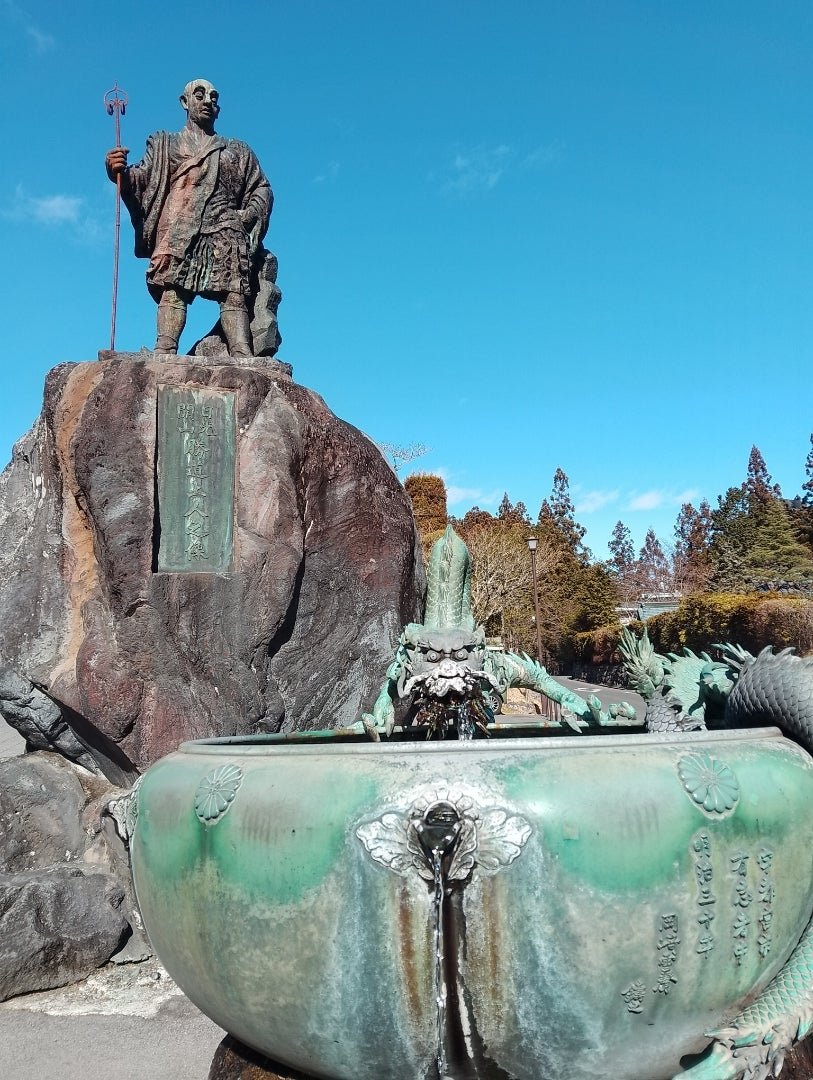
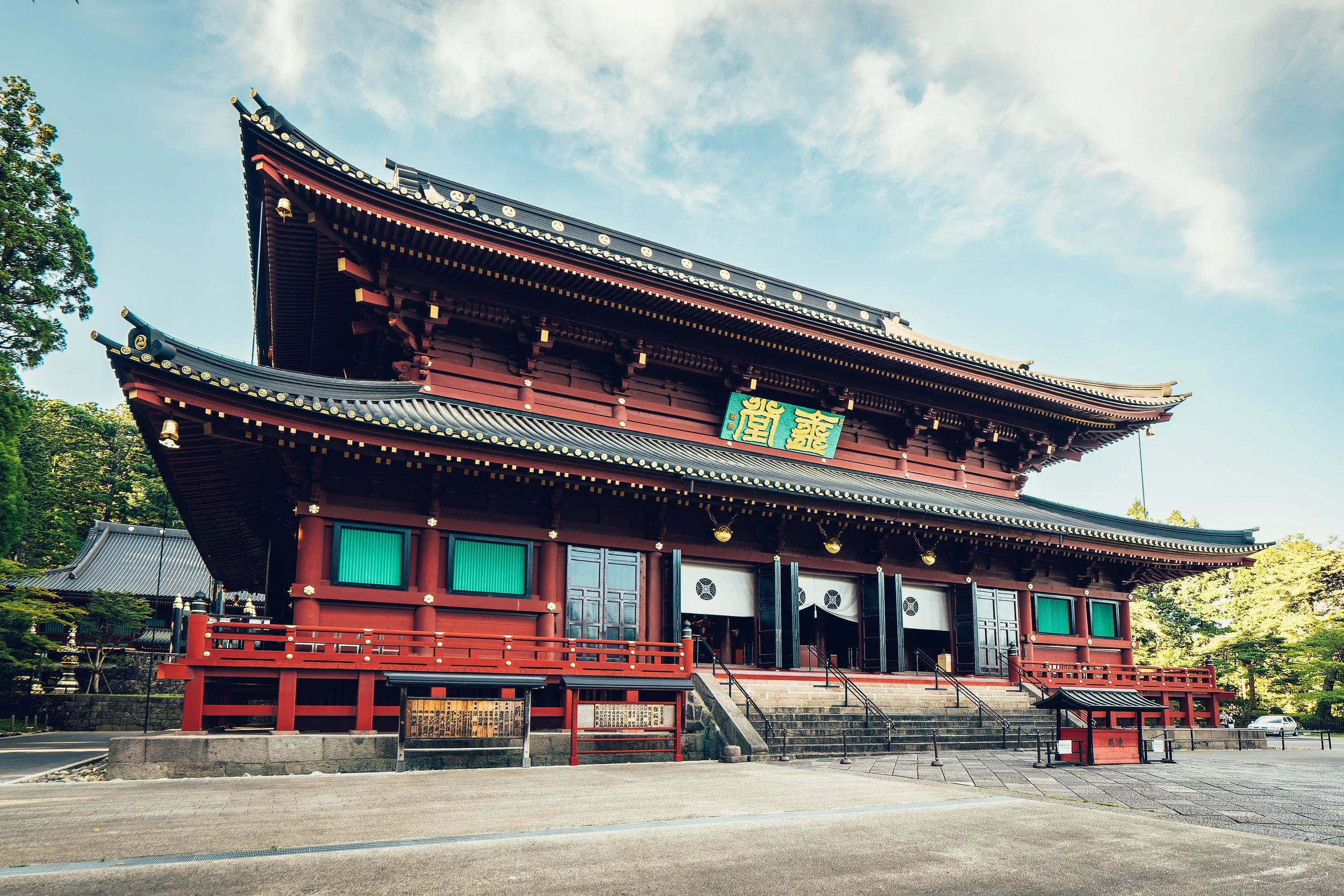
This is not surprising. They have come prepared for Tōshōgū — a shrine dedicated to Ieyasu (the historical figure behind Toranaga, the protagonist of the recent television series Shōgun), deeply associated with the Tokugawa shogunate. About Rinnōji they know almost nothing. So when a large hall appears first, they take it for the destination. When a bronze figure stands before it, Ieyasu seems the natural candidate.
When I explain that the center of this place was originally Rinnōji, and that Tōshōgū came later, most people look uncertain. We end the day at Futarasan Shrine's parking area, where the shuttle bus waits. Walking there from Tōshōgū, the grounds of the shrine pass by on the right — then you step out of the Tōshōgū complex and the older shrine opens ahead. It is usually at that moment that I mention: Futarasan predates Tōshōgū by centuries, and is entirely separate from it. Then, just adjacent, I point out Taiyūin — a Buddhist mausoleum where the third shogun Iemitsu, who built Tōshōgū in its current elaborate form, is interred. Most guests simply start to laugh.
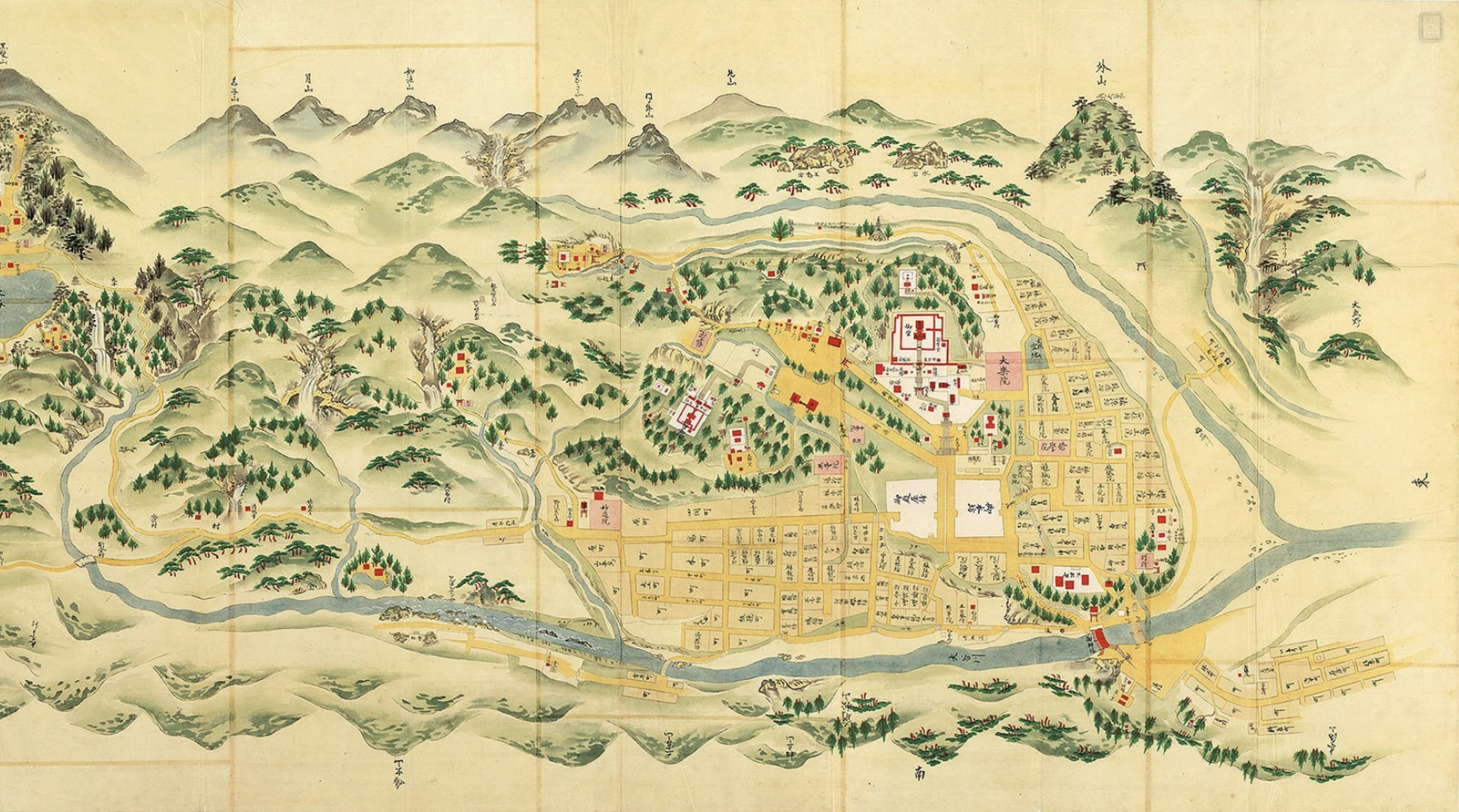
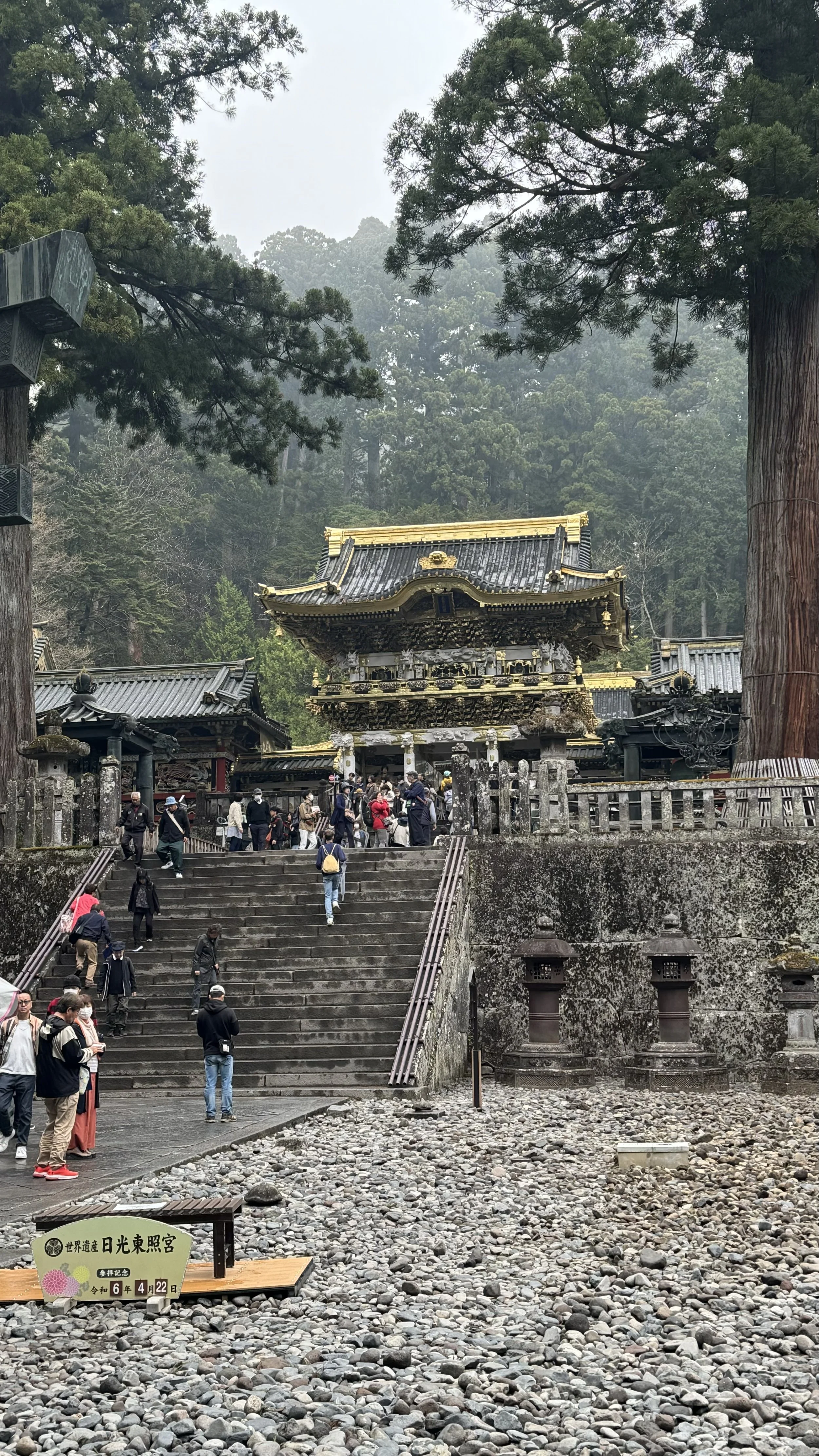
Ieyasu's grandson is buried at a Buddhist mausoleum. His grandfather is enshrined at a Shinto shrine. Even many Japanese, myself included, can readily distinguish shrines from temples while struggling to make sense of the specific relationships in Nikkō.
But the confusion is not Nikkō's. It is ours.
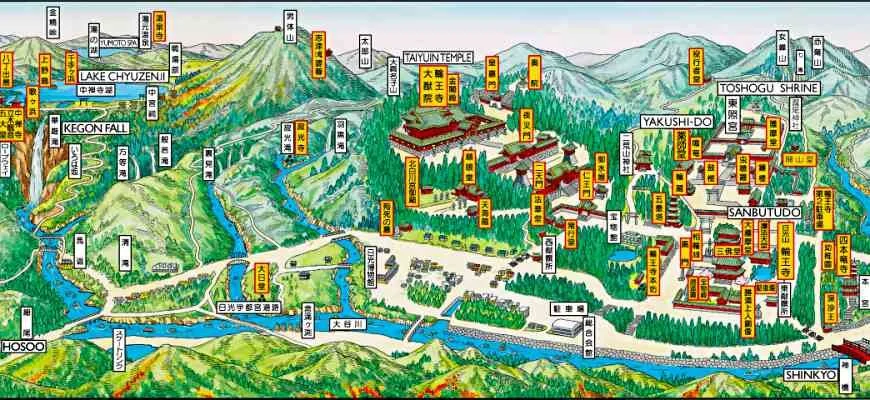
What is now registered with UNESCO as a World Heritage Site comprises 103 structures across the three institutions: Tōshōgū, Rinnōji, and Futarasan Shrine. Before the Meiji era, however, this entire area was understood less as three separate institutions than as a single sacred complex called Nikkō-san — one of the great sacred sites of the Kantō region. It was opened in 766 by the monk Shōdō Shōnin toward the end of the Nara period (710–794), and subsequently organized into a layered structure of three mountains, three buddhas, and three shrines. That structure is what makes Nikkō unlike anywhere else.
Two Serpents
According to tradition, Shōdō Shōnin opened Nikkō-san in 766.
Shōdō was a monk from what is now Tochigi Prefecture who traveled north in search of a sacred mountain. He eventually reached the banks of the Daiya River. There, a torrent blocked his path. There was no way to cross.
Then a strange deity appeared — a figure hung with skulls, who announced himself as Jinja Daio, the Bodhisattva of the Deep Sands, a deity of Indian origin. He produced two great serpents. They stretched across the river, forming a bridge, and Shōdō and his party crossed safely.
The place where the current Sacred Bridge now stands is the site of that legend. The bridge is also known by the older name the Serpent Bridge of the Mountain Reed. Jinja Daio was the same deity, according to tradition, who had rescued the great Chinese pilgrim Xuanzang on his journey to India — the monk better known in the West as the original of the fictional Tripitaka in the classic Chinese novel Journey to the West. From the very beginning, then, mountain asceticism, Buddhism, and deities of Indian origin were present here together.
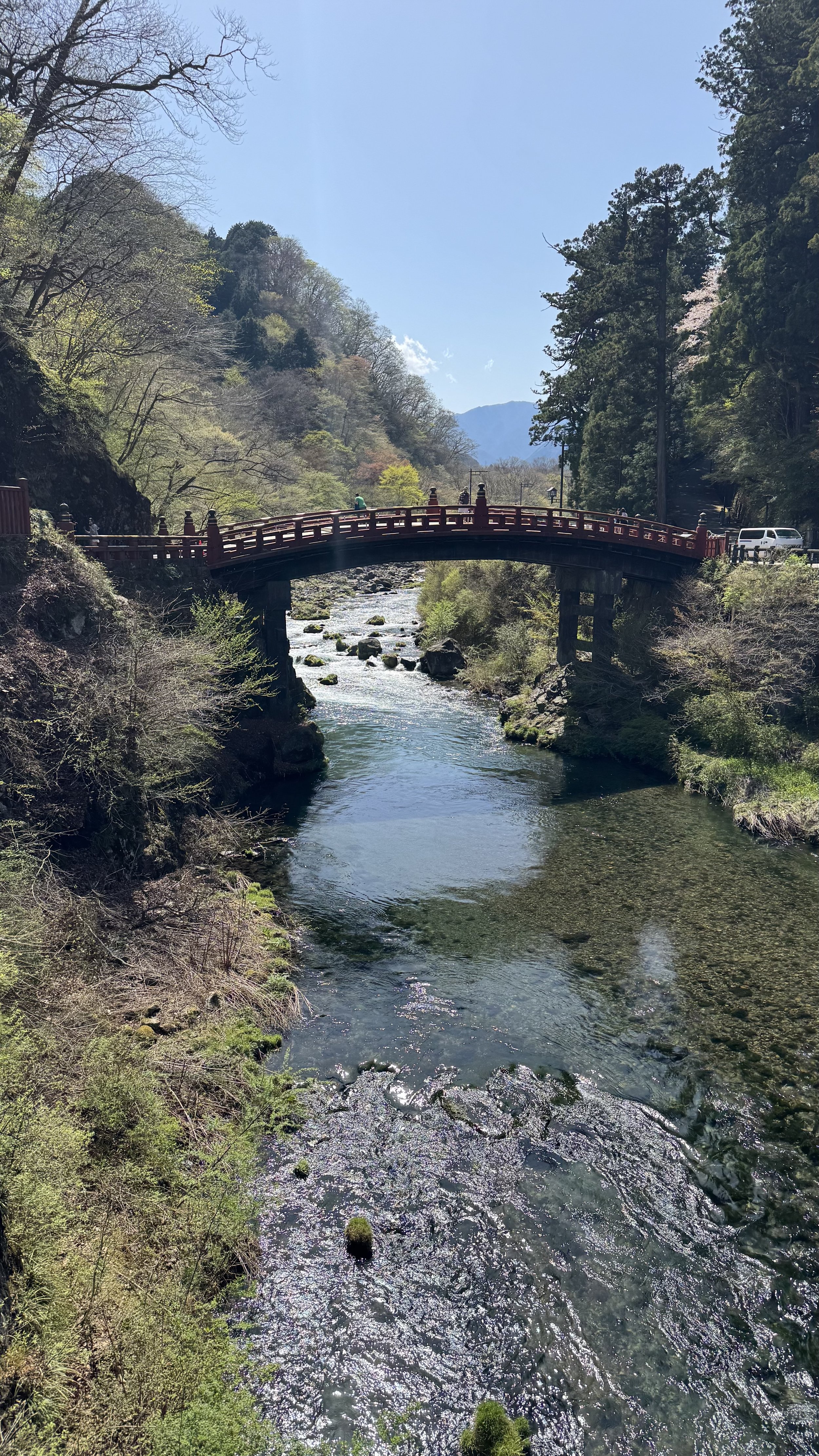
Having crossed, Shōdō built a temple enshrining the Thousand-Armed Kannon, which became Shihonryūji, the predecessor of present-day Rinnōji. The following year, he built a shrine to the deity of Mount Nantai on the adjacent ground. This is considered the origin of Futarasan Shrine.
A temple and a shrine, built side by side from the beginning, by the same person. The point of departure already announces Nikkō's character as a sacred mountain.
Three Mountains, Three Buddhas, Three Shrines
By the Kamakura period (1185–1333), shinbutsu-shūgō — the syncretism of Shinto and Buddhism, in which the two traditions were understood as a single integrated system — had deepened considerably at Nikkō-san.
The structure that emerged was a correspondence between three mountains, three buddhas, and three shrines.
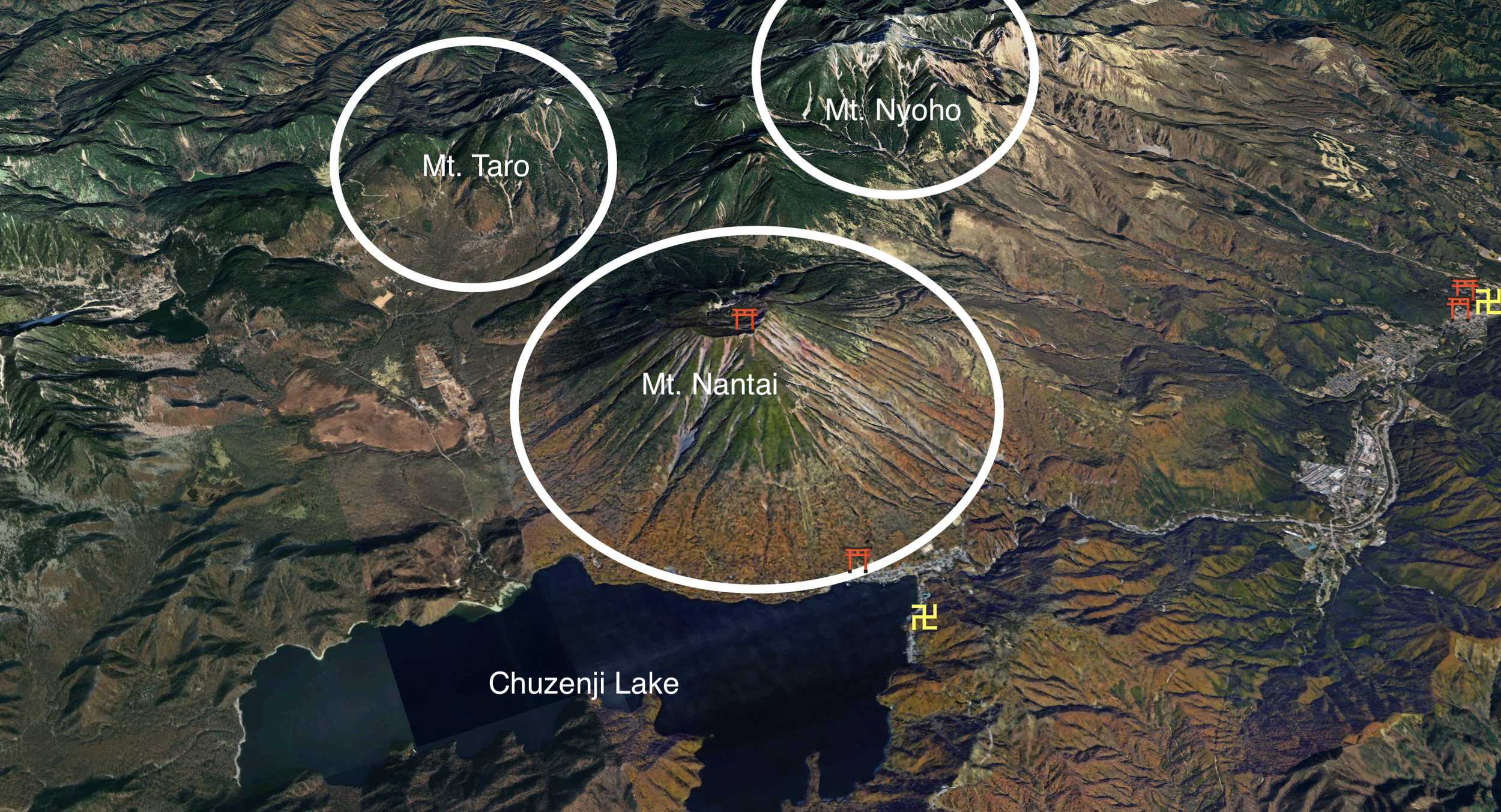
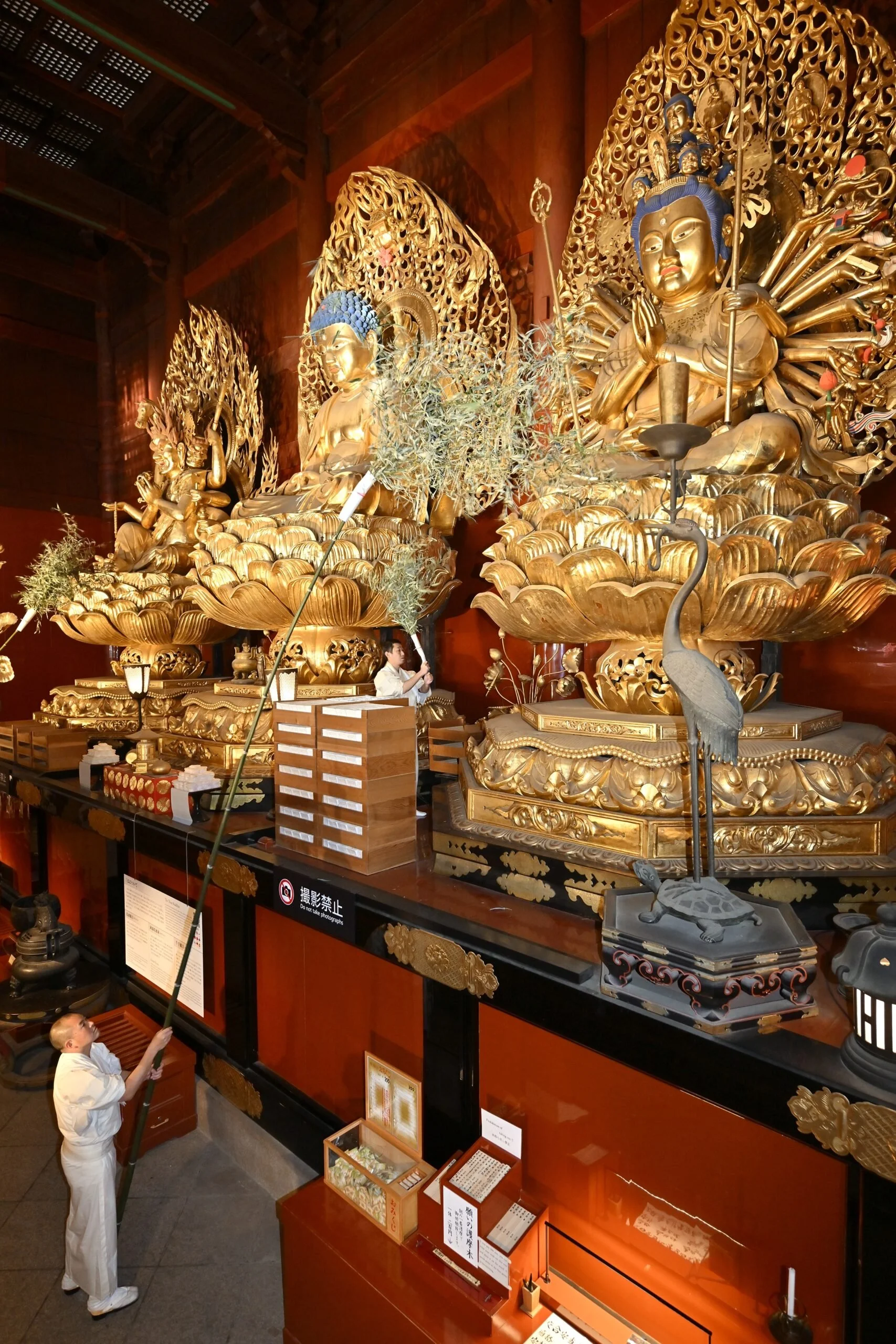
Three peaks: Mount Nantai, Mount Nyoho, and Mount Tarō. Nantai was read as a father-god, Nyoho as a mother-god, Tarō as a son — the mountains as a divine family. Each mountain deity was then assigned a corresponding buddha: Mount Nantai with the Thousand-Armed Kannon, Mount Nyoho with Amida the Buddha of Infinite Light, and Mount Tarō with the Horse-Headed Kannon. These three figures — seated at 7.5 meters tall, the largest wooden seated statues in eastern Japan — are what the Sanbuttsdō enshrines.
The theological framework behind this was honji-suijaku: the doctrine that the Shinto kami are local manifestations of universal Buddhas, who take on these provisional forms to appear in this world. The Buddhist side had developed this framework, and on its terms the kami were the "traces" while the buddhas were the "originals." Nikkō's syncretism was built on exactly this logic.
It is worth noting that the argument was contested from the Shinto side as well. From the late Kamakura period onward, priests at some of Japan's most ancient shrines began arguing the reverse: that the kami are the originals, and the buddhas the traces. This counter-doctrine was systematized in the Muromachi period (1336–1573) by the Yoshida school of Shinto. The logical framework — original and trace — was shared; only the hierarchy was inverted.
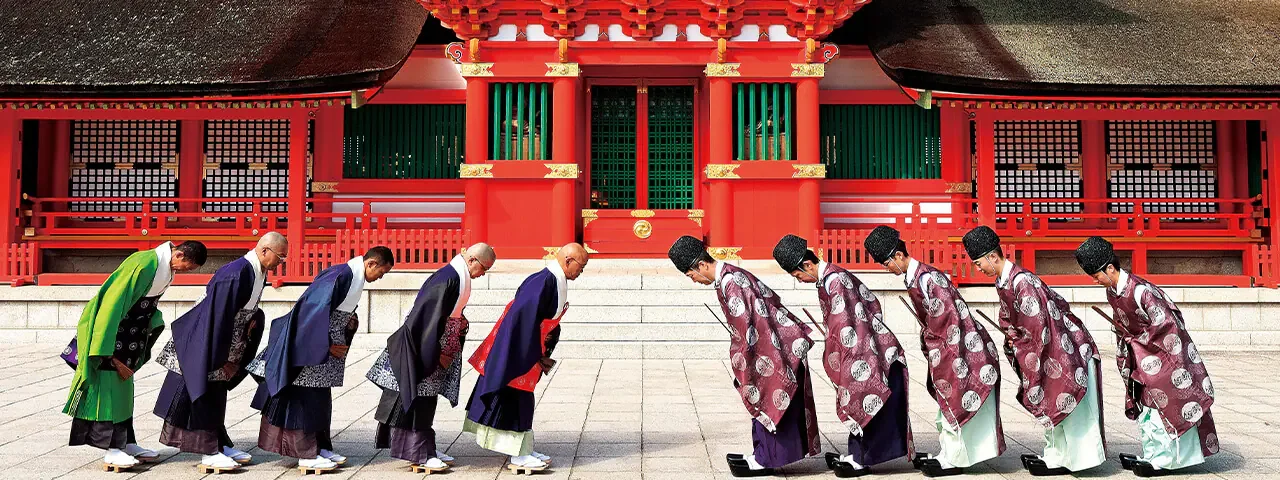
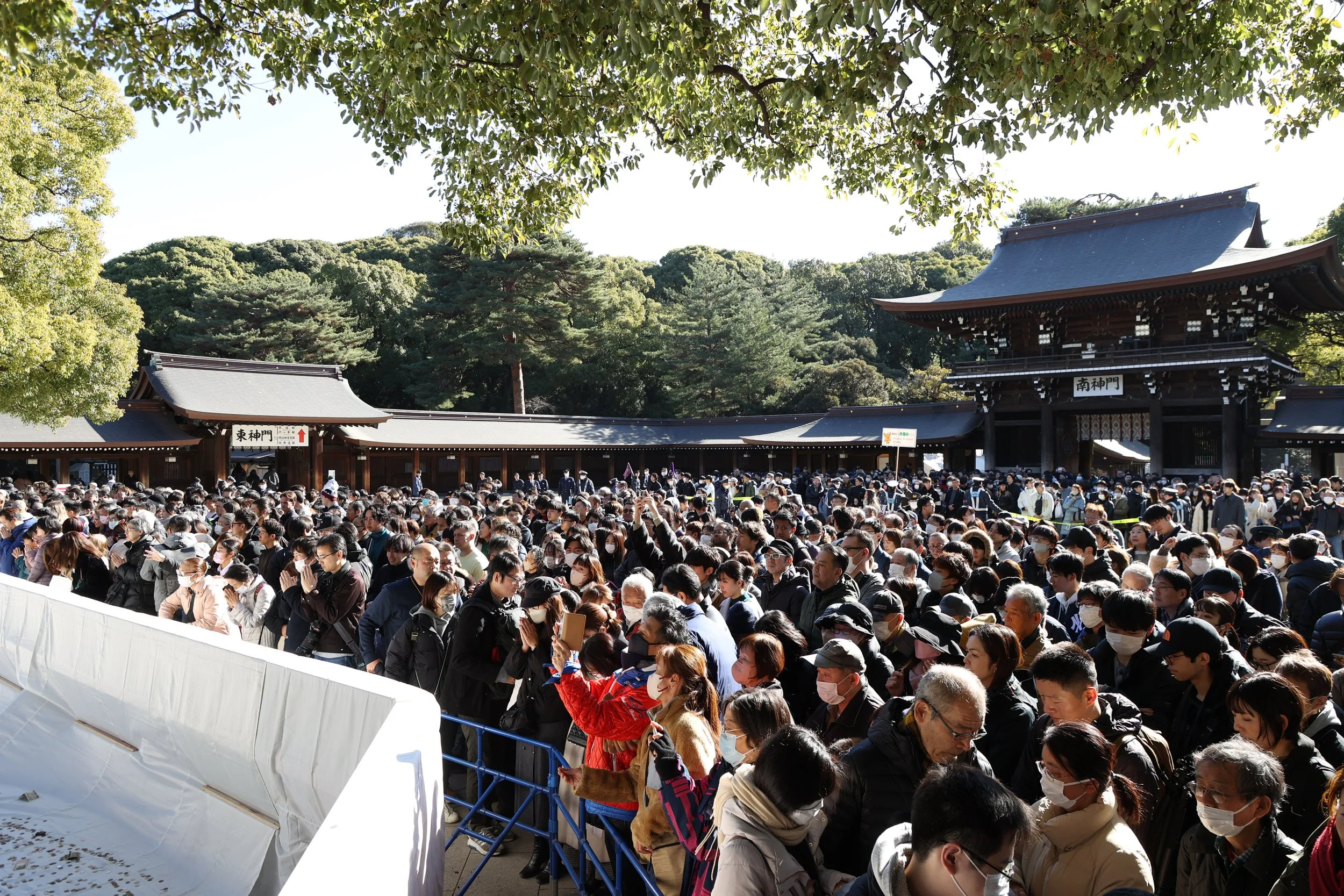
For ordinary people in villages, however, these theological disputes were largely beside the point. What mattered was that a syncretic space gave you access to both traditions — you could pray to the kami and the buddhas in the same place. Convenience and the practice of prayer itself mattered more than which tradition held priority.
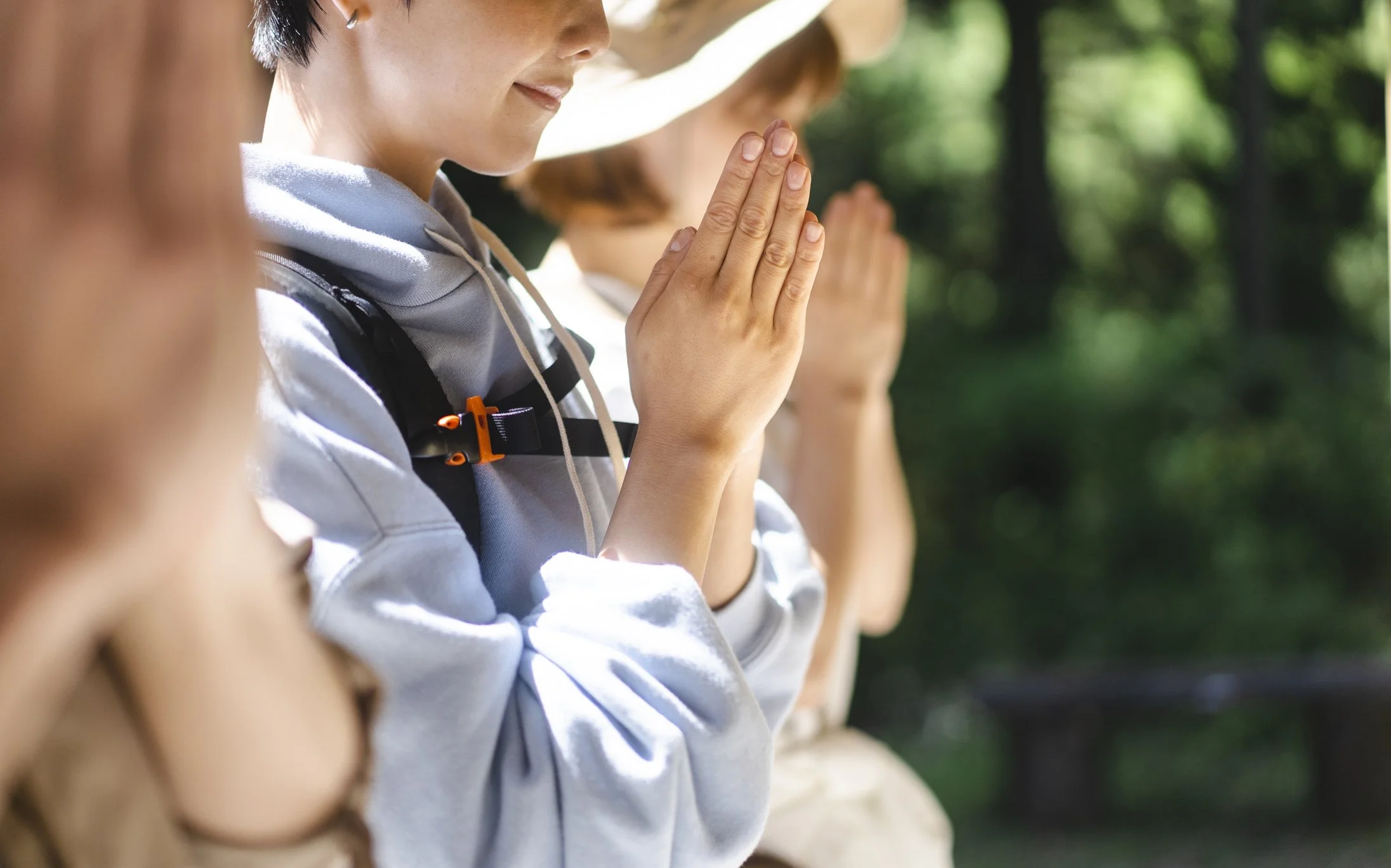
I find that attitude healthy. What seems essential to people is less the object of devotion than the act of gratitude itself — extending reverence toward whatever large thing sustains them.
When you stand in the Sanbuttsdō and feel its scale, you are not simply facing Buddhist statuary. The three peaks that rise behind this building are themselves understood as manifesting here, having descended, in their multiple-faced presence, into the hall.
Modern Japanese distinguish shrines from temples as institutional categories. But that distinction does not imply mutual exclusion. Most people mark the deaths of family members at Buddhist temples and visit Shinto shrines at the New Year; the two practices coexist without difficulty. Foreign readers often find this hard to parse, in part because the underlying logic — divided as institutions, yet still overlapping in sensibility — doesn't map onto familiar assumptions. Nikkō shows it with unusual concentration.
4. The Axis of the Pole Star
Tōshōgū arrived late, into a sacred landscape already a thousand years in the making.
The man who designed its incorporation was a monk named Tenkai — "Heavenly Sea" — a name that suited a man whose vision moved between the celestial and the political.
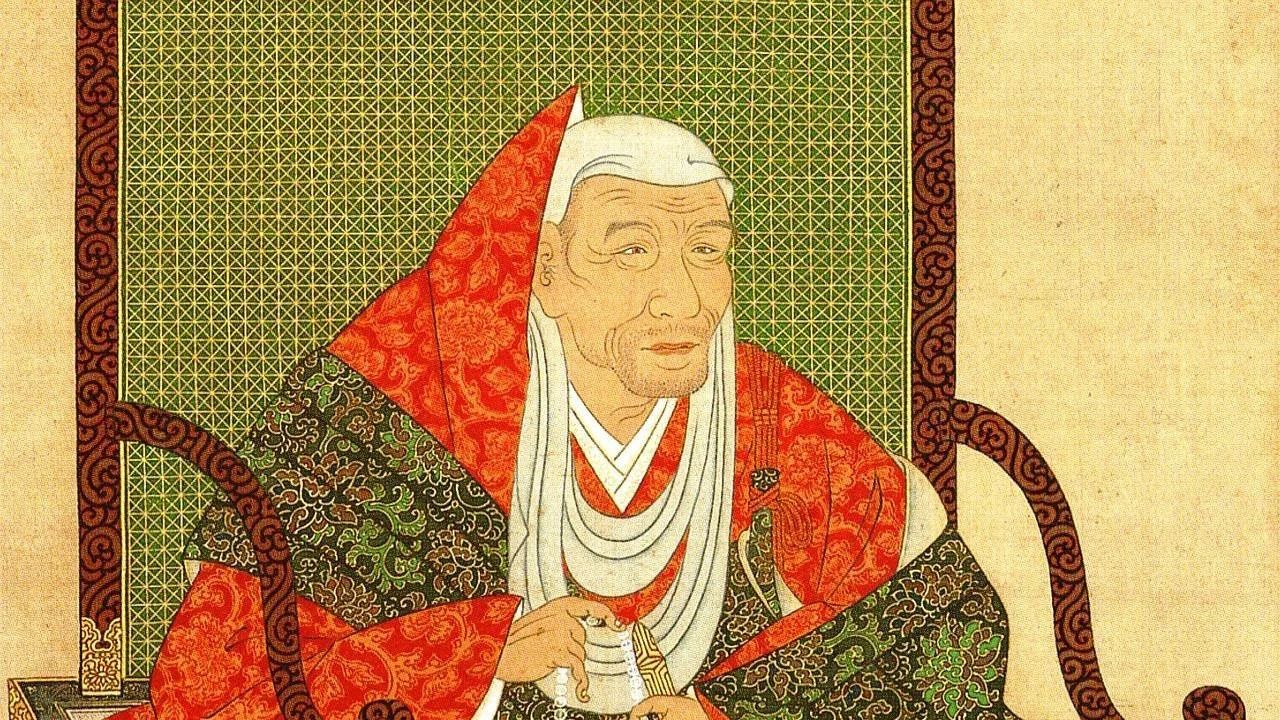
Tenkai was a senior figure in Tendai Buddhism — the school brought to Japan in the early ninth century by the monk Saichō, who had traveled to China at state expense to study at Mount Tiantai and returned to found a new lineage. The core of Tendai thought is the universality of enlightenment — the teaching that all beings are capable of becoming buddhas. Saichō established the head temple on Mount Hiei, on the border of what are now Kyoto and Shiga prefectures. Tendai had also been the primary carrier of honji-suijaku thought, systematizing the relationship between the kami and the buddhas. Tenkai stood at the apex of that theological tradition. Later, figures such as Hōnen, Shinran, Dōgen, and Nichiren — founders of the Kamakura-period Buddhist schools who brought Buddhist practice out of aristocratic monasteries and into the lives of ordinary people — had all trained on Mount Hiei. The mountain is sometimes called the "mother of Japanese Buddhism."
The temple's special position came not only from doctrine but from geography. In Chinese cosmological thought absorbed by Japan, the northeast direction — the "demon gate" — was considered the source of malign forces. Cities and buildings were designed with protective shrines or temples placed in the northeast to guard against this direction.
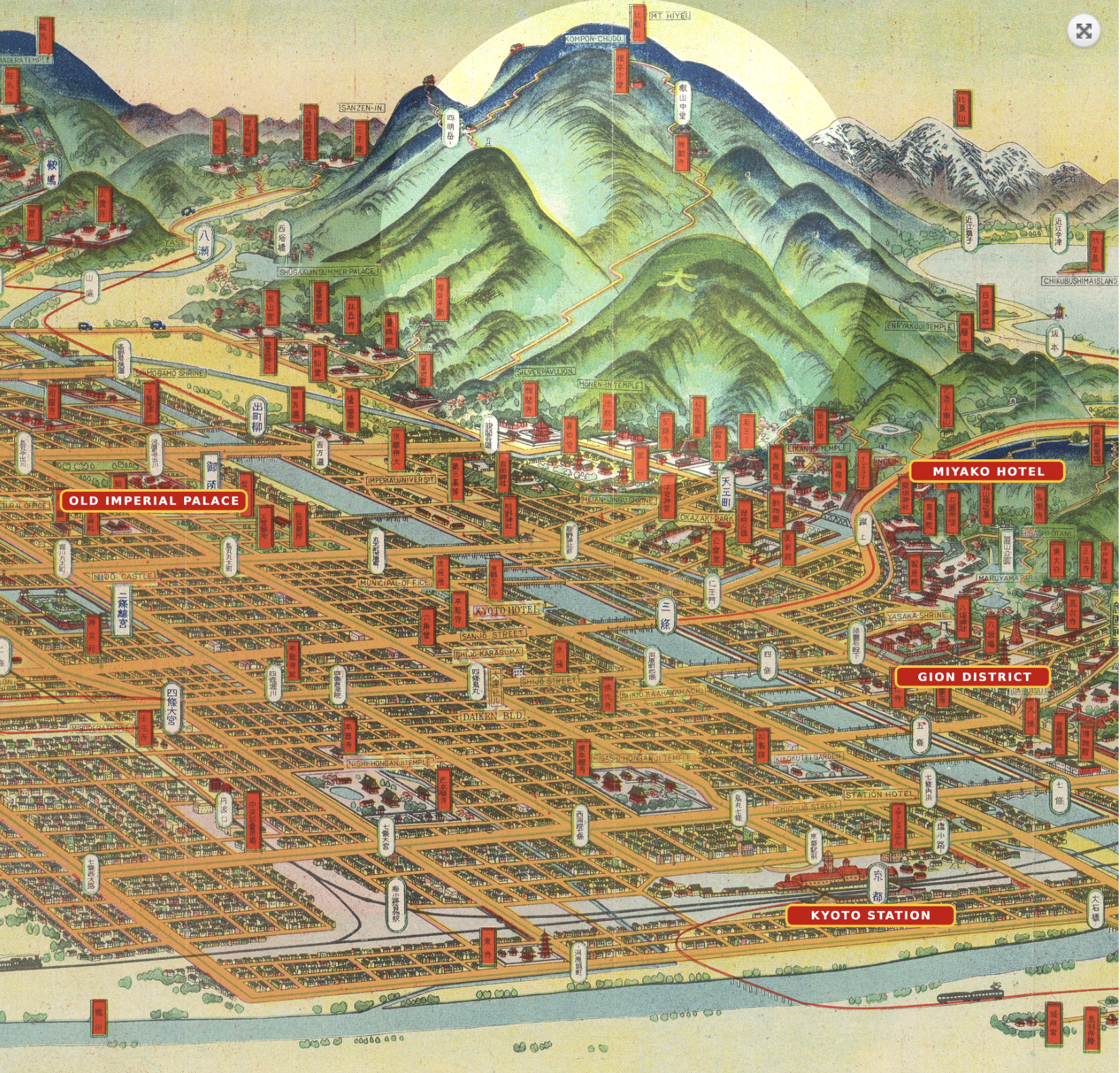
Mount Hiei stands to the northeast of the old capital Heiankyō — present-day Kyoto. Enryakuji was built there as a precinct for the protection of the capital and received special patronage from the imperial court.
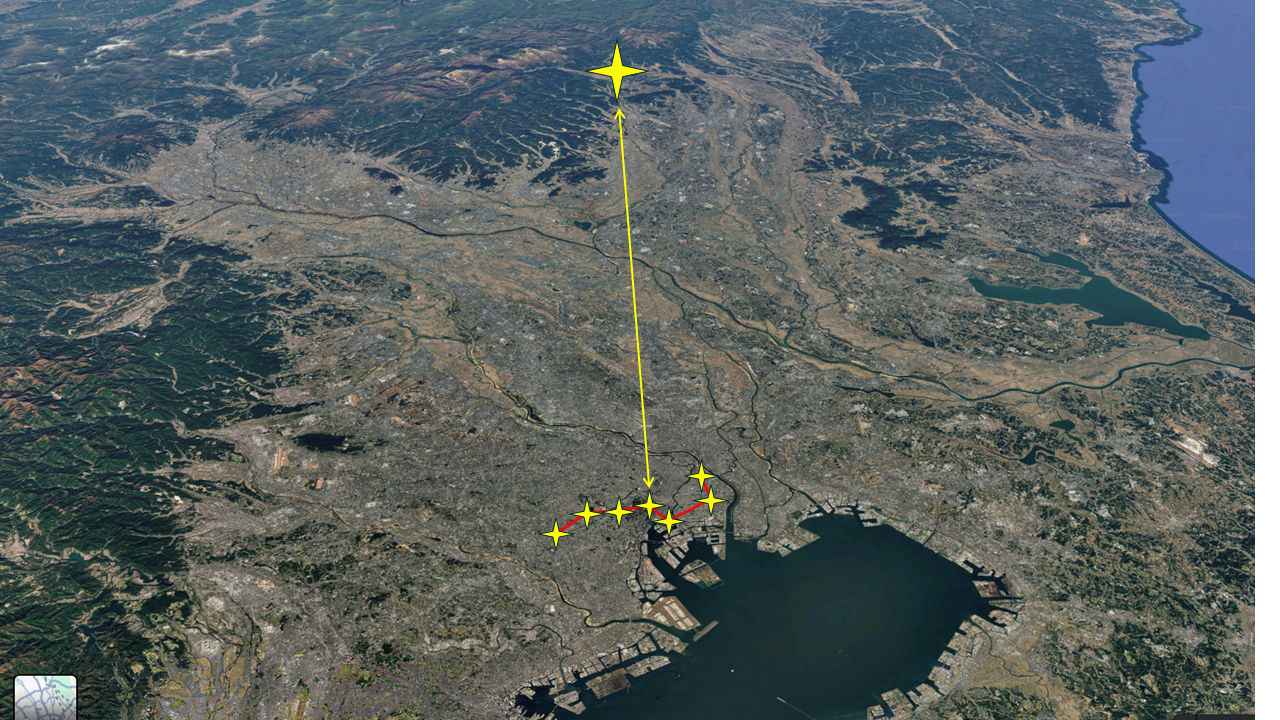
Tenkai applied the same logic to Edo. He founded Kan'eiji Temple on a hill in Ueno, to the northeast of Edo Castle — the demon gate, guarded, as Mount Hiei had guarded Kyoto. But his vision went further. Almost directly north of Kan'eiji, Nikkō lies on the same axis.
That alignment carried another layer of meaning. The North Star — understood as the fixed center around which all the heavens rotate — was itself an object of veneration. In the Pole Star faith, the unchanging North Star was revered as the cosmic source of power protecting the state. There is a tradition — though its precise documentation is disputed — that Edo Castle, Nikkō Tōshōgū, and the North Star fall on a single line; and that the major sacred sites of Edo, mapped together, form a pattern corresponding to the Big Dipper, with Tōshōgū as the Pole Star.
The axis of the Pole Star extended from the temple built to guard the demon gate. Tenkai may have been placing the new city of Edo within a very old cosmology.
At the far end of that axis, a site was created to enshrine Ieyasu.
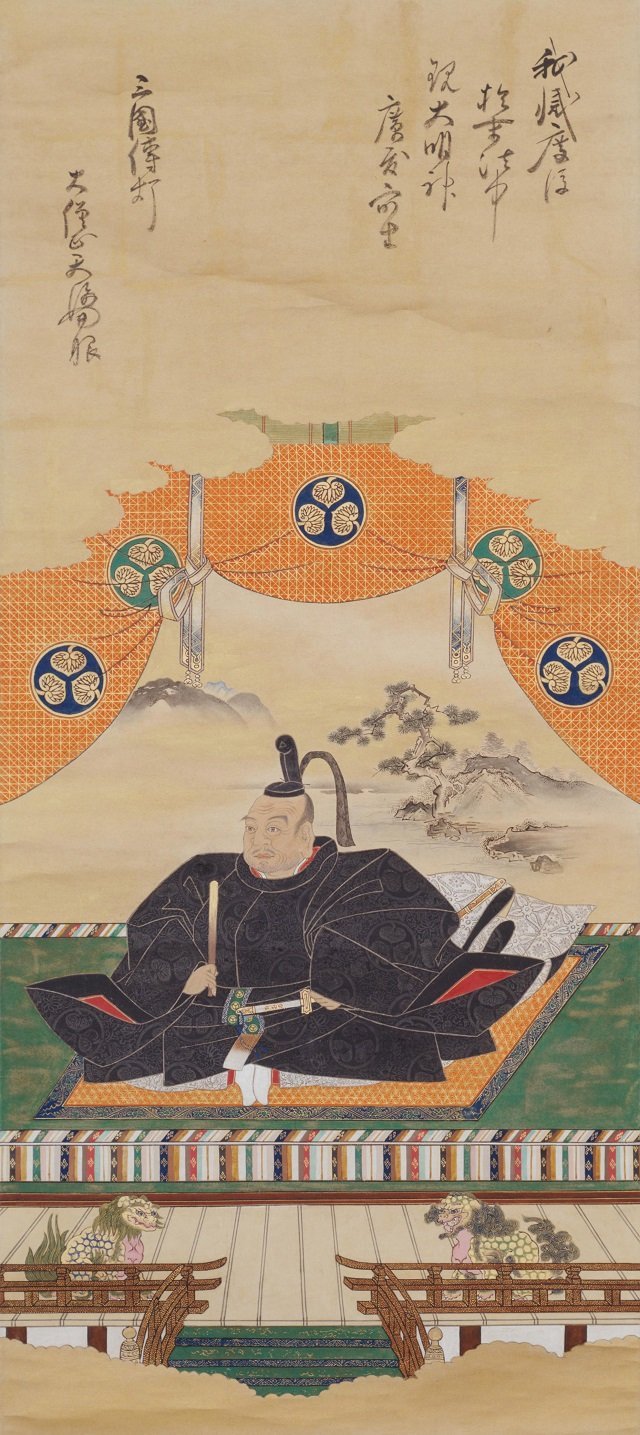
Tōshō Daigongen — Great Avatar of the Light of the East. The title gongen is itself a term from honji-suijaku theology: a buddha taking provisional form to manifest in this world. Ieyasu was enshrined here not merely as a dead man honored by posterity but as a buddha who had chosen to appear on earth in the form of a Shinto deity. The political sanctity of the Tokugawa house was written quietly into the vocabulary that Tendai Buddhism had spent centuries developing.
The reason this worked is that it did not replace the existing order — it was written into it. Taiyūin, the mausoleum of the third shogun Iemitsu, takes the form of a Buddhist mausoleum rather than a shrine, reportedly out of the consideration that a successor should not assume a rank greater than the ancestor. Even that hierarchy — a prohibition on surpassing the grandfather — was absorbed into the logic of the mountain.
A legend that gathered around Tenkai in later centuries holds that he was, in another life, none other than Akechi Mitsuhide — the general who turned on Oda Nobunaga at the Honnōji Incident, the coup that derailed Nobunaga's unification of Japan and made possible the chain of events that brought Ieyasu to power. Without it, history as we know it would look entirely different. The Tenkai-as-Mitsuhide theory is one of Japanese history's most cherished pieces of speculation, impossible to verify and impossible to dismiss. Adding to its texture: the lookout point at the top of the Iroha-zaka is called Akechidaira, and the name is said to have been given by Tenkai himself.
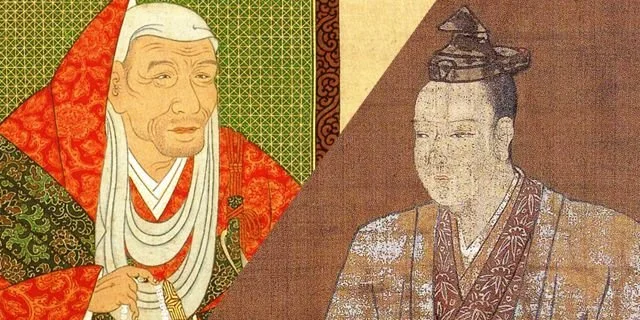
This cannot be treated as fact. But the persistence of the legend is itself evidence of something: that Tenkai was remembered not simply as a high monk but as a figure of almost excessive scale — the man who connected the sacred order of Nikkō to the political sanctity of the Tokugawa, writing one into the grammar of the other. Around such figures, history and legend accumulate naturally.
5. Shinbutsu-bunri: The Modern Scissors
The layered order Tenkai had constructed with such deliberate vision did not carry intact into the modern era.
In 1868, the Meiji government issued the Shinbutsu-bunri edict — the Separation of Shinto and Buddhism.
To understand why, it helps to stop and think about the architecture of power that had been built up over the centuries.
The Shinto-based legitimacy of the imperial line — grounded in the mythology of the Kojiki, Japan's oldest written record, which describes the emperors as descendants of the sun goddess Amaterasu — had always existed. But Buddhism too had been incorporated into state governance since the sixth century, when Prince Shōtoku and Emperor Shōmu made it a pillar of administration. Both traditions had long served as foundations of authority in Japan.
Why, then, did the Meiji government find it necessary to separate them?
The answer lies in the logic of honji-suijaku itself.
"The buddhas are the originals; the kami are their provisional traces" — within this theological framework, the kami of Japan, including Amaterasu herself, could be understood as manifestations of universal Buddhas. And the Tokugawa had used exactly this logic: Ieyasu was enshrined as Tōshō Daigongen, his authority embedded within a Buddhist order.
When the Meiji government sought to restore imperial rule and to reestablish the Emperor as the center of the state after centuries in which the role had been largely ceremonial, this structure became an obstacle. To reconstitute the legitimacy of the Emperor as something specifically Japanese, rooted in Shinto rather than the Buddhist order, the honji-suijaku framework first had to be dismantled. It is not coincidental that the edict's first directive demanded that shrines bearing the title gongen — or other Buddhist designations as their sacred names — submit statements of provenance. The title gongen was itself a product of Buddhist authority.
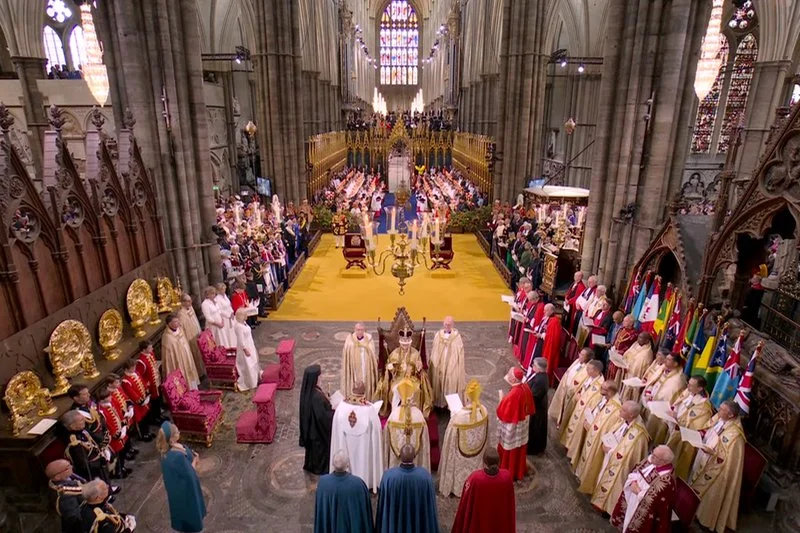
A second motive was external. As Meiji leaders engaged with the Western powers, they recognized the need for a spiritual foundation for the nation — something analogous to the role the Church of England played in Britain. The syncretism of shinbutsu-shūgō, in which Buddhism and Shinto were fused, could not serve as a distinctly Japanese national identity. The inner logic of imperial Shinto legitimacy and the external demands of modern statehood happened, in this case, to point in the same direction.
There was also the question of institutional entanglement. The shogunate had used a parish registration system — in which every household was registered with a Buddhist temple, which kept the official records of births, deaths, and family lineages — to incorporate Buddhist institutions into the apparatus of administration. Buddhism was structurally bound to the old regime. Dismantling that bond was, in the religious dimension, the completion of the break that the Meiji Restoration had made in the political one.
Three motives — the purification of imperial Shinto, the construction of a national spiritual foundation, and the severing from the old regime — converged. The edict was issued.
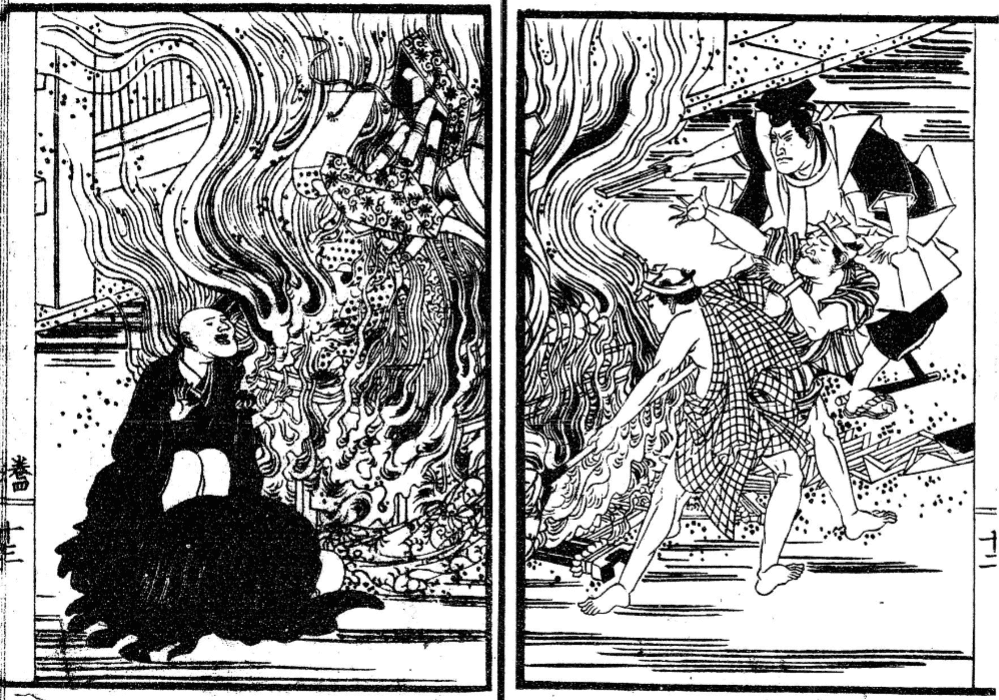
The edict's stated intention was limited: to remove Buddhist elements from Shinto shrines. But across the country, it triggered haibutsu kishaku — the violent destruction of Buddhist statues, the burning of temples. Why did it escalate so far?
At the level of popular belief, the coexistence of kami and buddhas had been peaceful and practical. But at the level of institutional structure, different tensions had long accumulated. In arrangements where shrines and temples shared the same grounds, Shinto priests were institutionally subordinate to Buddhist monks. And under the registration system, temples had managed both the vital records and the economic lives of their parishioners through offerings and funeral services — a relationship not entirely unlike that of the medieval Catholic Church in Europe, where religious institutions simultaneously served as sites of devotion, administrative management, and economic extraction.
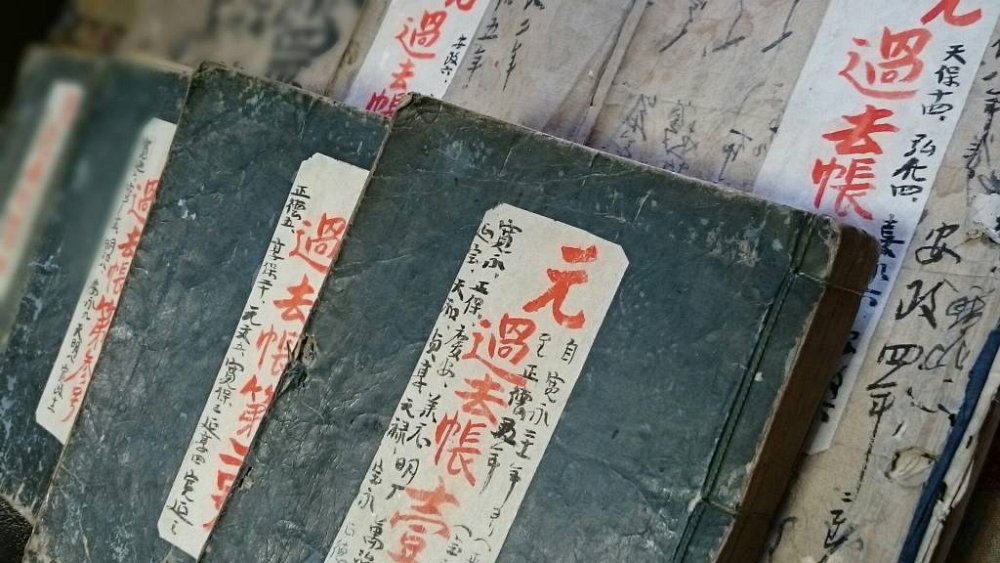
The initial violence of haibutsu kishaku came from the Shinto priestly side, which had been institutionally suppressed. The intellectual groundwork had also been laid: in the late Edo period, the nativist and Mito school traditions had steadily built the argument that Shinto held priority over Buddhism.
The edict was the spark that found the accumulated fuel.
Nikkō — the site that had perhaps most thoroughly embodied honji-suijaku, where the three mountains, three buddhas, and three shrines had been integrated by Tendai theology and the political sanctity of the Tokugawa was written into that system through the gongen title — was consequently among the places most severely affected. Buddhist images and implements were removed or destroyed across the complex. Priests who had served both shrines and temples were expelled. The Sanbuttsdō itself came close to being abolished.
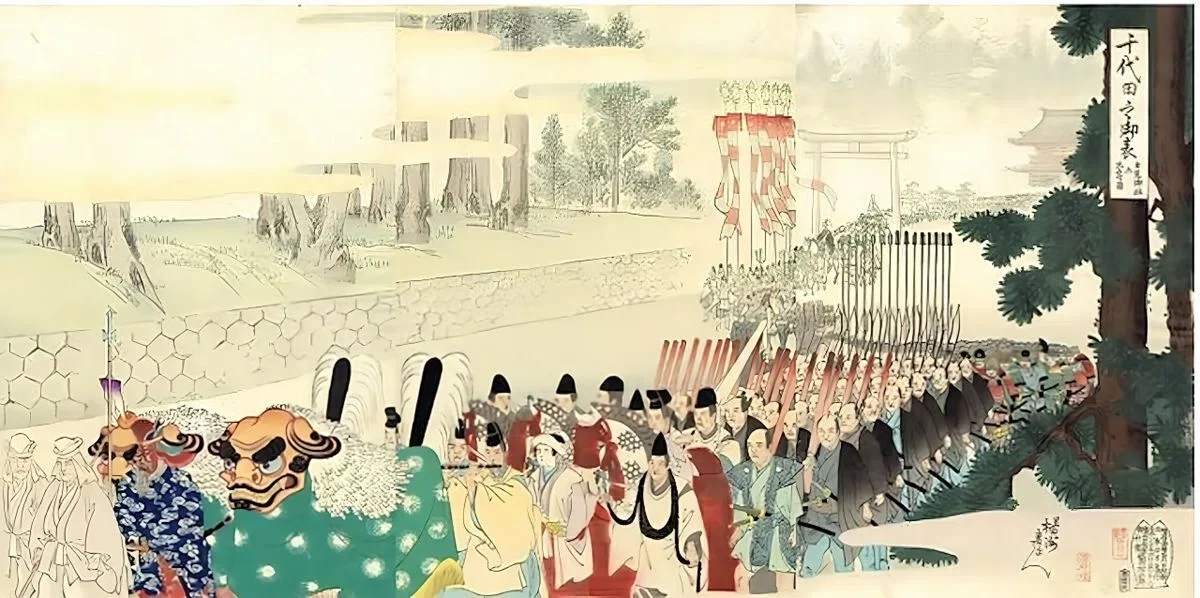
Prince Kōgen, the abbot of Rinnōji — a temple whose abbots were drawn from the imperial family or high aristocracy — made a personal appeal to Emperor Meiji during his imperial progress through the northeast, and imperial funds were granted for the hall's restoration. The survival of the Sanbuttsdō in its present form is partly the result of that appeal.
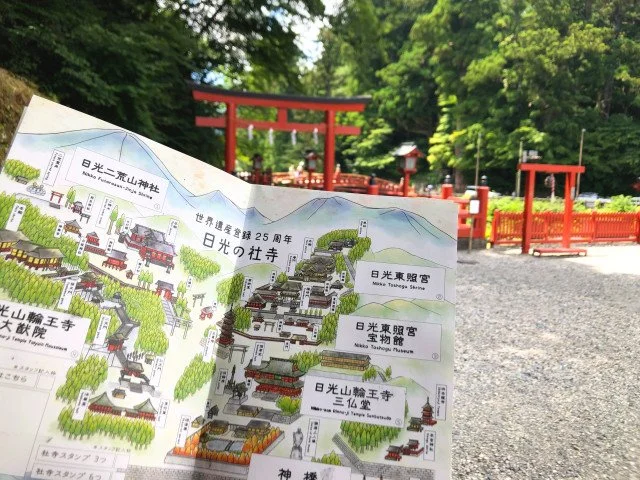
To the visitor today, Rinnōji, Tōshōgū, and Futarasan Shrine appear as three distinct institutions standing side by side. That arrangement is a product of the modern era. What had once been a single integrated sacred site was cut apart in accordance with the demands of the state; affiliations, names, and boundaries were clarified. Where does the shrine end and the temple begin? What belongs to Shinto and what to Buddhism? We receive those categories today as natural.
Which is why walking through Nikkō can feel slightly hard to account for: you pass through a temple, arrive at a shrine, find a shogun's mausoleum beside another shrine, and discover yet another Rinnōji sub-temple further on in Oku-Nikkō. The spatial logic seems slightly out of joint. But it is not the space that is out of joint. It is our way of reading it. The modern state cut the religious institutions apart into categories; it did not, in the same stroke, erase the sensibilities of the people or the memories held by the places. That gap is still visible in Nikkō.
And the separation did not stop at reorganizing religious institutions. What people came to see in this mountain, this lake, and its rivers — the meaning they made of it — was about to change.
6. The Man Climbing the Pilgrim's Path
That change in meaning appeared, at the level of ecology, as stocking.
According to the record, in 1873, under the authority of the head priest of Futarasan Shrine, the prohibition was lifted. Hoshino Teigoro released iwana into Lake Chūzenji. In subsequent years, carp, crucian carp, eel, loach, and various salmonid species followed. The fish life of Chūzenji today rests on the accumulated layers of that long program of introduction.
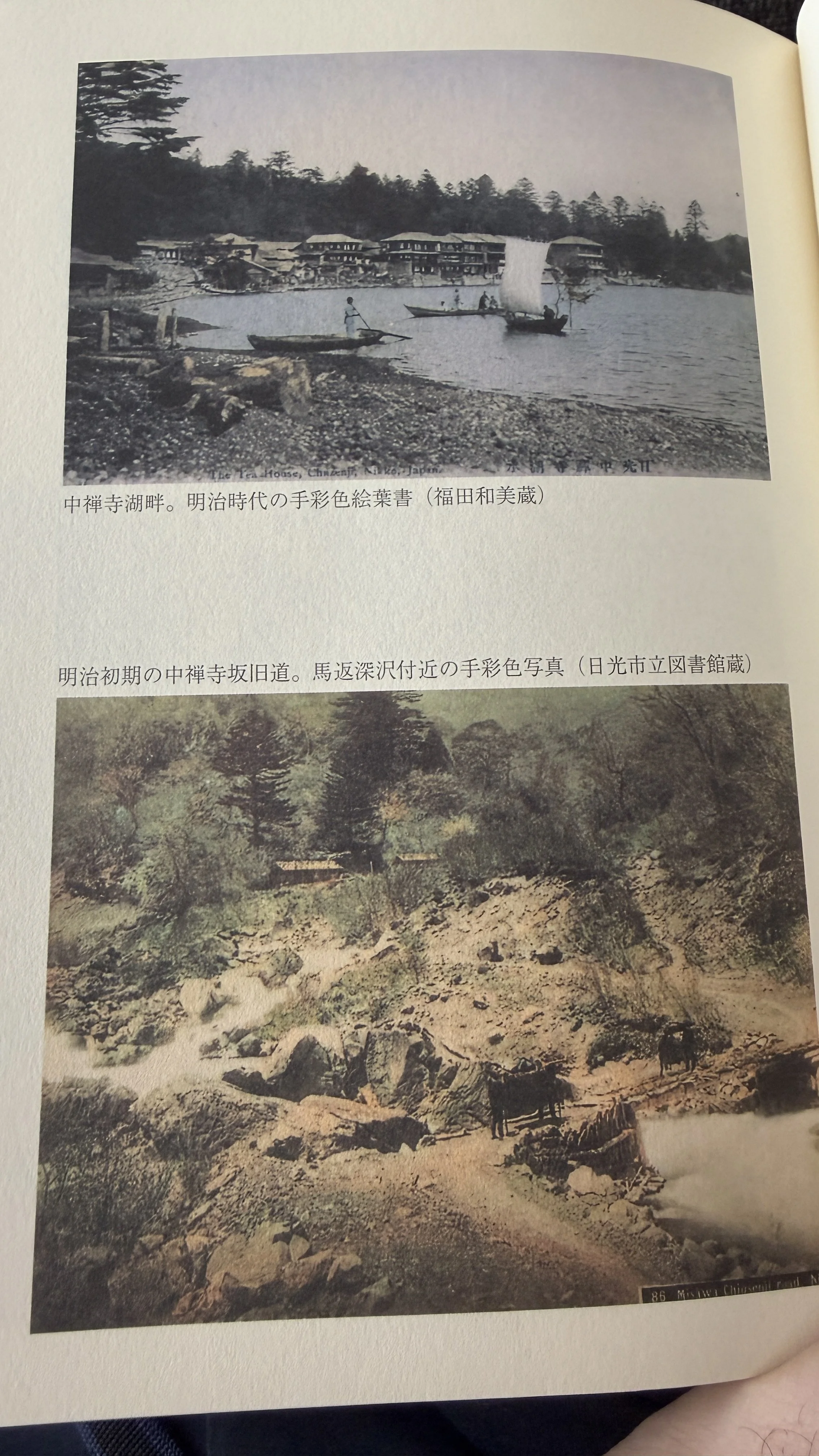
The stocking took place against a background of the Meiji drive to develop domestic industry, combined with policies of fisheries administration and expectations for regional economic development. But when I try to imagine the act itself — Hoshino climbing the pilgrim's path with living fish — it seems to point toward something more than policy.
From the center of Nikkō to Oku-Nikkō and Lake Chūzenji, the difference in elevation is more than 700 meters. From the Umagaeshi — the "horse-return," the point literally named for where horses turned back — the climb is nearly 500 meters. As noted in the book I found that evening, the switchback road that would become the Iroha-zaka did not yet exist. There was only the narrow, precipitous pilgrim's path cut through the cliffs. The road we know today came about fifteen years after the first stocking.
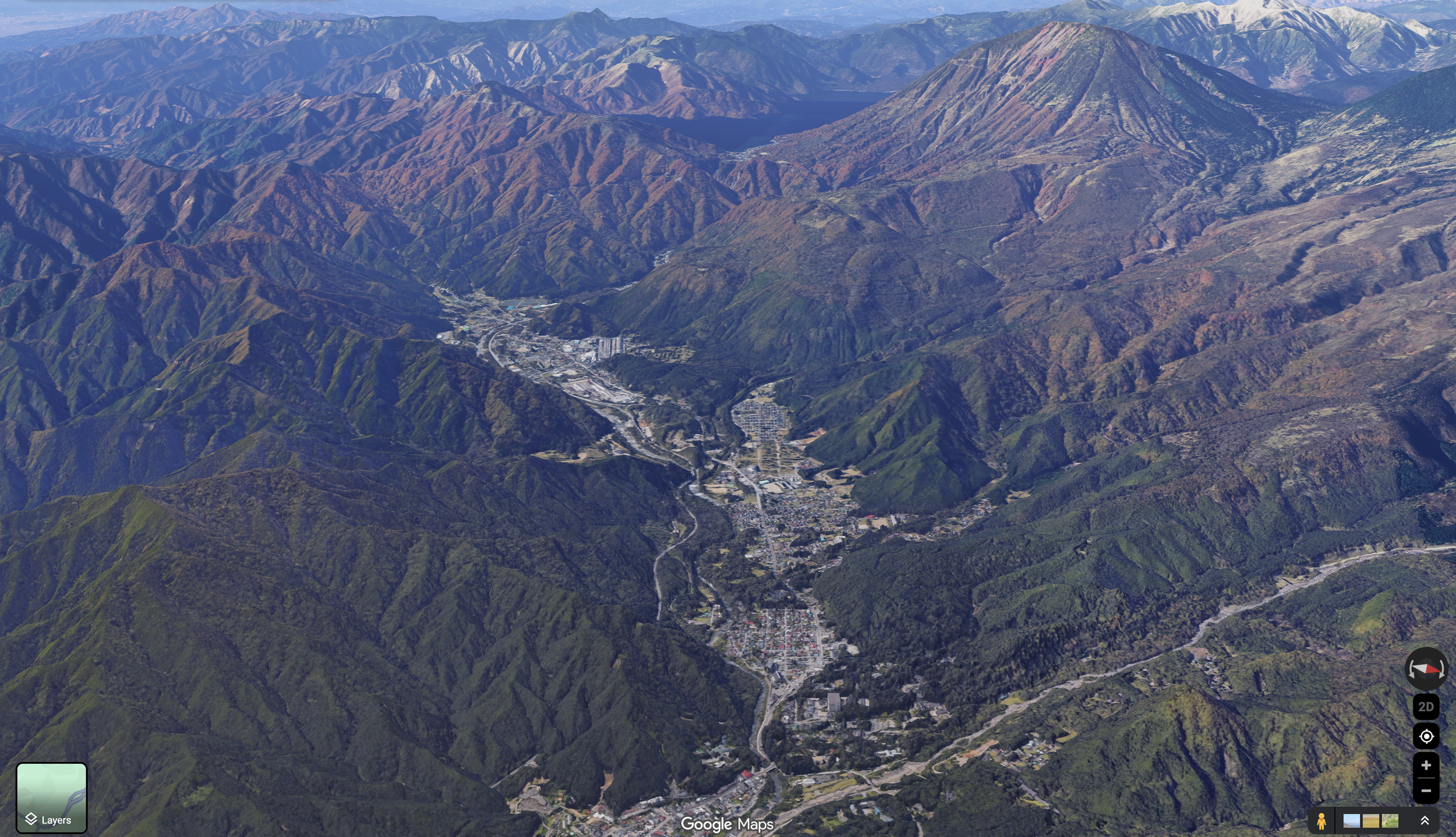
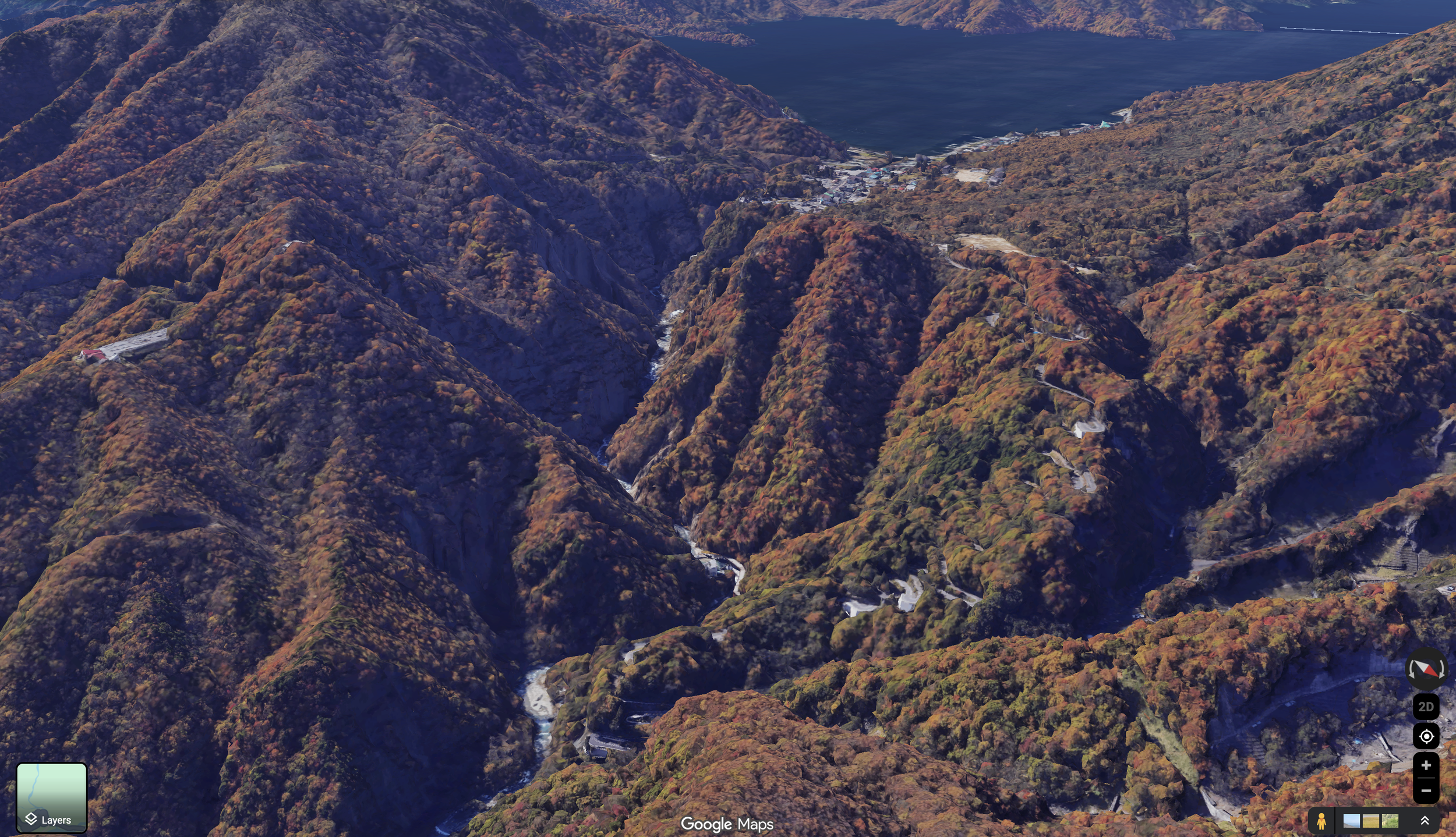
Carrying live iwana up that path. Without that effort and determination, Lake Chūzenji as we know it would not exist.
To draw a simple causal line from the Separation edict to the stocking would be an overstatement. But what cannot be overlooked is that the moment when the sacred order that had governed this place began to be reorganized was almost exactly the moment when the lake began to be seen as something to be intervened upon. Once "this water belongs to the gods and Buddhas, not to human use" ceased to be the operative boundary, the lake became, for the first time, a place to be improved, managed, and enriched.
The stocking was not simply an event in which fish were added to a lake. It was a symptom of a shift in what the lake was understood to be.
7. Summer: The Foreign Ministry Moves to Nikkō
Fish in the water created the conditions for what came next.
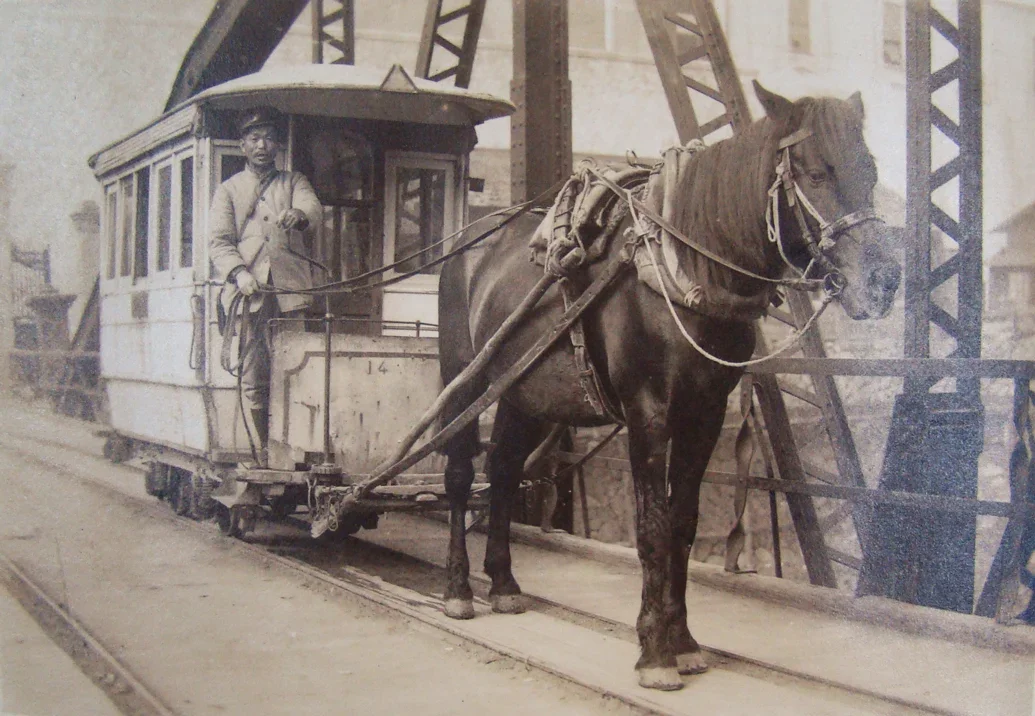
In 1890, a railway line connecting Ueno in Tokyo to Nikkō was opened. The distance from Tokyo contracted sharply. The town grew as a major domestic tourist destination. But for the foreign community — the diplomats and merchants living in Meiji Japan — the growing crowds were precisely the problem. What they wanted was a quiet highland retreat from the summer heat. As the Tōshōgū complex became increasingly crowded with domestic tourists, their attention shifted further in: to Oku-Nikkō, to the shores of Lake Chūzenji.
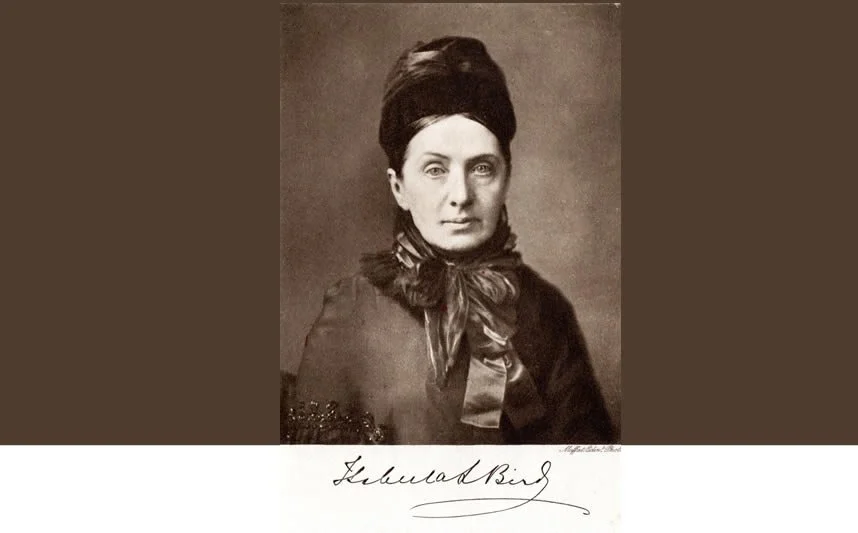
In 1878, the British travel writer Isabella Bird had described Nikkō as a "paradise" in her account of Japan, and the name had spread in the English-speaking world. But the road from Nikkō station to Chūzenji was then still only accessible by rickshaw, palanquin, or on foot. People climbed it anyway.
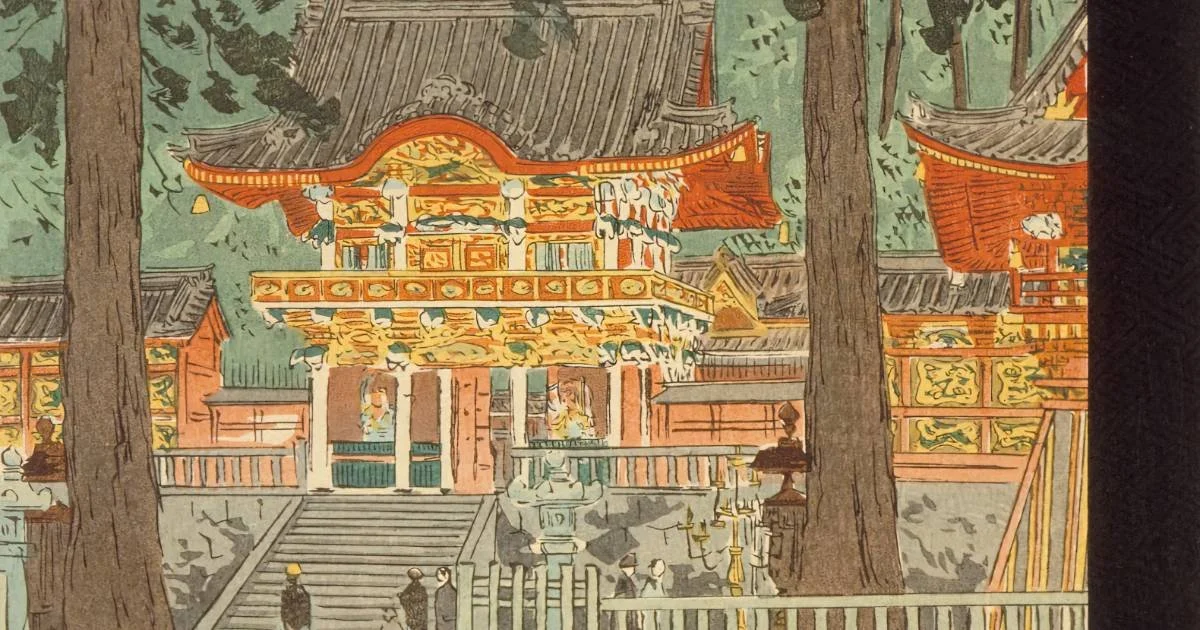
The first person to build a villa on the shores of Lake Chūzenji was Thomas Blake Glover — the same Glover known to most Japanese through Glover Garden in Nagasaki. Born in Aberdeenshire, Scotland, he had arrived in Japan in the final years of the Edo period and remained active through the Meiji era, involved in weapons imports, the introduction of steam locomotives, coal-mine development, and the founding of what would become Kirin Beer. He received the Order of the Rising Sun from the Meiji government. In my essay Forest and Constitution, I described the young Itō Hirobumi — later Japan's first prime minister — making a clandestine crossing to Britain to study Western institutions. It was Glover who arranged that passage.
Glover began fishing Lake Chūzenji in 1889 and built a lakeside villa in 1893.
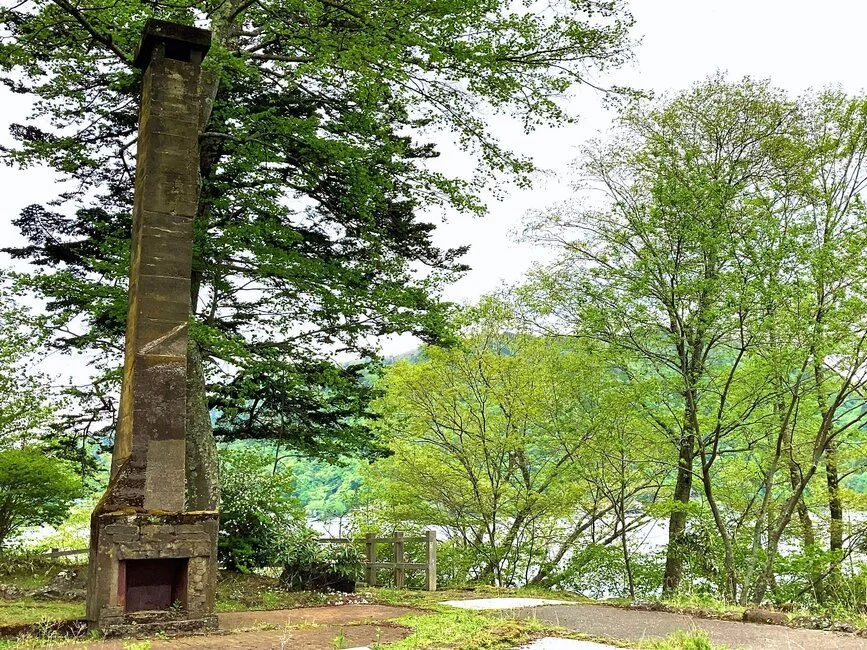
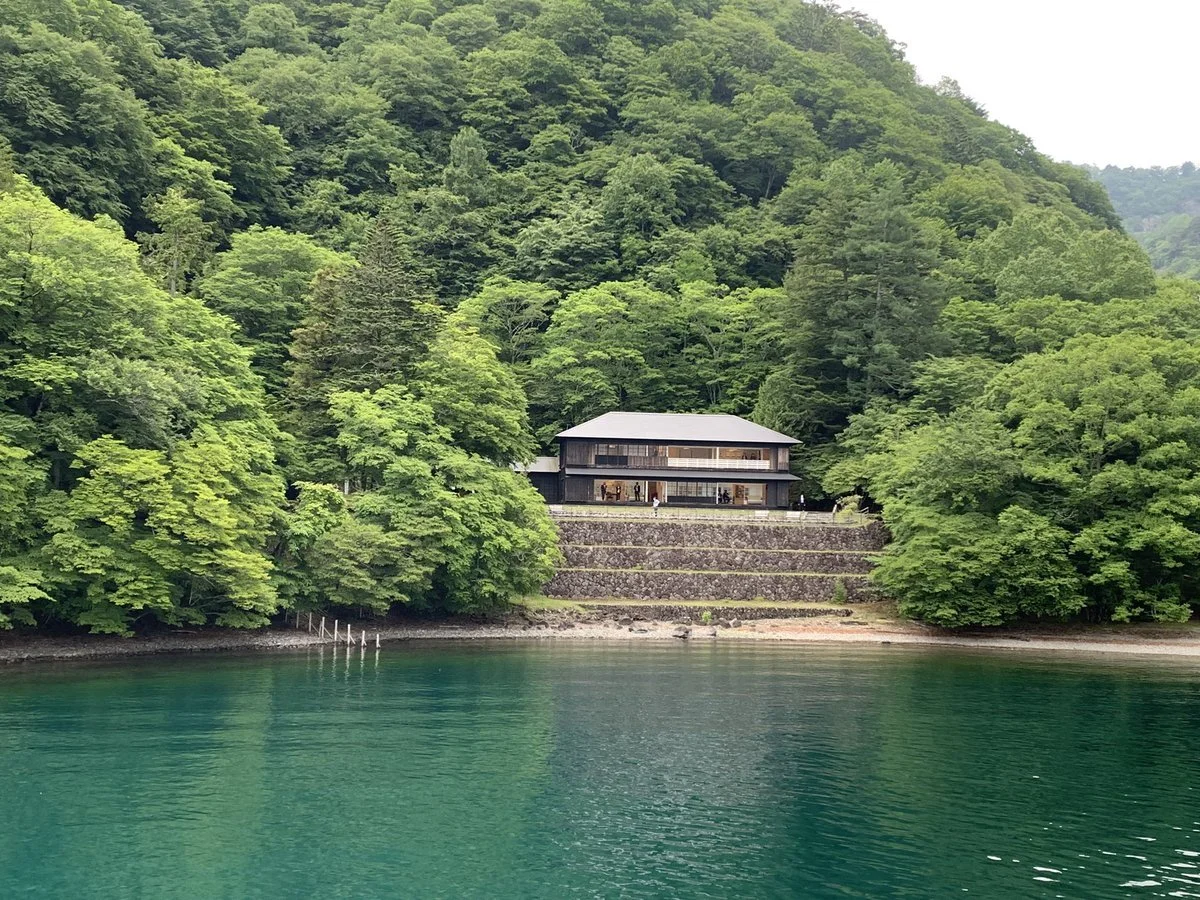
![[640_640]_20231018142220_117-6.jpg](https://images.squarespace-cdn.com/content/v1/6994803766dc2e3ba687912a/1774424125720-6WDDFDDLC20YQWOPID7C/%5B640_640%5D_20231018142220_117-6.jpg)
In 1896, the British diplomat and Japanologist Ernest Satow built a private villa on the lake; it later became the British Embassy Villa. Once freedom of movement for foreign residents was established in 1899, villas belonging to the legations of Italy, Belgium, France, and others followed rapidly. Before the Second World War, more than forty foreign villas lined the shore. It was said that "in summer, the Foreign Ministry moves to Nikkō." The lake had become an international social world.
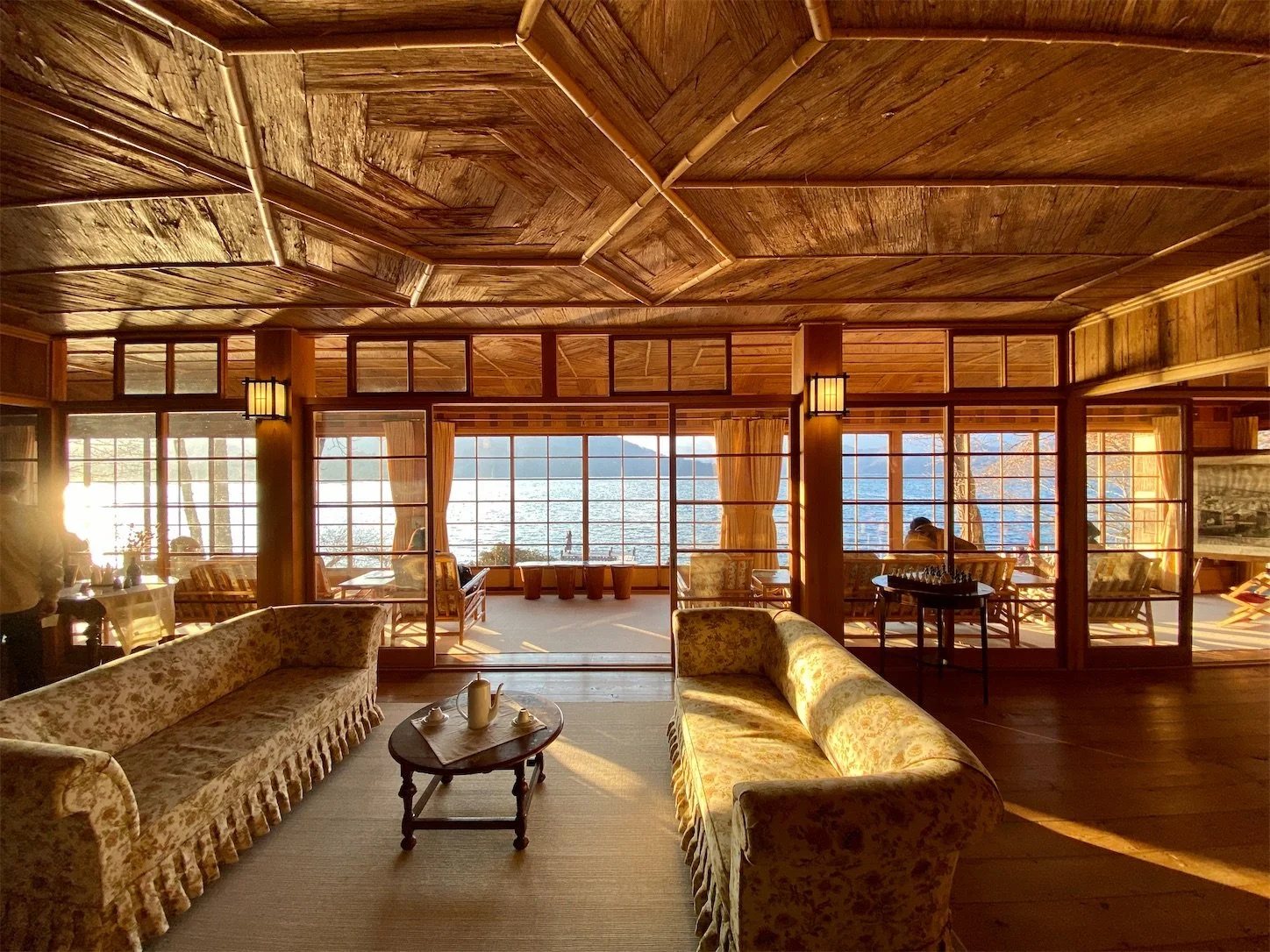
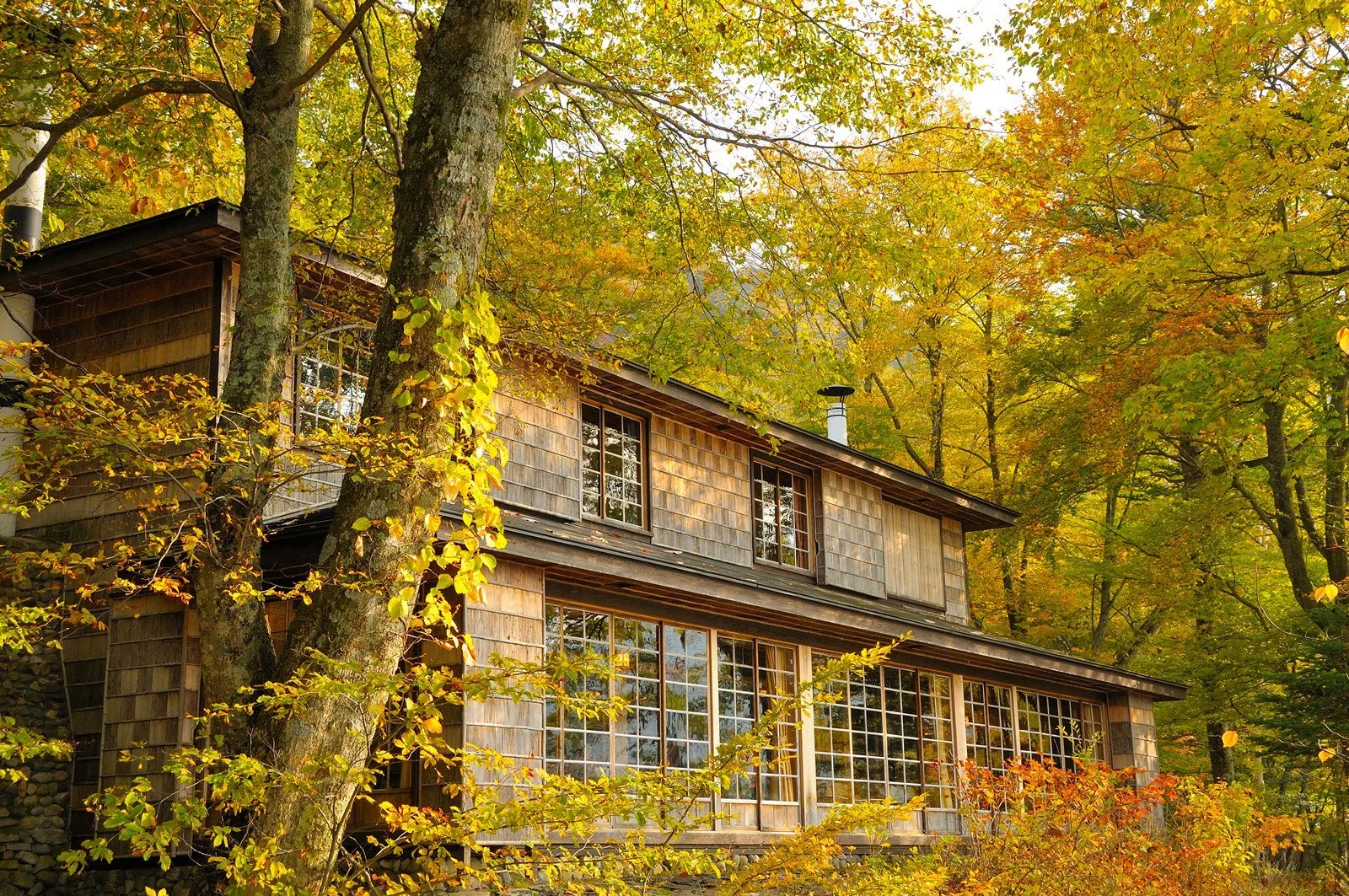
At the center of that world was the fly-fishing that Glover had introduced.
In 1902, Glover imported 25,000 brook trout eggs from Colorado and released the fish into the Yukawa — a stream that flows into Chūzenji through the wetlands and silver birch forest of Senjōgahara. That autumn, a devastating typhoon struck Nikkō and all the hatched fish perished. Glover tried again. In 1904, he imported a new consignment of eggs and released them. This time they survived.
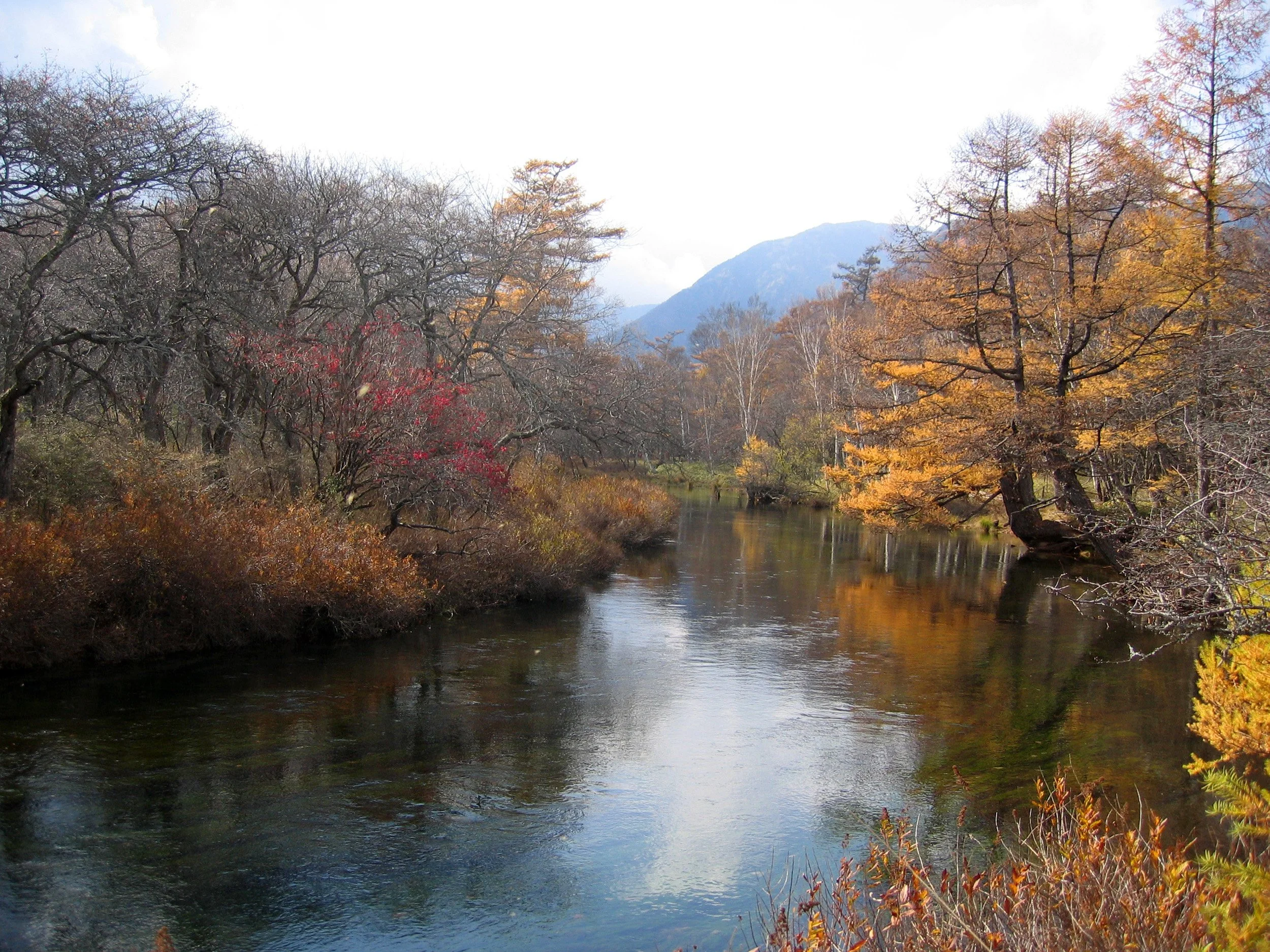
The Yukawa is unusual among Japanese streams: it flows unhurried through the broad marshland of the Senjōgahara wetlands, a gentle, meandering current rather than the steep, rapid-falling streams typical of Japanese mountains. For a man from Aberdeenshire, the Yukawa may have suggested something of the rivers he had known.
Japan has its own indigenous fly-fishing tradition: tenkara — a fixed line tied directly to the tip of a long rod, with a single hand-tied fly, adapted to the steep, fast-moving streams that cover most of the Japanese mountain landscape. Originally a commercial method developed by professional fishermen rather than sportsmen, tenkara prioritizes efficiency and quick reads of moving water: catching as many fish as possible in a short time, in a stream that doesn't slow down. Compared to the unhurried, distance-casting style of British fly-fishing, developed on Scotland's gentle rivers, tenkara is suited to entirely different water.
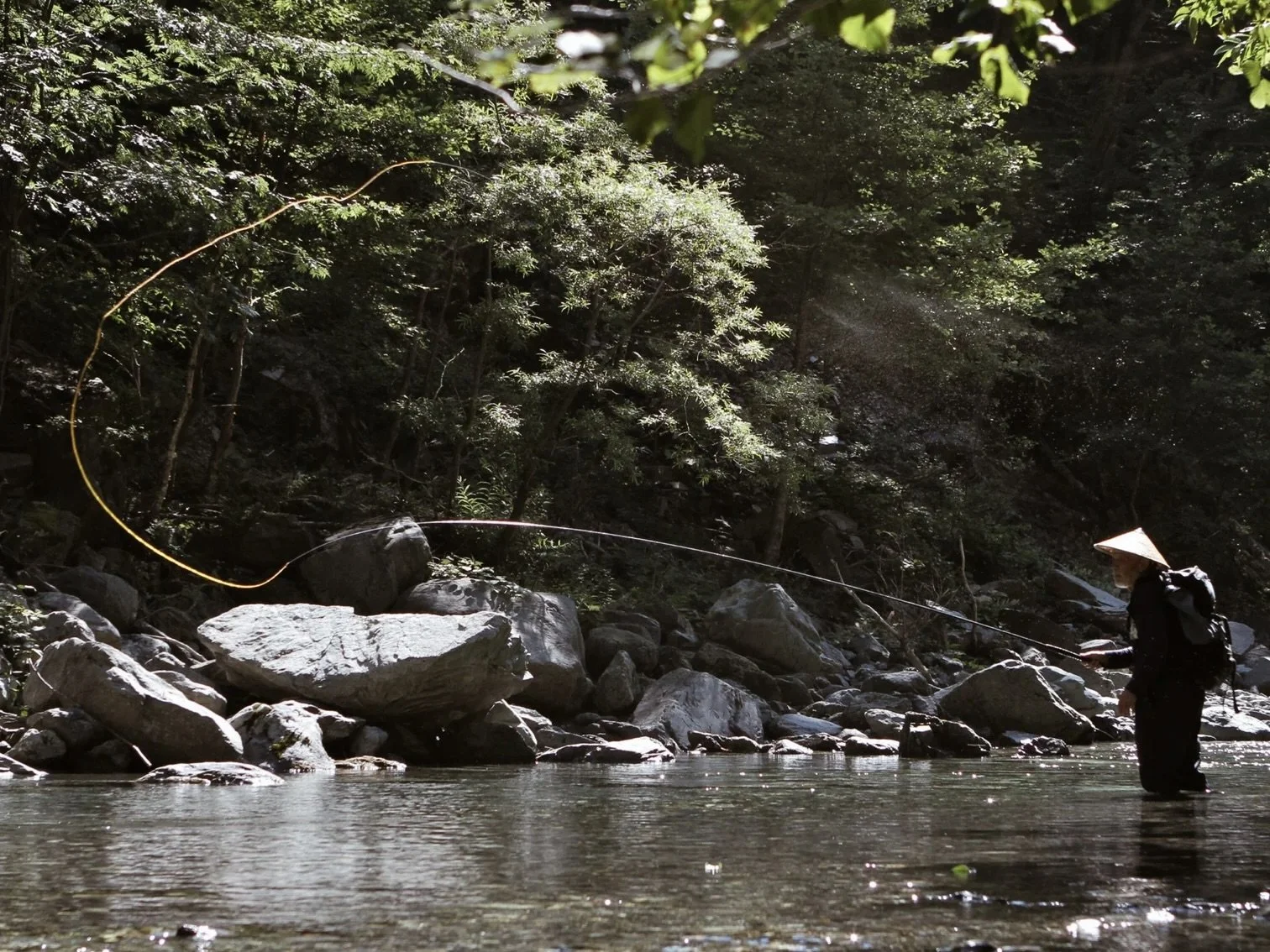
In recent years, tenkara's radically simplified aesthetic — nothing superfluous, everything functional — has attracted growing interest abroad.
But it was the British style of fly-fishing that took root at Nikkō. First, a body of water with no fish. Then a sacred order that had held the lake untouched. Then a modern state that reorganized that order. Then fish introduced into the lake. Then, layered onto that: a foreign enclave culture, a taste for the outdoors, and the particular practice of British sport fishing.
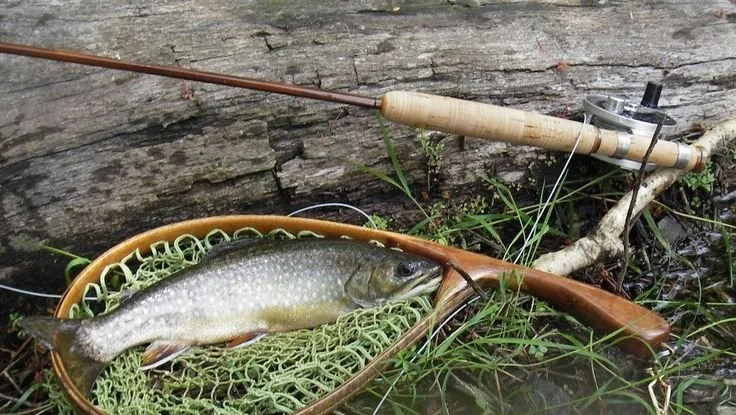
The landscape of fishing in Oku-Nikkō that we now think of as characteristic — that sense of place — was itself built on several strata.
That evening in the bistro, the book on the shelf was the entry point. Drawn in by my own hobby, I happened to open it. But what I found was not simply a history of fishing. I began to see that the waterway I was attracted to had not been there naturally — it had come into being at the intersection of sacred prohibition, political reorganization, deliberate introduction, and the culture of a foreign enclave.
8. Strata of a Landscape
Since that evening, the way I see Oku-Nikkō has changed.
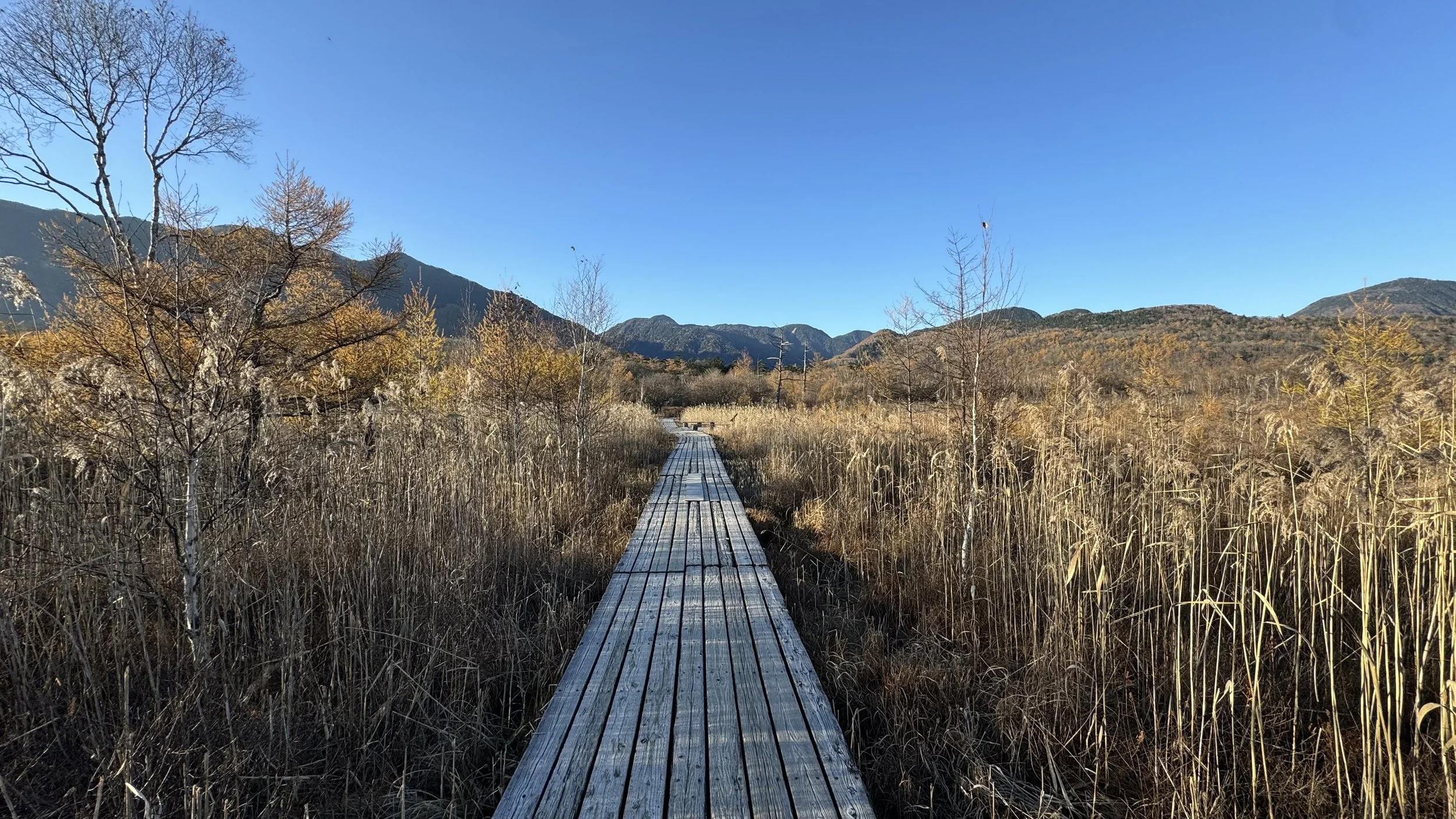
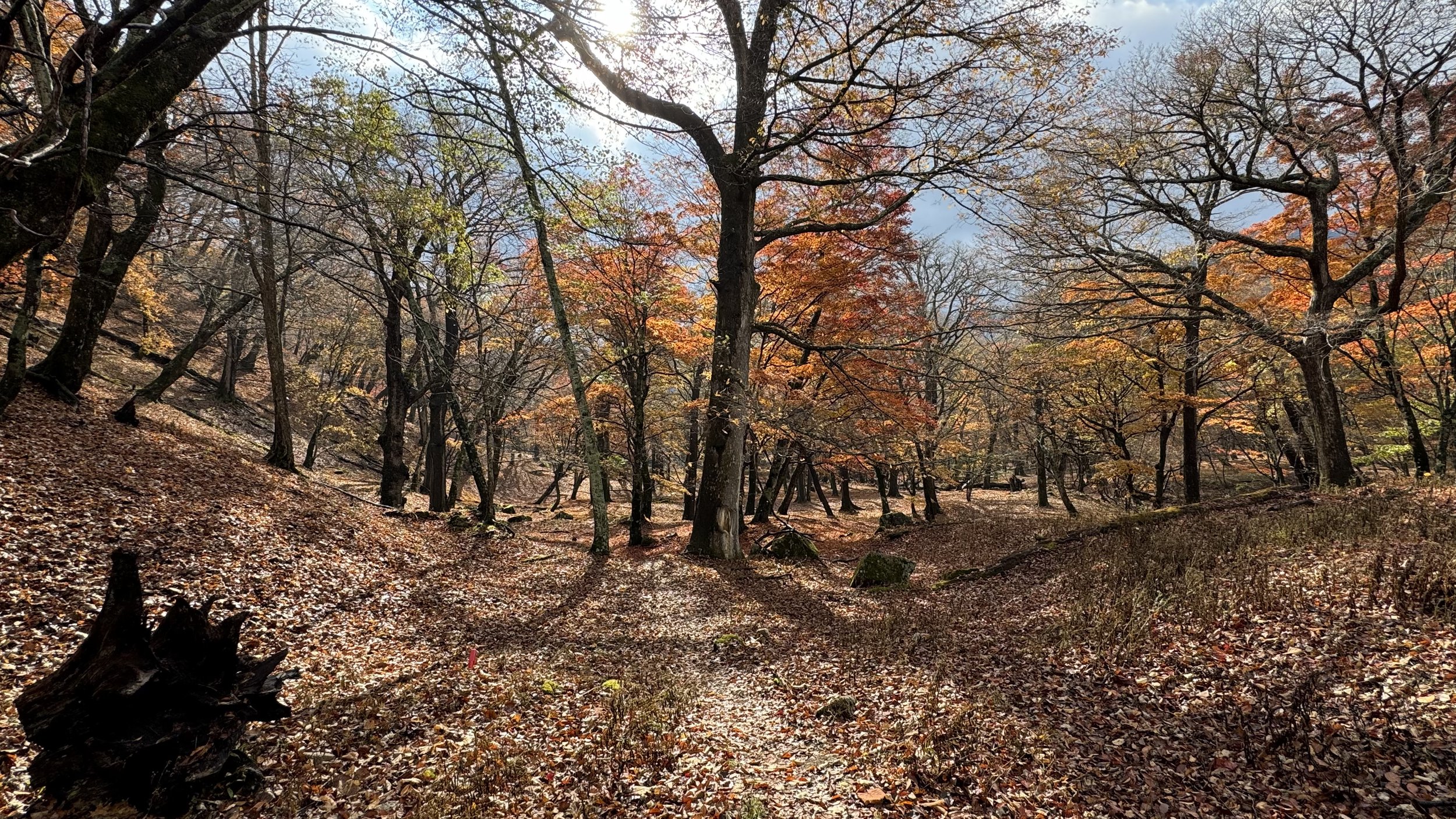
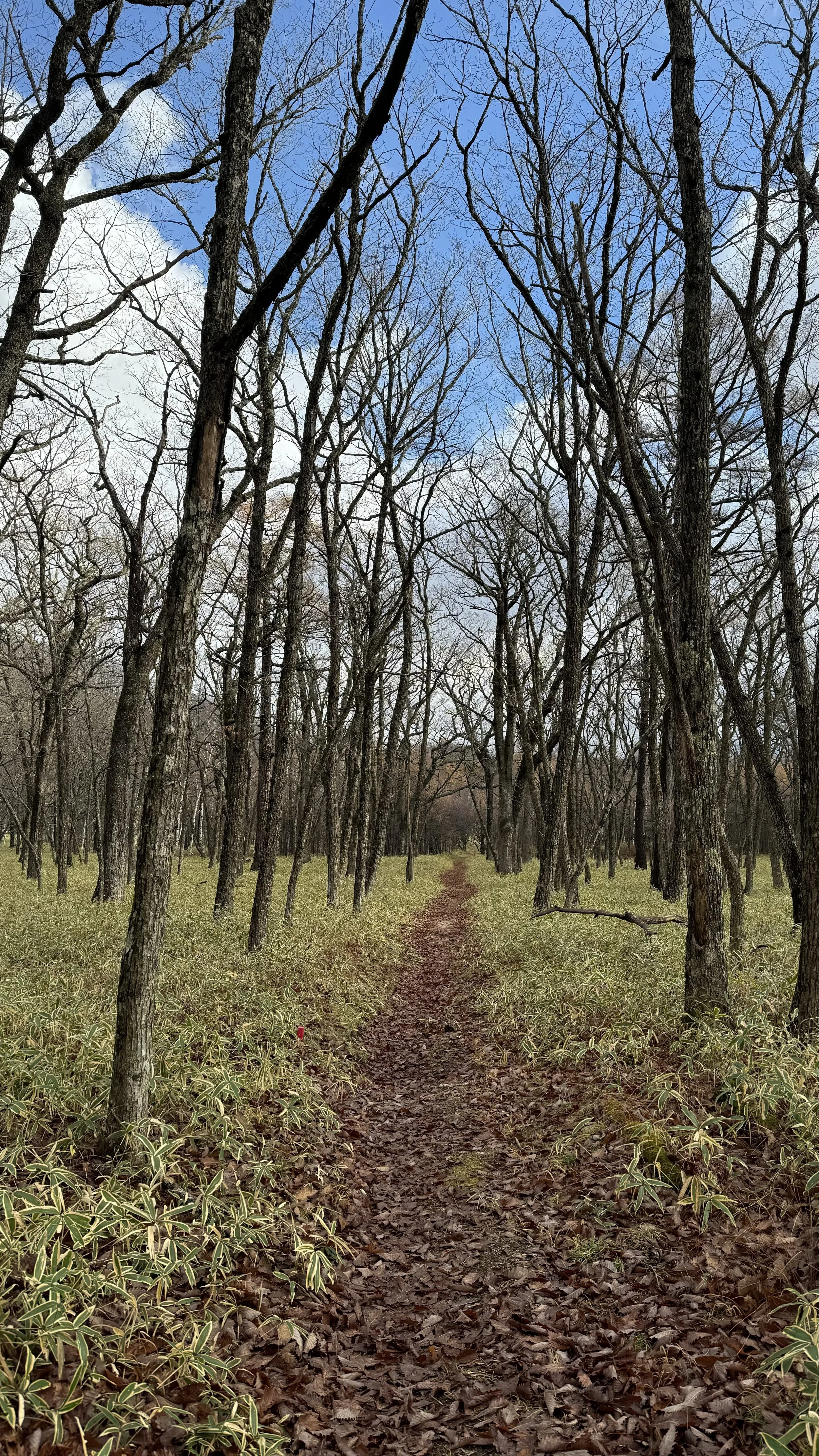
Lake Chūzenji and the Yukawa are as quiet and beautiful as before. The softness of the morning light is the same; the smell of the wind in the evening is the same; the landscape's restraint — its refusal to explain itself — is the same. But the history that has settled into that stillness seems now to speak, without words, from beneath the surface.
A sacred order in which the gods and the buddhas were overlaid. On top of that, the political sanctity of the Tokugawa house, grafted into the site along the axis of the Pole Star. Then the modern state cutting that order apart — and fish being brought into the lake — and, over all of that, the culture of the foreign enclave and the practice of British fly-fishing taking root.
Nikkō is not only the place where modern Japan reorganized religion. It is also a place where you can see, through the landscape and the ecology together, what was kept and what was made over — what the layers were, and how they accumulated.
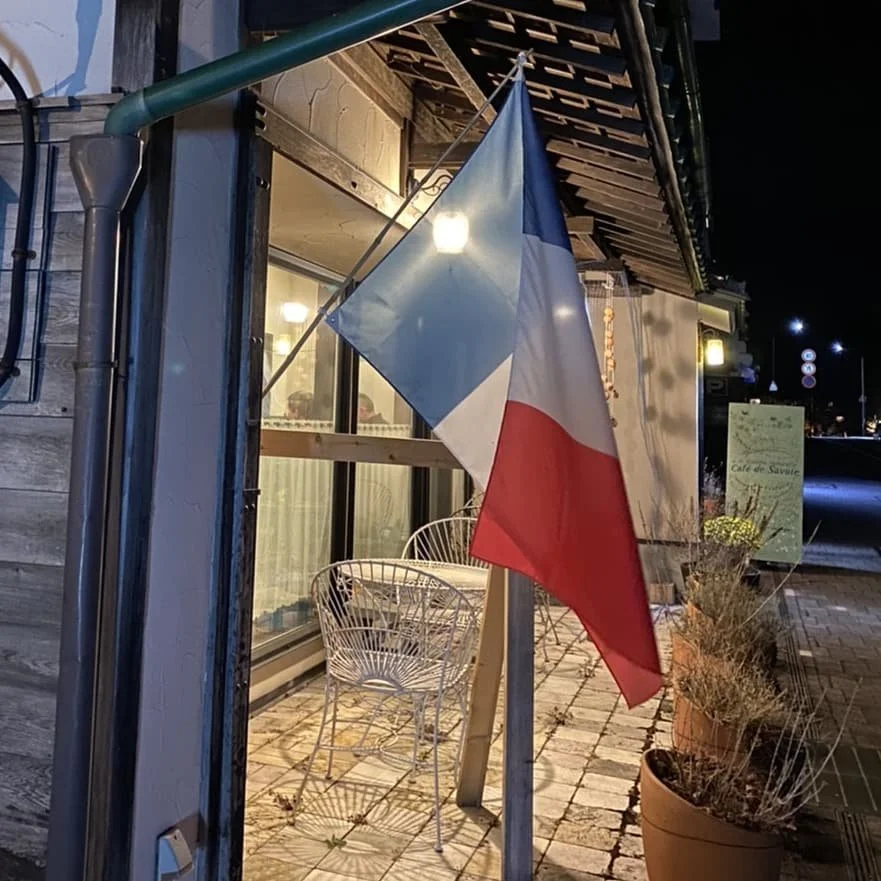
That night, the lake lay black beyond the window. Inside the bistro there was an orange light, and I sat alone with a glass of wine, imagining the rest of a story I hadn't yet finished reading. Looking back now, what I was imagining was probably not the remaining pages of the book. It was a different way of reading a place I thought I already knew.
